Our last week in Broome

I have to say that our last week here in Broome has been rather casual. We have spent our time between enjoying the delights of the beach, pottering around the township to find points of interest, bike riding, walking, chores and socialising with other campers. The weather has continued to delight, albeit yesterday was a wee bit warm at 35 degrees. Typically it is around 30 degrees, which is just right.

The old town of Broome, Chinatown plays a major role in modern Broome. Today it is the hub for many pearl shops from the areas local waters. You can’t help but imagine what the town must have been like back in heyday of Broome’s pearling industry when the town’s many pearlers that came from far and wide (Japan, China, the Philippines, Indonesia and Europe) would arrive back on shore, cashed up and head for the opium dens, brothels and billiard halls of Chinatown. Of course its not at all like this today!
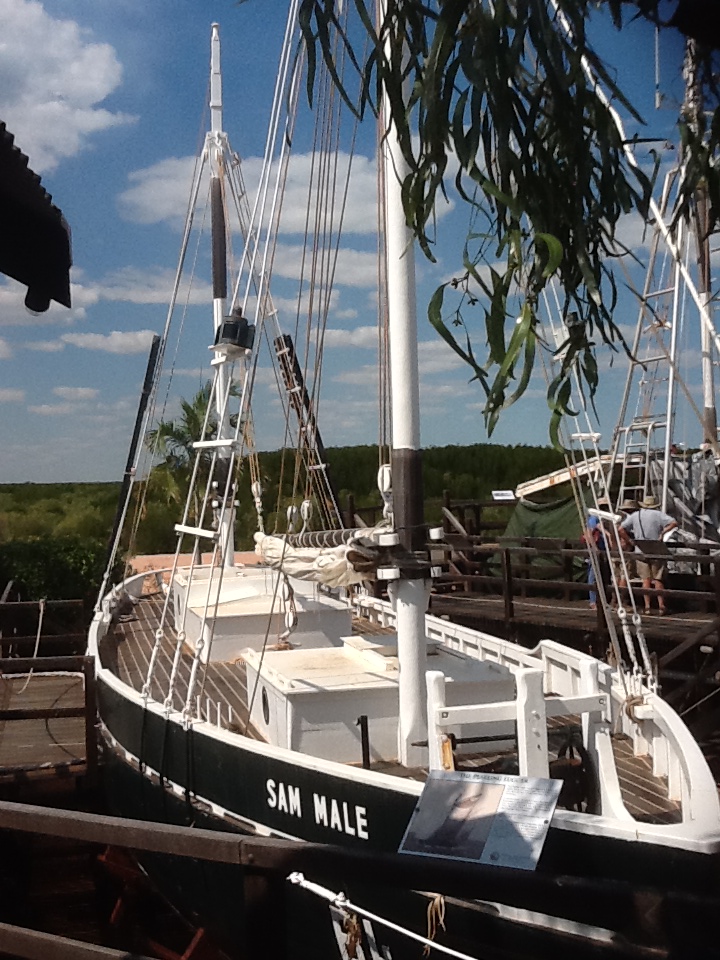
The old lugger Sam Male

The old lugger Sam Male

Several of the old luggers, Sam Male and DMcD that were used by the pearlers have been restored and rest at Pearl Luggers in Broome, alongside the tidal jetty and authentic pearlers store. At its peak before the first world war there were 403 luggers operating out of Broome and around 3000 divers. The conditions that the pearl divers worked in is hard to imagine back in the 1800s. Aborigines were captured and made to dive. The death toll was high due to sharks that cruised the estuaries where they frequently dived. When we think about how we dive today and what our dive equipment is like, and then compare it to what the divers put up with it makes sense that so many lost their lives – relying on the crew to keep air piped through hoses; lead shoes for weights; a metallic diving helmet; a canvas dive suit; and lead weights around the chest and back in addition to the shoes. We have certainly come a long way! With our dive and swimming passions we have managed to spend just a little bit of time around Chinatown – and of course I have sneaked into the occasional pearl shop for a quick look.

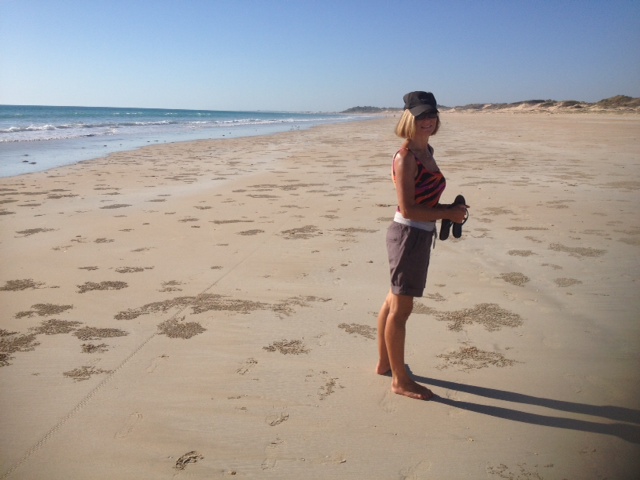
Yesterday, like many other days we drove many kilometres down the beach to peace and quiet and enjoyed an afternoon swim and walk.
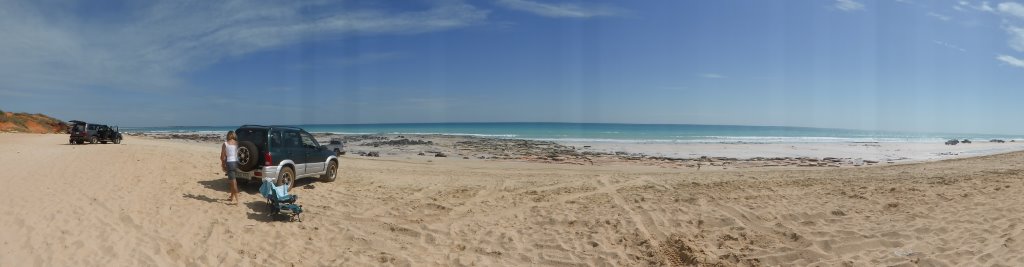
A deserted bit of Broome beach

A deserted bit of Broome beach

When we first arrived here we were rather surprised to find ourselves walking and driving among nudists – then we learned that right along this stretch is designated a nudist beach. Given that many of the 4 wheel drive vehicles belong to baby boomers you can just imagine what a pretty sight this isn’t! I guess when you get older you don’t worry what others think! Thankfully we haven’t quite arrived at this stage.

Broome, like many other more isolated Australian towns has a strong community and lots happening. Last Saturday it was speedway – Steve enjoyed this; last Friday it was horse raising on the dirt track – and again this weekend, a real attraction on the WA social calendar; in two weeks time its rodeo weekend; and we have seen gala balls promoted; music evenings and much more. Its fantastic to see. With its sunny winter climate, beautiful beaches where you don’t have to fear the infamous crocodile sneaking under the water, and excellent community spirit we can understand just why it is so popular at this time of year.

But alas, we have lots more to see and do before our traveling time ends, so in the next few days we will head south for our next adventure. Oh and I couldn’t resist including this photo.
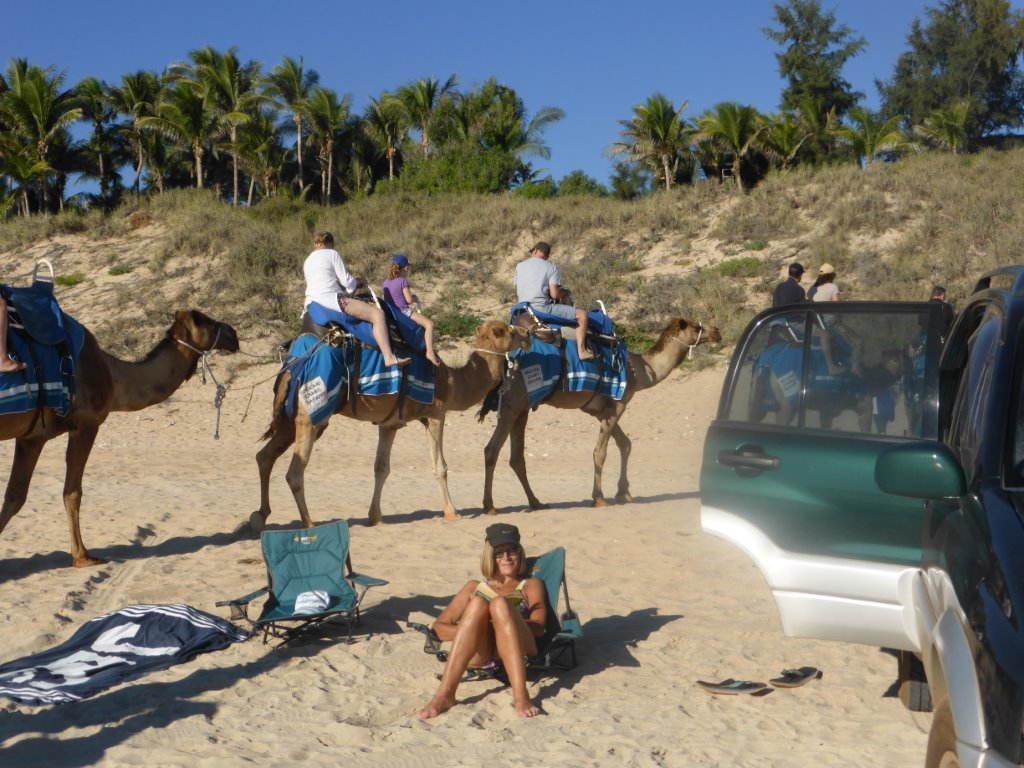
Peace and quiet no more - the camels have arrived!

Peace and quiet no more – the camels have arrived!

The other day I was quietly reading on the beach after a swim, and found myself surrounded by those pesky camels that the tourists seem to love so much.
Our time in Broome

We have now enjoyed a week in the seaside town of Broome, north West Australia. Broome is a real tourism hub for this region, with its warm temperatures, beautiful beach and warm seas.

Broome Beach

Broome Beach

We are very much enjoying our time here, having pottered around the little township, investigating Chinatown, the history of pearling and the old pearl luggers and the waterways. We were very lucky to arrive during full moon, to see the natural phenomenon of the “Staircase to the Moon” that occurs when the full moon rises over the exposed mudflats of Roebuck Bay at extremely low tide. This creates the illusion of a staircase reaching up to the moon. The Kimberley Coast has the biggest tides in the southern hemisphere, with the difference between high and low tide as much as 10 metres, thus low tide can expose a significant amount of mudflat when the tidal movement is at its greatest. We, along with lots of others positioned ourselves at the right place and time, armed with cameras to watch this special effect….and it was quite beautiful. But alas, unless you have an amazingly good camera when you photograph it, all you get is a black screen and some strange looking light spots, not at all what you see with the naked eye. So, disappointingly, no photos to share!

On Thursday we journeyed to the Horizontal Falls, the only 2 waterways in the world that run horizontally. David Attenborough describes these as ‘one of the greatest natural wonders of the world’. With a 5.45am pickup in the luxury 4×4 Bus ‘Big Foot’, off we ventured.

The 4x4 beast

The 4×4 beast

We (J&S and Kerry and Therese) were prepped and ready for our early morning flight – imagine our puzzlement when we went the opposite way than the airport, and started our journey by road. The trip was an all-dayer, a combination of fly, road and boat. We learned we were the group starting by road (the opposite of what we had expected), however we were really pleased…..the first part of the trip is by road up the Dampier Peninsula to Cape Leveque and much is still dirt, and they say, usually fine to travel at 90kmphr. However, with recent rains on the Peninsula dumping some 200mls, the road is very rutted and corrugated and from our Bungle Bungles experience I don’t need to tell you what that feels like! Even in this especially built 4×4 bus we felt the bumps! We were last on and had to sit in the back seats, so it was a bumpy way to start the day, but better that than at the end of the day. On our way up to Cape Leveque we stopped at Beagle Bay, an aboriginal community, Kooljaman (world renowned wilderness camp, famous for its red cliffs meeting the pristine white sandy beach and crystal clear waters of the Indian Ocean) for a light breakfast and One Arm Point, another aboriginal community and where we both visited an aquaculture hatchery and jumped on board the seaplane to Talbot Bay, home of the Horizontal Falls.

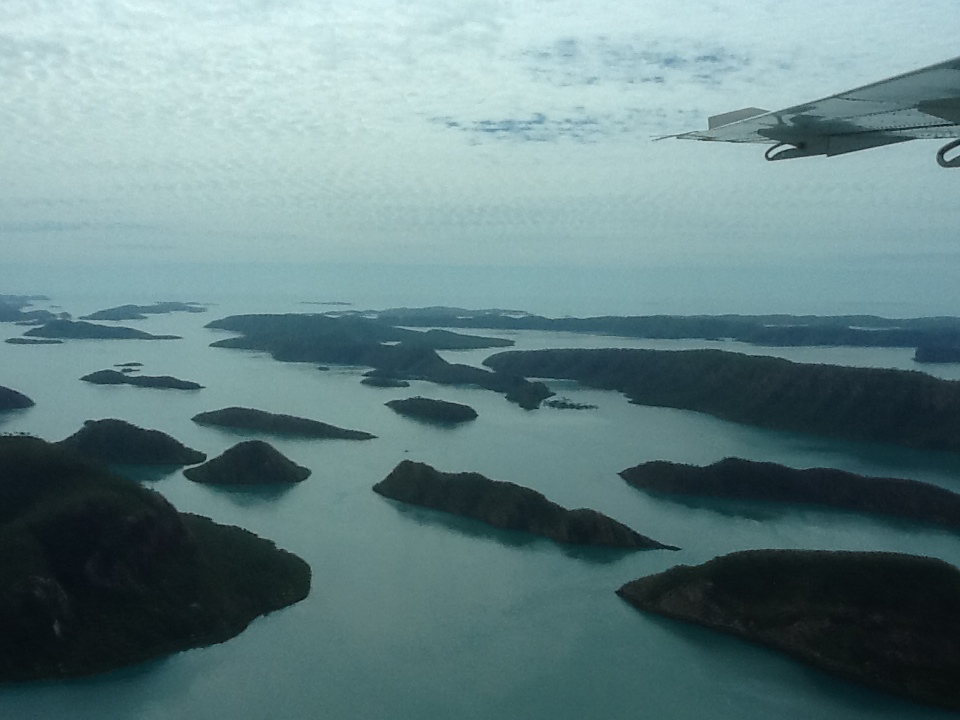
The seaplane trip seemed to be over in a flash. We flew low level over the stunning 1000+ islands of the Buccaneer Archipelago.

The islands of the Buccaneer Archipelago

The islands of the Buccaneer Archipelago

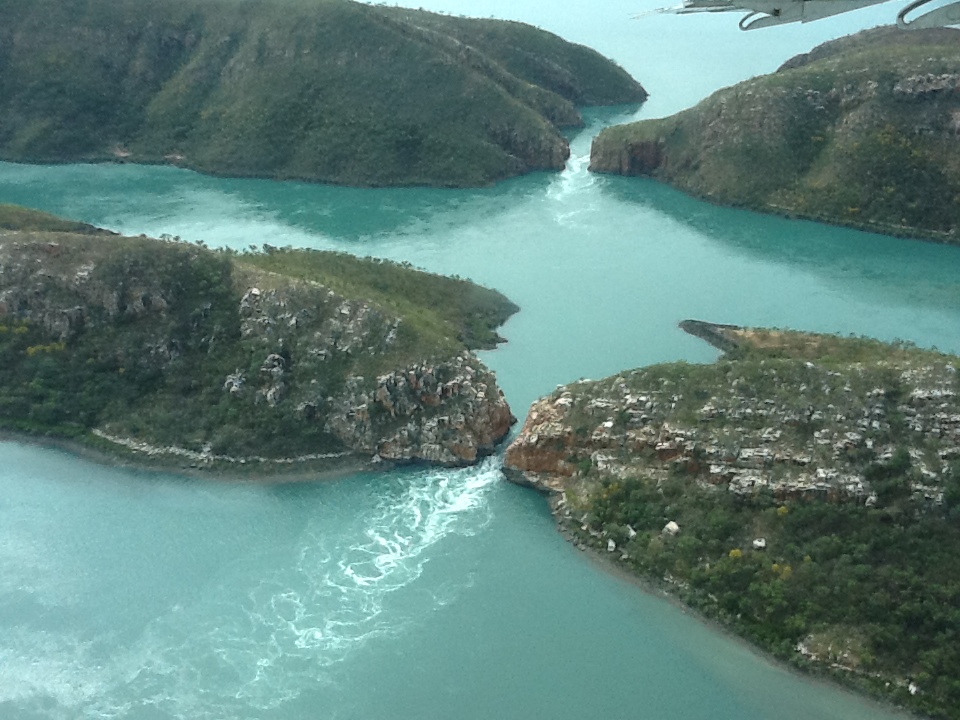
What a magical vista from the plane, so picturesque with vibrant turquoise seas, islands of all shapes and sizes and quick running seas with whirlpools and little waves whipped up by the ferocity of the tidal movement. The conditions here caused havoc with the pearl fishermen last century and many sailors and divers lost their lives. Oh what an amazing waterway to sail in, with lots of inlets, rivers and bays to anchor in. After 30 minutes there were the falls, the twin gaps that are part of the McLarty Ranges with their two parallel ridges approximately 300m apart.

Looking down on the Horizontal Falls

Looking down on the Horizontal Falls

The most seaward gap is ~20m wide and the second and most spectacular just 10m apart. The view from the air confirms just how small these gaps really are.

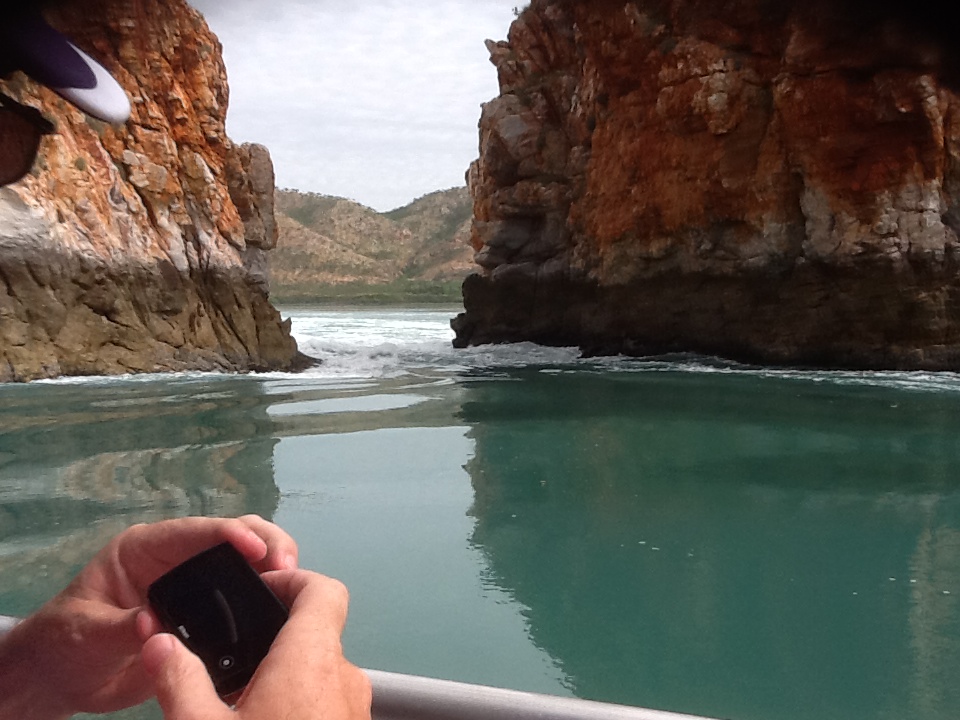
We flew in to a pontoon that houses overnight guests, a restaurant, helicopters, speed boats to the falls, a shark diving cage and all the supporting services and facilities. During the very enjoyable afternoon we did 2 exhilarating trips to and through the falls in the 900hp ‘beast’. With the speed of the tidal flow it is a feat of control and driving for the skippers of these boats. We have several videos of charging through The Falls, however sadly cannot post them into the blog.

The Horizontal Falls, looking into the 10m gap

The Horizontal Falls, looking into the 10m gap

After a lunch of fresh barramundi, we enjoyed a dive in the shark cage (the sharks are pretty harmless) which was an excellent cooler, and then took a ride up into Cyclone Creek, a long and very sheltered waterway that runs between stunning red bluffs and escarpments, yet still demonstrates dramatic whirlpools and strong waterflow given the extreme tides. This is where the pontoon and boats are housed during the hurricane season.

To cap off the day we enjoyed a one hour seaplane trip back to Broome. And did we have fun – yes we did. Hopefully you can enjoy the spectacle through some of the photos in the blog.

We have enjoyed long walks (and swims) on the 22.5km white sands of Broome Beach, sometimes driving down onto the beach where 4 wheel drive vehicles are permitted.

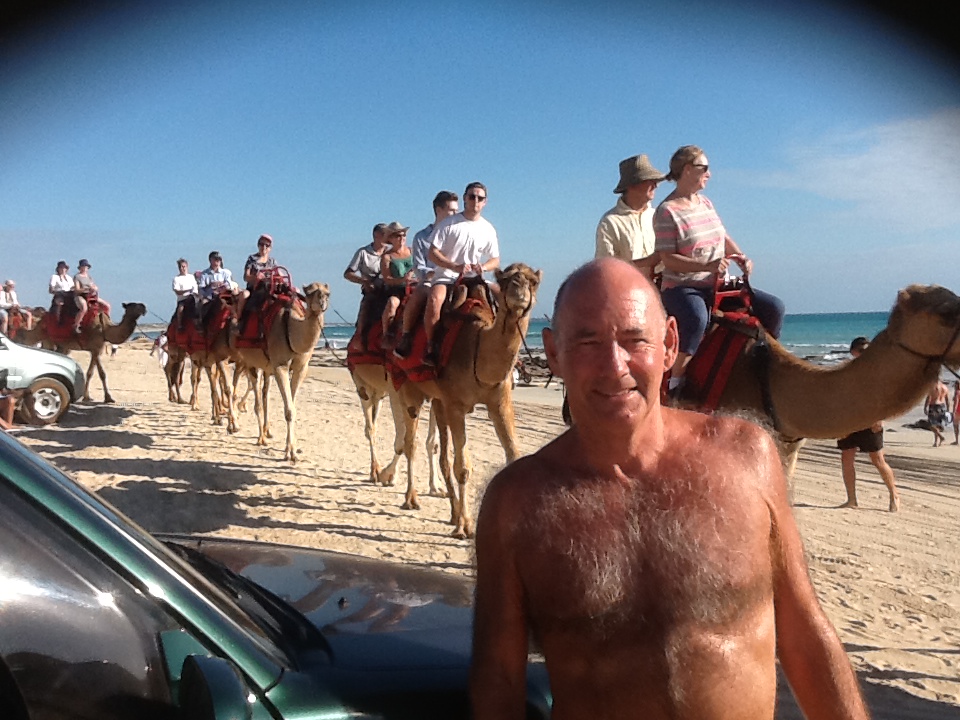
Steve and the camels!

Steve and the camels!

In the afternoons we have been greeted several times by camel trains close by – a favourite tourist activity is camel riding on the beach and especially at sunset. So far we have resisted this activity. The smell is enough to put you off!

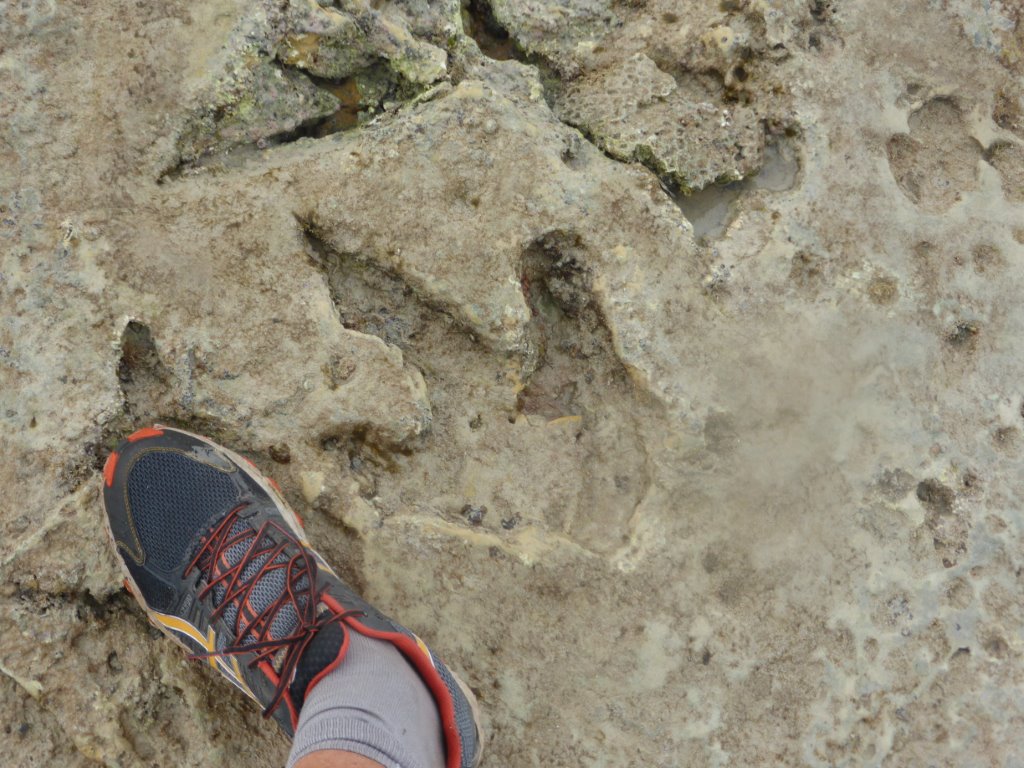
Last Friday morning we went off to hunt out the dinosaur footprints that can be seen at very low tides at Gantheaume Point. We climbed down the beautiful rich red but precariously slippery rocks and the small cliff from the lighthouse to explore the sandstone rocks, and there we found them….apparently 120 million years old dinosaur prints embedded into the rock.

A 120 million year old dinosaur print alongside Steve's foot so you can appreciate its size

A 120 million year old dinosaur print alongside Steve’s foot so you can appreciate its size

Along this coastline some 20 different species have been identified from embedded footprints, some up to 1.7m in diameter.

We expect to be here for another week enjoying consistently warm 30 degree sunny days and the delightful local hospitality before continuing on down the WA coast.

From Kununurra to Broome and tourquoise seas, white sandy beaches and more sunshine

After a very pleasant 6 days in Kununurra it was time to hit the road again, heading for the Bungle Bungles, to see from the ground these famous beehive-like domes in Purnululu National Park. The drive was very enjoyable, with varied landscape from sandalwood farms, to mining and cattle stations, passing through undulating ranges and valleys. We chose to stay at the Bungle Bungles Caravan Park, a relatively new camp ground (2011) on the Mabel Downs Station. It’s still a 53km drive to the Information Centre and then another ~20kms to any major walks from the camp ground. And what a busy little camp ground this is, playing host for one or two nights to many ‘caravaners and off-roaders’ who don’t want to take their vans or trailers on the  ‘amazing’ road into the Park.

I feel compelled to mention some facts about Mabel Downs Station. It is one of the Stations that form Yeeda Corporation,  traversing property from Broome to Halls Creek, 500kms away and then on to The Bungle Bungles. It’s hard to comprehend the scale of this significant holding with its 95,000 head of cattle and sheep. And complementing this is the facility they have opened up 1km off the highway for campers visiting the Bungle Bungles.

We travelled out to the Bungle Bungles with our Kiwi friends Therese and Kerry, and wow, what a trip!

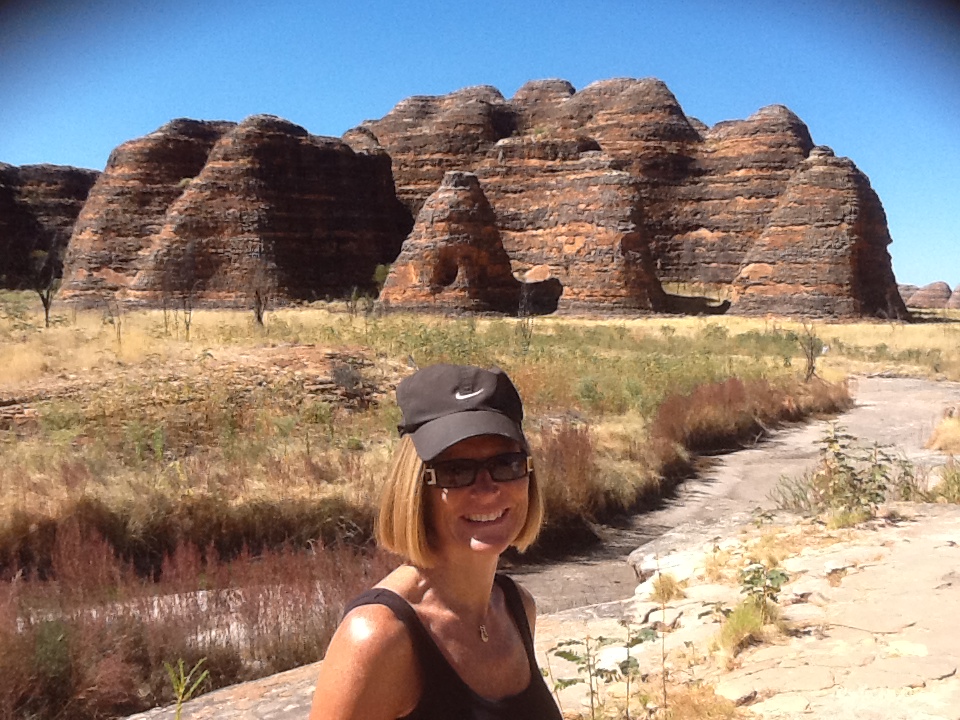
The Bungle Bungles at ground level

The Bungle Bungles at ground level

We decided to take pillows and cushions to soften the ride – because this is one brute of a road. It is described as a metal road, but somehow they forgot to say ‘and all the metal has washed away, and it has huge corrugations that shake and rattle your teeth and your bones!’ We crossed 9 river/stream crossings, 5 with water up to the running boards. The road trip (return) itself took us 5 hours, and on our way in I did hear a number of times ‘this had better be good when we get there’. And it was. We visited Cathedral Cove, Piccaninny Creek, and also walked to The Window.

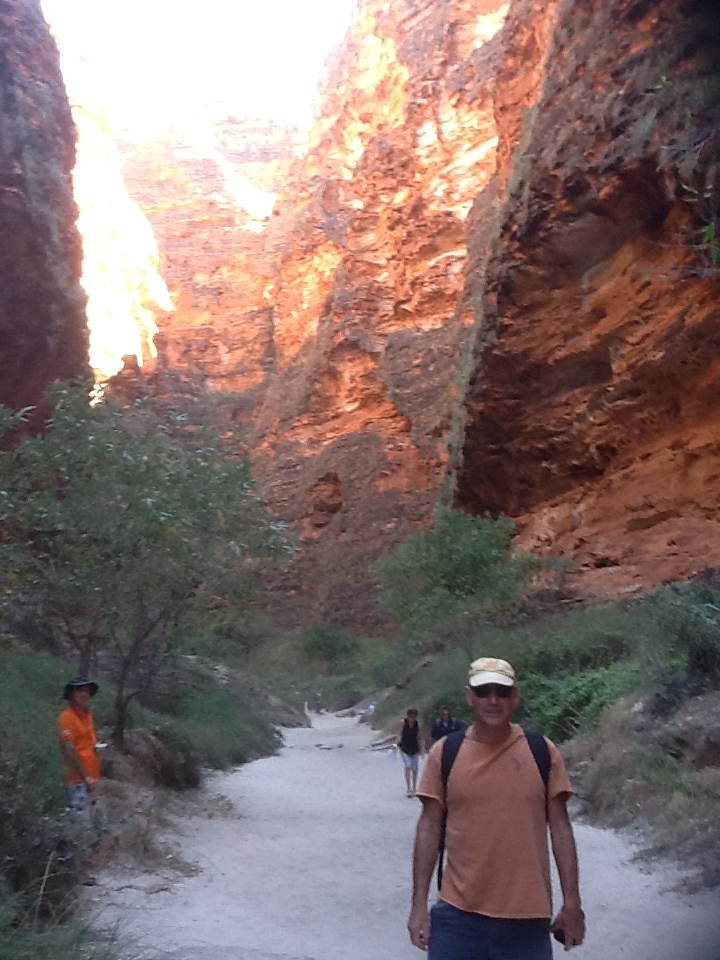
On the way in to the "Cathedral', Cathedral Gorge

On the way in to the “Cathedral’, Cathedral Gorge

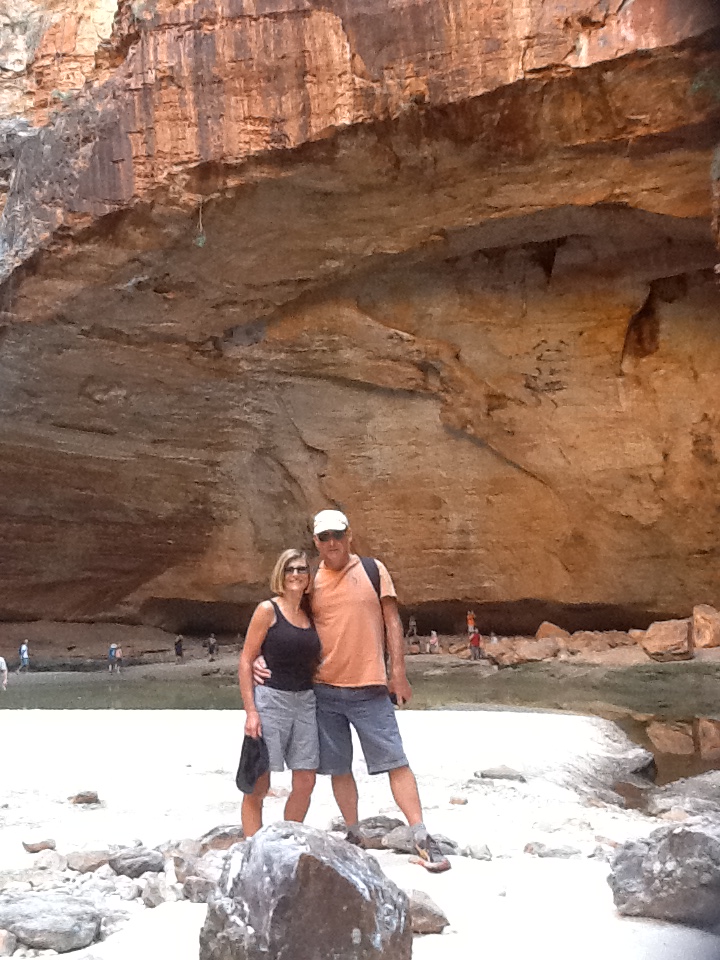
Cathedral Cove is at the end of a short walk through a hidden valley with 200+m domes rising up on either side, ultimately opening to an enormous cathedral like cove, where over millions of years water has eroded the escarpment to form the cathedral that sits over a large pool.

'The Cathedral', overlooking large natural pool

‘The Cathedral’, overlooking large natural pool

The escarpments of the domes tower high above creating an amphitheatre like environment. It is truly spectacular. To just sit and take in the surroundings was quite something.

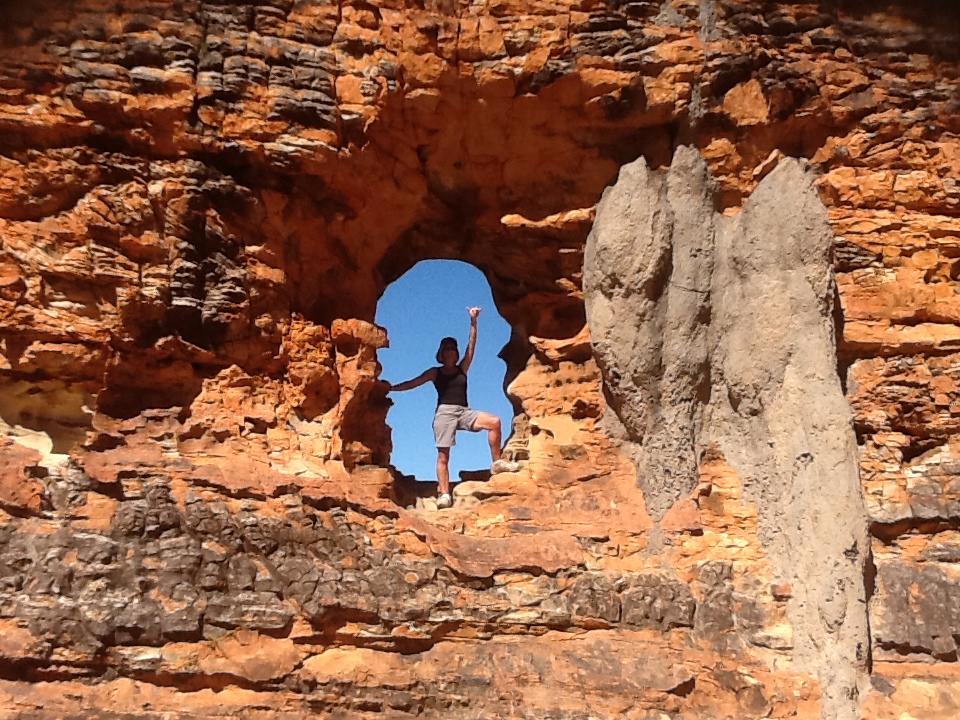
The Window walk is several kms up the Piccaninny Creek, where you can more appreciate the scale of the Bungle Bungles, passing the Sunset Lookout and ending at The Window, which is a natural window that has formed in one of the domes. The dried creek bed is quite staggering. It is largely rock, with many undulations and crevices formed over millions of years from the rushing waters of the annual wet season.

Jane 'posing' in The Window

Jane ‘posing’ in The Window

So, yes, it was worth it. Phew, just as well, because the return trip seemed longer and the corrugations some how grew bigger. We definitely needed a glass of red and a massage at the end of the day….well, Steve got the massage! It was an excellent day and we truly appreciated being guests of Therese and Kerry.

From here our next stop was Fitzroy Crossing, some 300kms away, and edging toward Broome and the East Kimberley’s. We stayed at the Fitzroy River Lodge, just before the town itself. This was an excellent grassed camp ground with very good facilities. The local attraction here is Geikie Gorge, which is close to the town. By all accounts it is very interesting, however with having been on so many excursions recently we decided to just relax, walk, bike ride and catch up on chores. We were due to stay two nights, but surprise surprise, after over 2 months of blue skies and sunny days it rained over night and with light drizzle in the morning we decided not to drive, but to stay and head to Broome the following day. So on Monday it was Broome here we come. This was a 400km day, on good roads and of course as it does in northern Australia, the sun shone again. We have booked 10 days in Broome, however think it likely we will be here for 3 weeks.

Our time at Kununurra

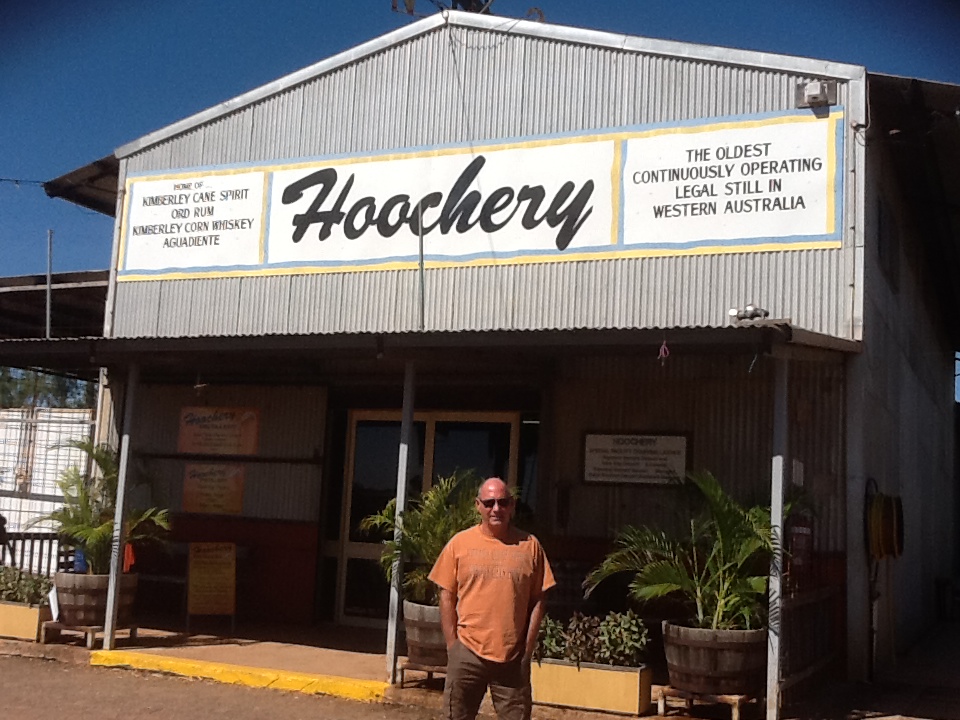
Well, we have had a busy time in this little town in the East Kimberleys that was established in 1960 to service the Ord River Scheme. There are some 6000 residents in the greater area, who today support local tourism, mining and a strong agricultural industry that has recently, much to the chagrin of many locals, extended to the development of large plots of Indian Sandalwood. On Thursday we relaxed and went for a bike ride. The following day we did a tiki tour around local sights. This included the Zebra Rock Gallery which features zebra rock, a fine grained siliceous clay stone with rhythmic patterns of red bands or spots contrasting sharply with a white background, found in Lake Argyle);

The Hoochery

The Hoochery

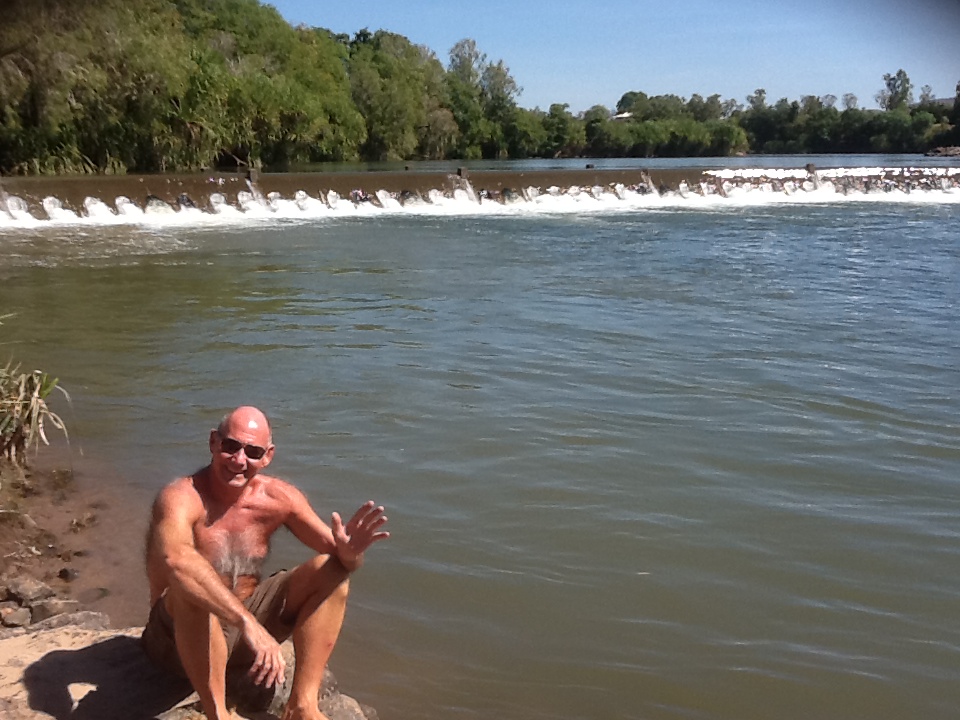
the Hoochery, the local rum distillery, the Sandal- wood shop where we learned about sandalwood and of course purchased some products; and the Ivanhoe Crossing, which is on the original Kununurra to Darwin road and is the old concrete causeway over the Ord River built in 1954. Sadly today it is closed to vehicles unless you want to tackle a huge boulder that blocks the crossing and then take on the fast flowing waters of the Ord, home to saltwater crocs and the mighty barramundi.

Ivanhoe Crossing

Ivanhoe Crossing

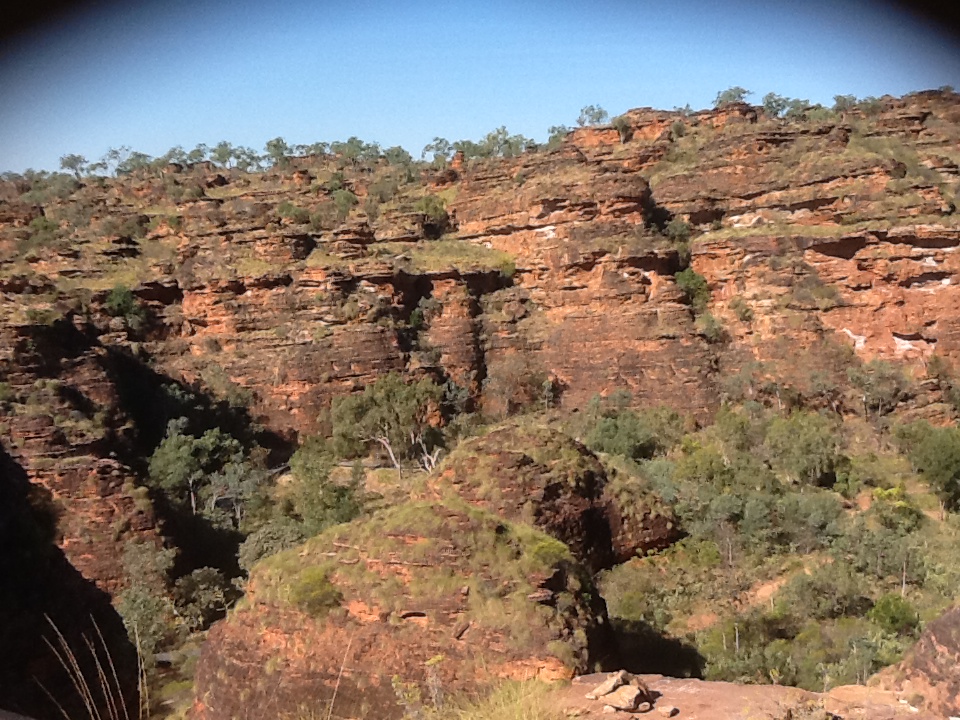
Then we visited the  Mirima National Park or Hidden Valley to look at the unusual sandstone formations that are known as the ‘mini Bungle Bungles’. They are amazing. We took our lunch and chairs and hiked to the top of the walk that takes you to the top of one of these formations so that we could sit and take in the beauty and then the views across the valley. They are truly majestic and so unusual!

The view from atop one of the domes in Hidden Valley

The view from atop one of the domes in Hidden Valley

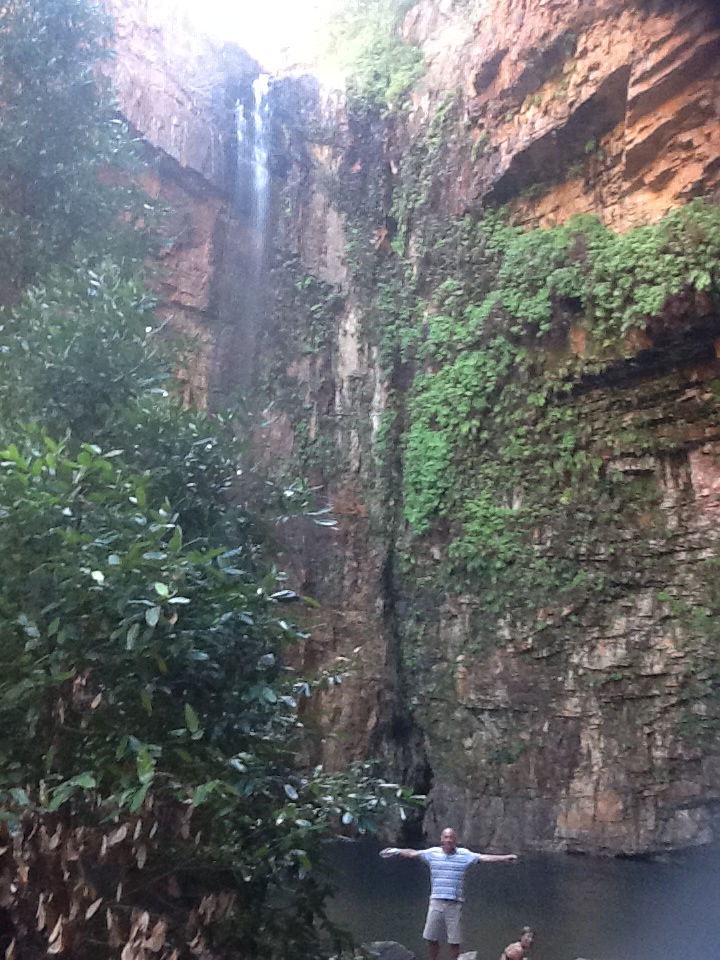
On Saturday our friends Kerry and Therese took us with them to El Questro. Over the years we have heard so much about the El Questro property and resort, seen stunning footage of this wilderness resort from helicopters on promotional TV programs and of course heard whispers of the per room rate. So this was a must on our agenda. Our first stop was the Emma Gorge Resort which is tucked away just a couple of kms off the Gibb River Road, on the El Questro property. What a stunner this spectacular gorge was. Following a 25 minute climb we came face to face with towering walls, plummeting waterfalls and a large waterhole that shimmered through shards of sunlight.

Emma Gorge

Emma Gorge

This was a delightful start to our day. From here we ventured further into the property and swam at the Zebedee Thermal  Springs which comprise lots of small pools surrounded by palm trees that create dappled light and excellent shelter from the heat of the day.

Our destination of El Questro caravan park and resort followed. After crossing several streams we arrived at the very well patronised caravan park. What a hive of activity this place was. Choppers flying in and out, a wedding breakfast being set up, campers in abundance. After a picnic lunch and conversation with locals to learn more we went to the Chamberlain Gorge and Jetty which is in a pretty spot….but with a beware of crocs sign, so no swimming here! This was the spot to get a view of the exclusive resort (we campers are not allowed at the resort!). Well, the consensus – disappointing. Of course we could only see the outside and some 300m away. When promoting the resort, which is on the top of a cliff overlooking the river, it has always looked like the escarpment is hundreds of metres high. Sadly its not! It might be 100 feet, but its not what we expected. That’s editing for you. With lots of disappointment we called it a day and headed home…..in reality we had a super day, with excellent company and one to truly remember.

Sunday we took a two hour scenic flight from Kununurra, across Lake Argyle, over cattle stations, down, around and over the magnificent Bungle Bungles that rise 300m from the desert, then over the Argyle Diamond Mine, home of the famous Argyle pink diamonds, along the Carr Boyd ranges (alongside Lake Argyle), over Kununurra and Hidden Valley, Ivanhoe Dam and the agricultural plateau and home again. How can 2 hours pass so quickly!

Looking out over Lake Argyle

Looking out over Lake Argyle

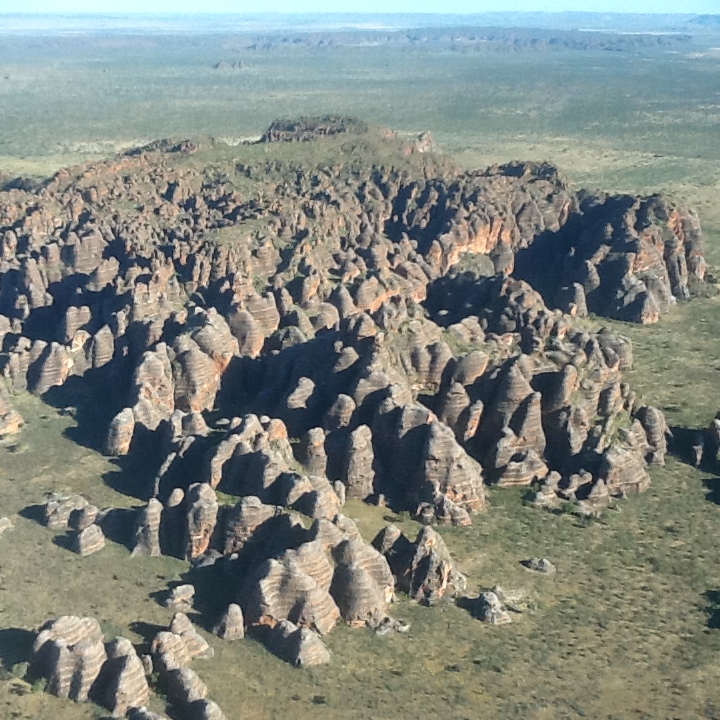
This is the only way to get a true perspective of the landscape. This region is truly quite stunning, with some of these ranges being amongst the oldest on the planet. The Bungle Bungles can only be described as inspiring and unforgettable. These orange and black striped domes have been formed over 350 million years. Truly amazing.

Looking down on the Bungle Bungles

Looking down on the Bungle Bungles

I will share more on these once we have visited on foot, and walked amongst the domes in a few days time. We were the only two passengers on our flight, so could ask lots of questions of our knowledgeable diminutive female Kiwi pilot, who has been in this region 5 months.

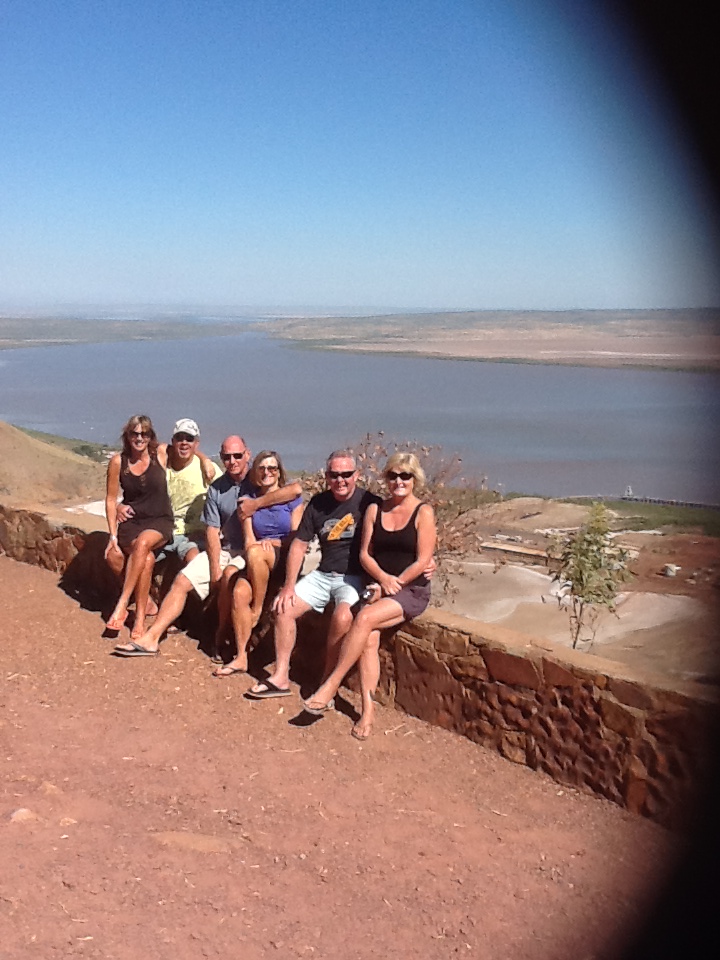
On Sunday we were both ‘choring’ when a large motorhome pulled up behind us, and it was our kiwi friends Rod and Dearne who have caught up to us again. So yesterday, Kerry and Therese took the four of us to Wyndham. We had been warned there wasn’t much to see, however we wanted to make a trip of it for the day. A 200km round trip, Wyndham is the last port northward before Darwin, servicing the huge cattle and mining industries of this region. The sights of interest for all of us included the 2000 year old Boab Tree in the local caravan park, which, if you do visit the little town is a must. It is quite something to dream and think of the experiences this tree must have had over time! There is a lookout 350m above sea level in the Bastion Range, overlooking the town and the five rivers of this region – the Ord, Forrest, King, Durak and Pentacost Rivers that all enter the Cambridge Gulf.

Six Kiwis atop the lookout in Wyndham

Six Kiwis atop the lookout in Wyndham

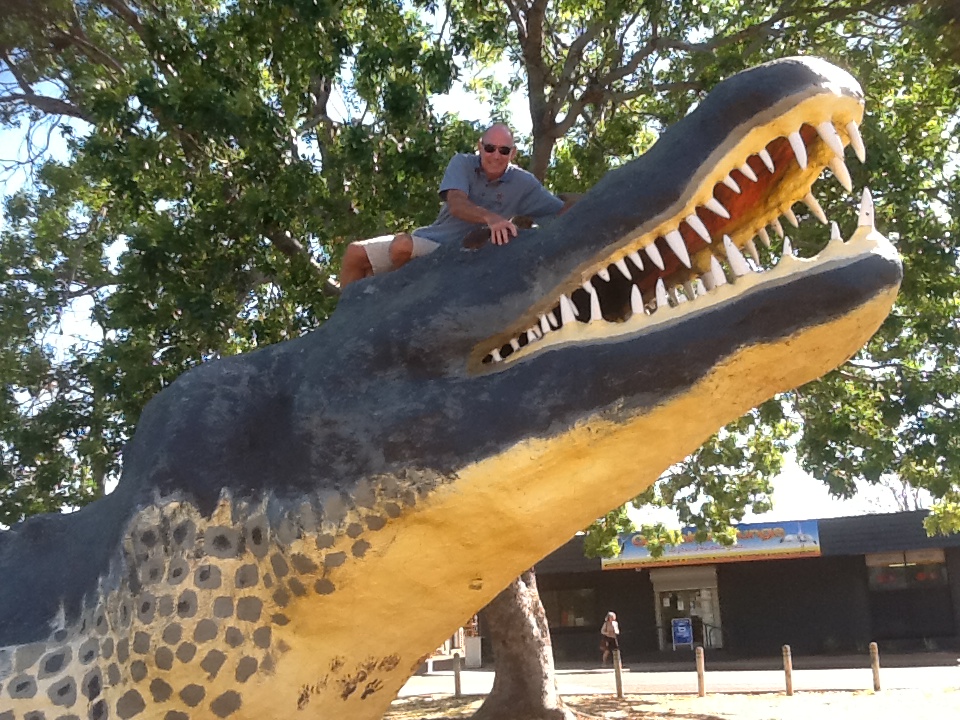
Because it is a working port and there is so much water in the river, it is muddy and unattractive at water level, hiding many saltwater crocs. Talking about crocs, there is a 20m concrete croc in town that is an attraction for many a photo!

Meet croc wrestler Steve

Meet croc wrestler Steve

Big kid Steve climbed aboard for a ride….We had a good look around, visiting historic sites and enjoyed lunch at the very busy local café in town before returning to Kununurra.

Tomorrow we head south to the Bungle Bungles, on our journey toward Broome.

From Northern Territory to Western Australia

When we left Katherine last Monday we had every intention of driving to Timber Creek and stopping there for the night. However because it was only 11am when we got there we made the decision to drive on to Lake Argyle. The drive from Katherine passes through more of Australia’s massive cattle stations, as well as beautiful national parks. We can now say that we have seen a cattle muster by chopper. 120kms south west of Katherine is the 422,550 acre Willeroo Station which is (unless recently sold) owned by the Sultan of Brunei, and is home to around 18,000 head of Brahman cattle. Those chopper pilots are amazing (or have a death wish), they fly so close to the ground during the muster. Another 75kms and we came into the Victoria River and Gregory National Park area. When driving 500+kms it makes such a difference to drive through magnificent scenery of escarpment ranges and strong flowing rivers. We really enjoyed this section of our trip. After refuelling at Timber Creek on we went, passing through the WA border crossing and on to Australia’s largest artificial lake by volume, Lake Argyle. With the time difference, we were set up and ready to investigate by 12.30pm.

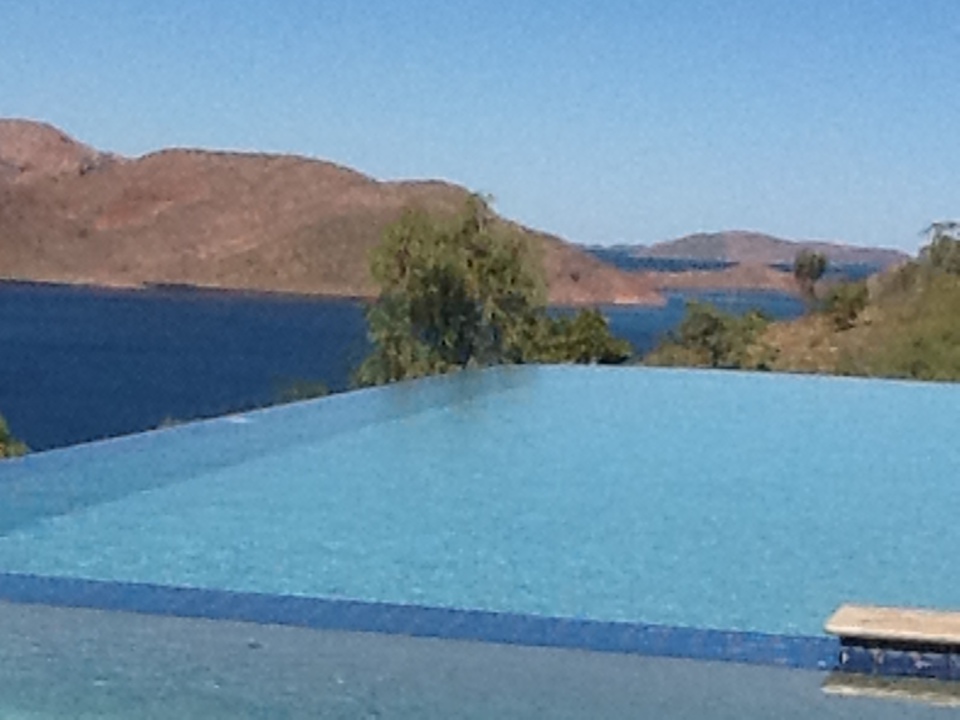
The camp ground at Lake Argyle sits up high on 5 acres overlooking the lake. Incredibly the view from the camp ground only takes in 1% of the Lake, and one of the best spots to enjoy that view is from the infinity pool sitting on the edge of the escarpment.

Looking onto Lake Argyle from the infinity pool

Looking onto Lake Argyle from the infinity pool

The Lake itself was formed in 1971 as part of the Ord River Irrigation Scheme. Millions of acres of farmland were flooded to hold a surface volume of 1,000 square kilometres in normal times. To put this in perspective it is 21 times the volume of Sydney Harbour (or 5.8 million megalitres) in the dry season and up to 88 times in the wet season.

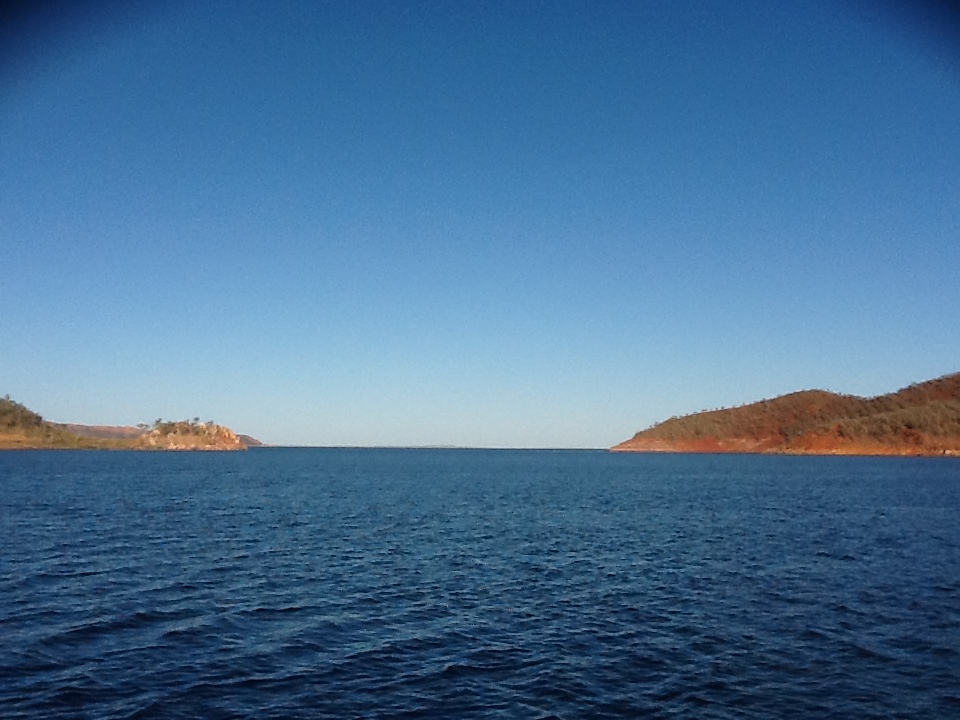
Looking across the Lake you simply cannot see land because of its size

Looking across the Lake you simply cannot see land because of its size

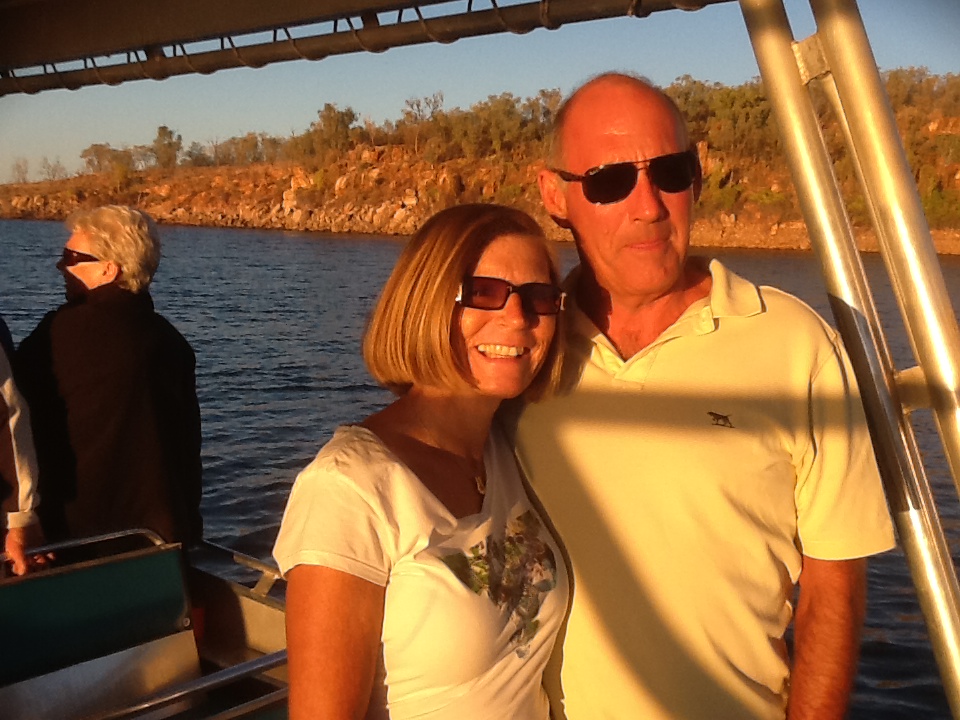
It makes for a beautiful vista, and the lake has become an important wetland area for bird life, as well as being the home to an estimated 35,000 fresh water crocodiles. Whilst at the lake we enjoyed a delightful sunset cruise that took us around various islands to see rock wallabies and kangaroos, feed various types of fish that inhabit the lake, see crocodiles basking in the sun, swim (fresh water crocodiles don’t find we humans at all appetising) and see the stunning colours of the evening sunset. At one stage when we couldn’t see land in the distance the skipper shared with us that the lake went another 35kms in one direction and 40 in the other.

Enjoying the sunset cruise

Enjoying the sunset cruise

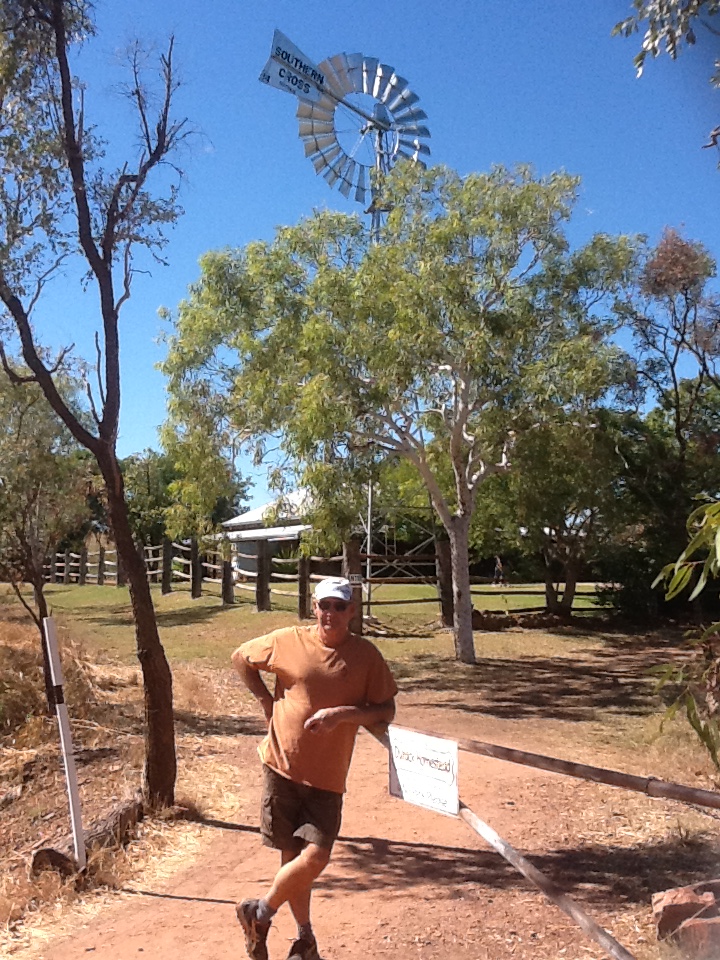
Because we stayed three nights at lake Argyle, we also went on all the different walks from the camp ground. The most interesting was across the range to the Durak family homestead. The Durak family, originally from Ireland were real pastoral pioneers of the west, having come to Australia, initially settled in Queensland and then, traveling overland for 2 years in 1882-83 with 5000 head of cattle they established Argyle Downs station. Over the next 50 years their property totalled 6000 square miles, and it was their farmland that was flooded to form Lake Argyle. The old homestead was preserved and relocated a short distance from the camp ground. The history behind this family is preserved and shared at the homestead.

The Durak family homestead

The Durak family homestead

After three days it was time to head to Kununurra, a snip of journey, just 75kms from the lake. We have been based at the Discovery Holiday Park for 6 days, both because there is a lot to see here, and, we are parked right at the end of the campground, 3 metres from the side of Lake Kununurra, enjoying a beautiful and peaceful outlook and surely someone has to smell the roses!

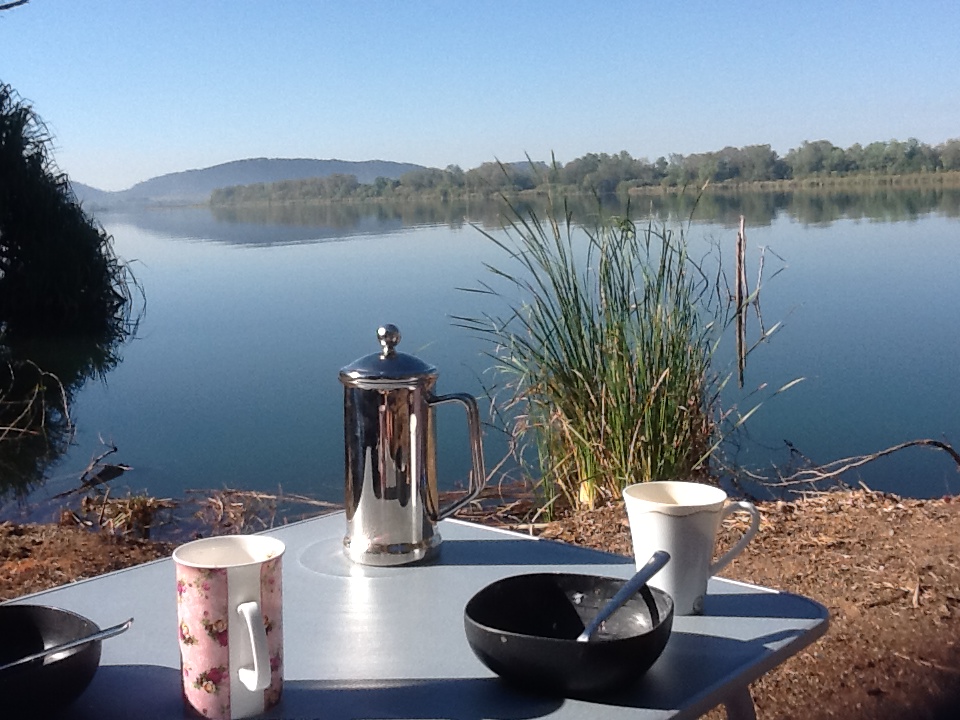
The view at 7.30am this morning from the breakfast table

The view at 7.30am this morning from the breakfast table