
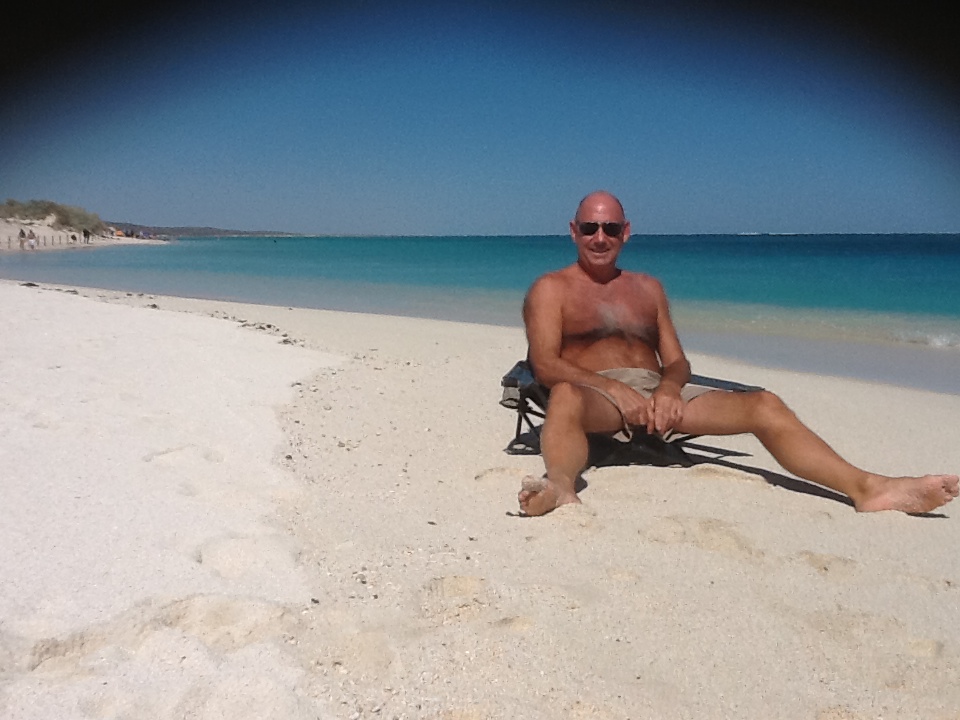
Our drive to Coral Bay was uneventful, other than we commented on the landscape over the 160kms and its similarities to the Yorkshire moors. It was rather surprising! We set up camp with the intention of staying 3 days. What a magical little part of the Western Australian Coastline this is! Coral Bay beach is very protected from any wind, and with the outer reef doing its job of holding back big seas, the whole wider bay, known as Maud Sanctuary Zone, is accessible for snorkelling, kayaking and swimming.
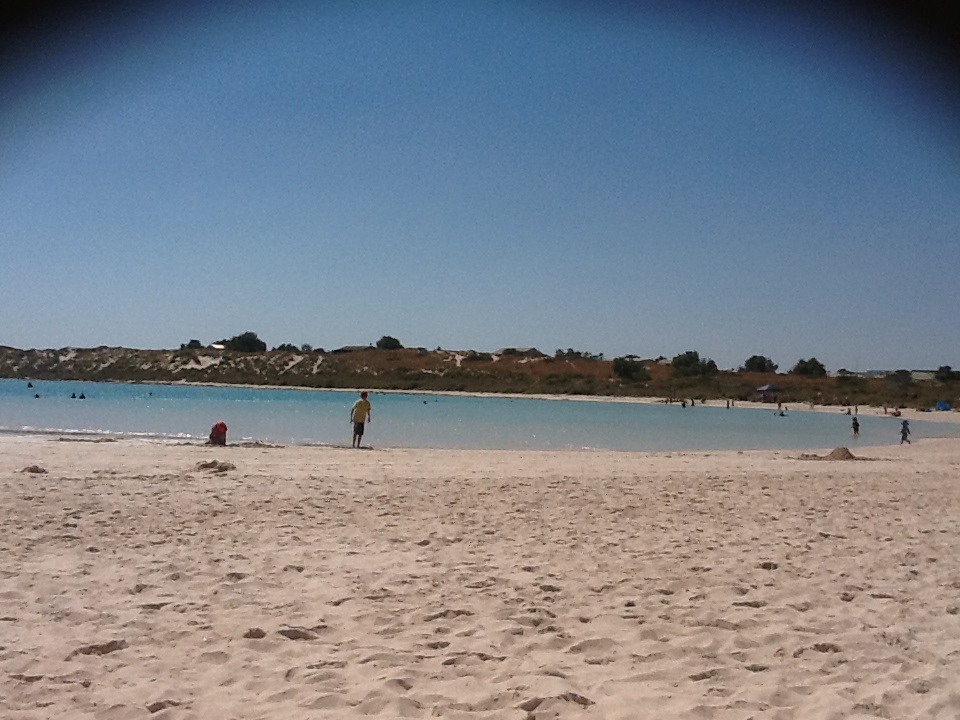
Looking across Coral Bay
The whole bay is full of coral and fish life, its a marine wonder- land. Walking straight off the beach and into snorkelling crystal clear water with around 250 species of coral and 500 species of fish is fabulous. Needless to say we spent a lot of time in the water, between swimming and snorkelling.
On our second day the weather was perfect – sunny skies (what’s new there!) and no wind – so we set off early, hired a double sea kayak, donned wetsuits, and along with our snorkel gear headed for the outer reef. We had come here for some serious stuff so we needed to take action. The kayak company has a number of moorings along the inside of the reef, so we were able to go to different spots to snorkel. Because it was so calm, the water was like glass and it was quite incredible paddling along looking down at amazing corals and all sorts of colourful fish. It was just like being in the water with them. Of course we ‘gracefully’ slid off the side of the kayak into the water to snorkel. The depth was between 3 and 8 or 9 metres, and wow, this was an excellent snorkel experience. Whilst the corals are not as colourful as some we have seen, the sizes and types of different corals was staggering, and again there was an abundance of colourful fish life from very tiny to sizeable. we had a great time. Climbing back on board was a bit clumsy, but hey, no one could see us! Off to the next spot! This was great fun. On our next snorkel we played chasey with a turtle, that lead us on a very complicated and intricate dance. From above it must have looked very comical as we went in all directions alongside this beautiful creature. After almost three hours we thought we had seen a lot, and although the water is relatively warm, its not tropical and we were a little cool despite the 30 degree air temperature. So we called it quits for the day, spending the afternoon at the beach swimming.
If you have a keen eye, here’s the afternoon’s entertainment – aerobatic planes
We certainly enjoyed snorkelling at Coral Bay, and being able to literally step into deep water (3m plus) from the shore, and fin out a short distance to an underwater garden is incredible.
Coral Bay is also known for its manta-ray population. It isn’t easy to get to see these majestic ballet dancers of the sea, and yes we scored a bulls eye! Three metres from the shoreline in the shallows, playing for an hour, how good is that. We sat above on a 4m cliff, watching a magical performance in 1 metre of water. One step better would have to have been in the water, but that wasn’t to be.
It was so nice here we stayed 5 days, changing parks after 2 days to the ‘best spot in town’, with water views and the beach straight over the road in front of us.
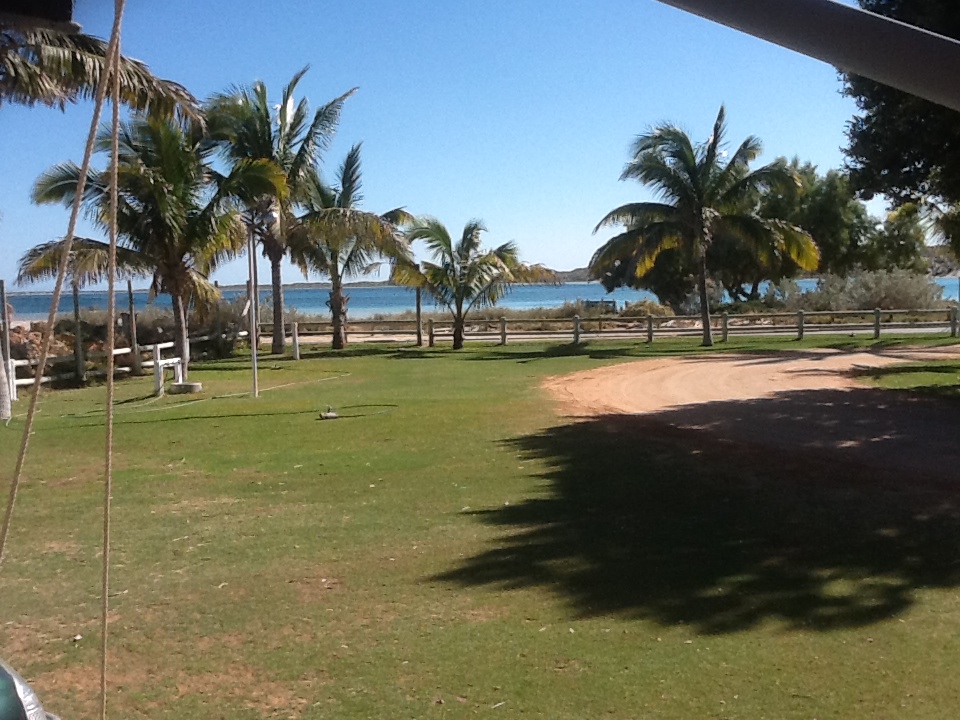
The views a bit hard to take!
We also enjoyed bike riding and beach walks between Coral Bay and the little boat harbour. And, we got to see the second Bledisloe Test, with the Kiwis whipping the Aussies 51 to 20. Steve was very happy, Jane not so happy….yes I am the renegade kiwi that supports the Wallabies.
From Coral Bay our next stop has been Carnarvon. Carnarvon is known for 2 key things – firstly it supplies 70% of WAs winter vegetable requirements, and secondly Carnarvon’s Earth Tracking Station was built in conjunction with NASA in 1966 as a satellite communications and tracking station,
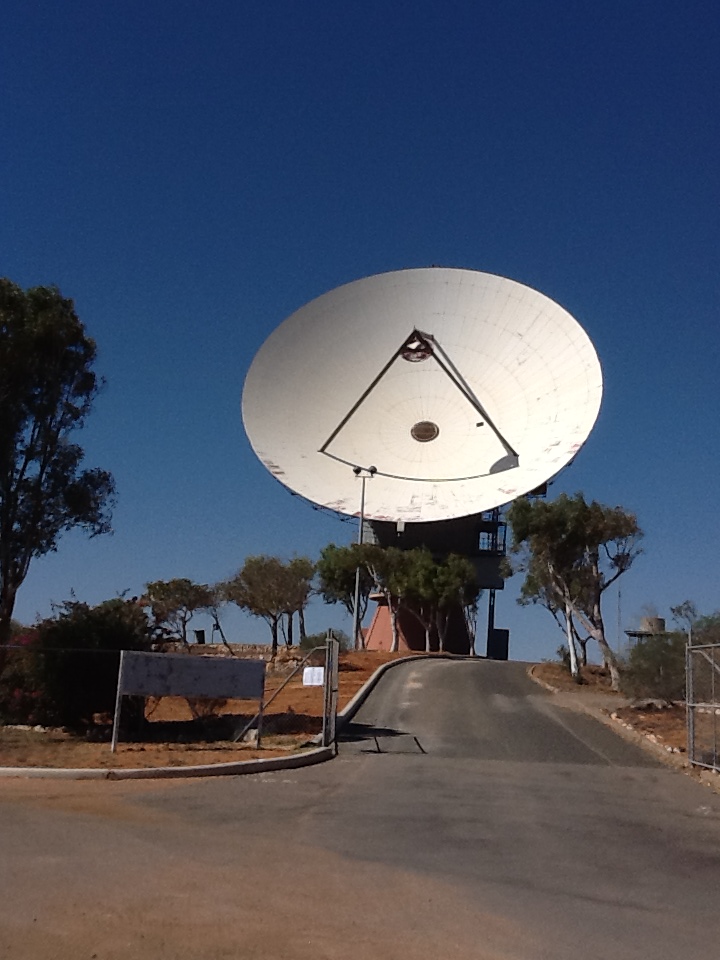
I’m a bit dated but I still stand tall – The OTC Dish
which was involved in the Apollo space missions – it was closed in 1987 after assisting in tracking Halley’s Comet.

Looking back along the jetty to land
Historically and of interest is the town’s one mile jetty built in 1897 to transport wool and livestock. It was used until 1966, and today it is largely original timbers that are progressively being preserved. There is a very active trawler fleet here, with a number of different fishing companies operating rather healthily. There does appear to be a very good sense of community, with a real mix of those involved in horticulture, those in fisheries, and those in local businesses supporting tourism and the townspeople. This is the only town (population 8,500) between Port Hedland and Geraldton, so when traveling its a pit stop for supplies and any maintenance work required.
Yesterday, taking a different approach I did the town tour by bike – so 26kms later, plus walking the jetty, I had seen everything that was of interest. Steve took the other option…..the car.
Today we spent the day at Quobba, 70kms by road, and north of here. Quobba is renowned in the area for its blowholes, its marine reserve and its waterfront camping, courtesy of Quobba station. When its a bit windy like today, swimming and snorkelling the marine reserve (inside a fringing reef) are sadly a no go.

The seas rushing into the bay….no swimming today
I was really disappointed we couldn’t get in the water, however the water displays made up for it. With 3 metre swells crashing into the small cliffs just north of the beach, the blow holes were performing and 20m plus water plumes billowing into the air and over the cliffs and rocks were quite spectacular to watch. We did get close but not too close because there are ‘king waves’ that appear from nowhere and envelop the rocks and everything in their path. Hopefully these couple of photos provide a sense of the scale and volume of water thrown into the air.
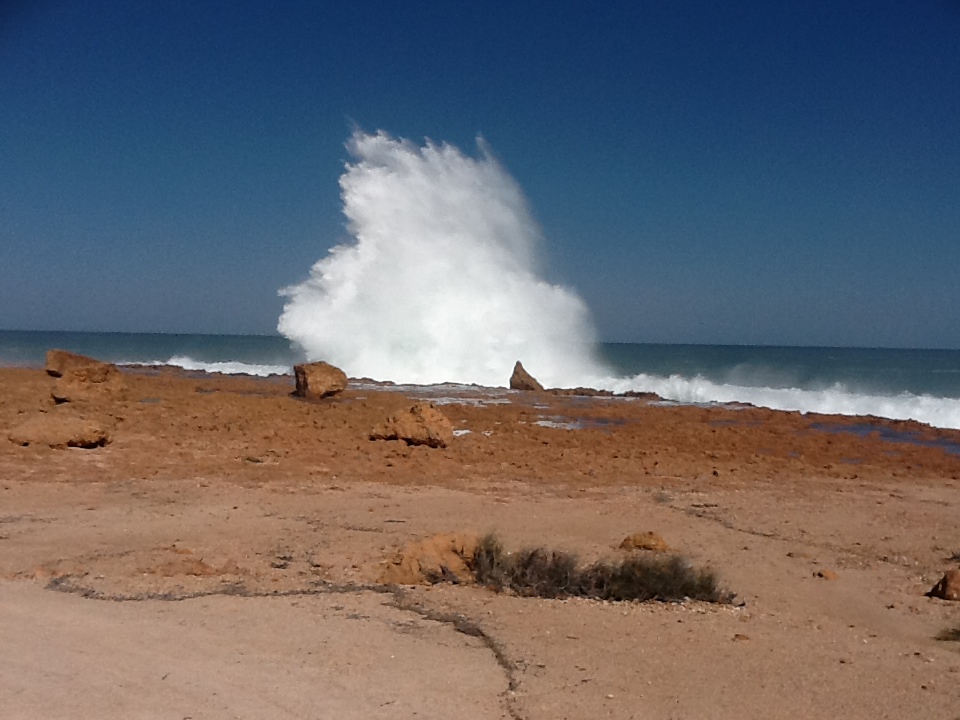
Crashing waves at Quobba
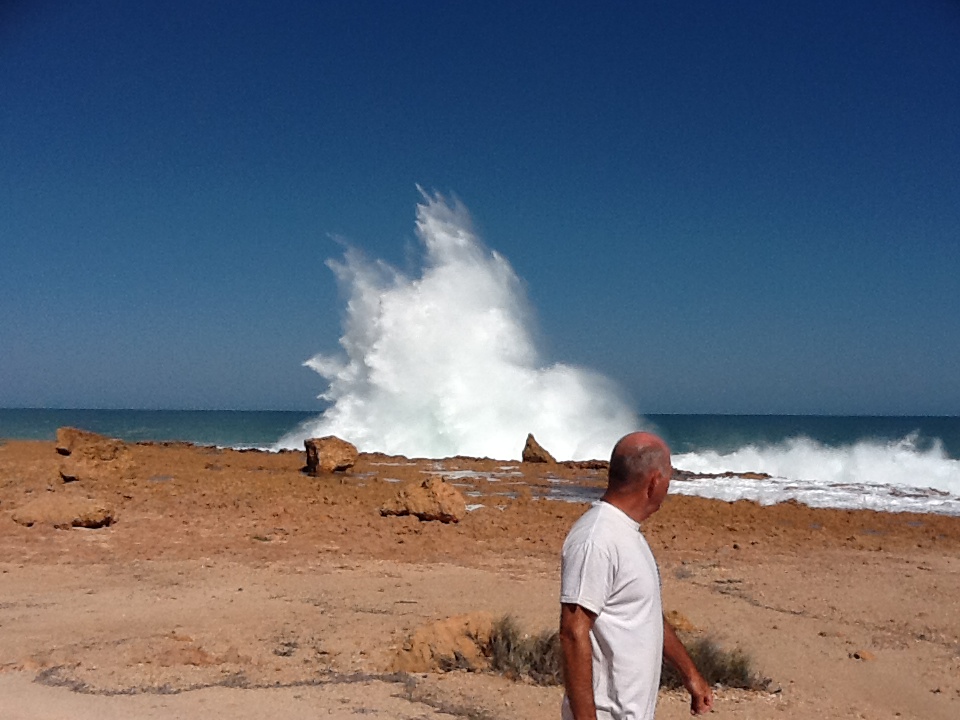
I wasn’t running away from this one – that came later!
Tomorrow we head south again, toward Denham, Shark Bay and Monkey Mia. We expect to spend a week or two in this area – we are getting closer to Perth and don’t want to get there too soon and leave behind the warm weather.





 Jane and Steve's Travels