From Margaret River to the delights of the Rainbow Coast

When I signed off on our previous blog, our wine and food tour was imminent. We were picked up from our country caravan park and whisked around the Margaret Region on a beautiful sunny day, to 3 excellent wineries to sample over 25 different wines, taste various venison products, cheeses, chocolates and sauces and dressings. The four of us had a super day. Now I’m not sure what conclusion you will draw – between the 4 of us we seem to have purchased more wine and food than the rest of the tour group combined (another 15 wine and food buffs). My excuse – we had no wine, and we enjoy fine foods. Sounds good doesn’t it. For those interested we visited wineries Watershed Wines, Fermoy Estate and Knotting Hill Estate.
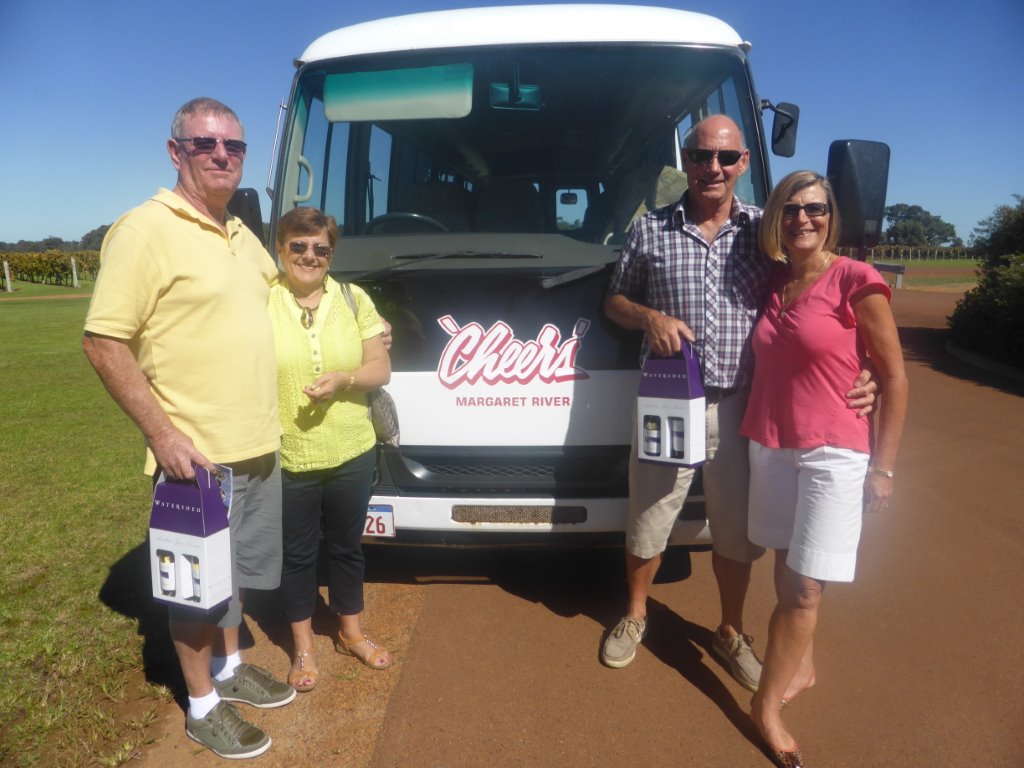
Chris and Marie, Steve and Jane after the first winery - the small packages change to dozens later in the day

Chris and Marie, Steve and Jane after the first winery – the small packages change to dozens later in the day

Of course before leaving we had another day of the world surf pro and were able to spend the morning watching the women’s final. World class surfers make the sport look so easy!

On Thursday we waved farewell to Chris and Marie and headed south along the Rainbow Coast, onto the Vasse Highway, through the town of Pemberton, to Walpole on the coast, and then through the windy road of the South Coast Highway, passing through large Karri Forests to the town of Denmark. Denmark is a small town of 2300, first properly settled in the late 1890s, and today is a wine subregion, with some 20 wineries. Other industry includes dairy and beef farming, orcharding and timber milling. 50km west of town, and 17kms from Walpole is the well known Valley of the Giants tall tree walk – a 600m walk 40m high through the canopy of the 400 year old tingle forest. When we passed through, sadly it was drizzly and visibility was very limited, so we elected not to partake in this spectacle.

Denmark sits in a natural and well protected shallow harbour. On the western side, where we based ourselves for 3 nights is the popular Ocean Beach, just exposed to the seas of the Southern Ocean. Its probably the best beach close to town, although a short distance to the west of town is Green Pool and William Bay, and the magnificent Elephant Rocks.

The Elephant Rocks....can you see the two big ones?

The Elephant Rocks….can you see the two big ones?

Naturally we enjoyed time walking the beach, marvelling at the white sands on the southern beaches. Along the way, the toffee factory was a compulsory stop, and further to the east, Willoughby Wines and Brewery, where we relaxed for an afternoon in the sun, listening to the musical talents of a young sibling trio from Perth. This is one of the delights of traveling around – we get to check out local events, markets, and local produce, and there are some great little spots. If you are passing through they make a very good gluten free pizza and produce some very good sauvignon blanc.
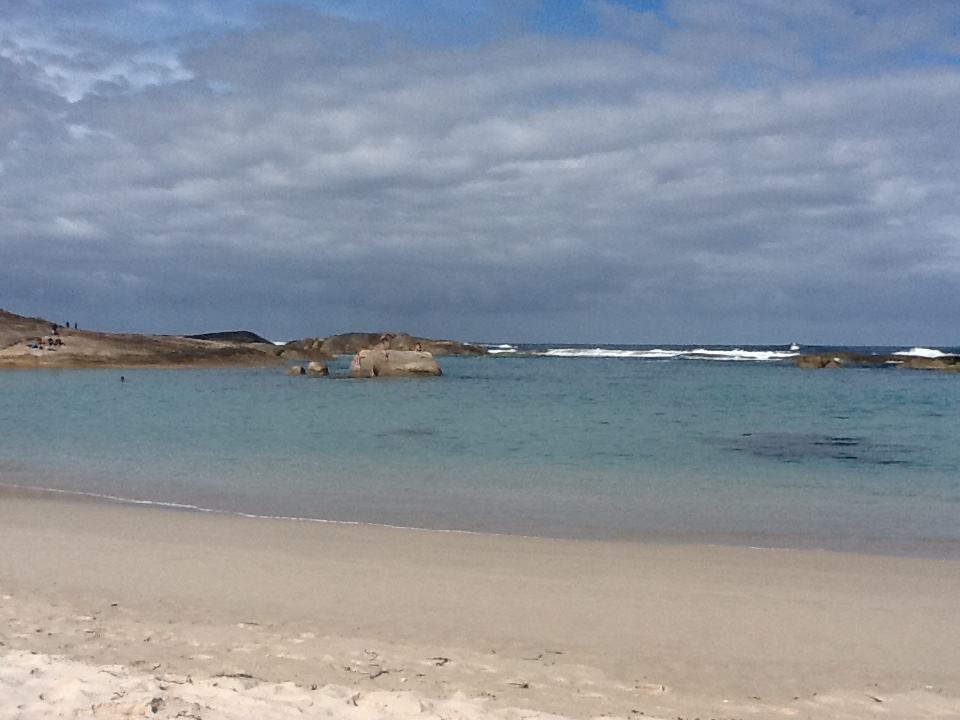
Green Pool, Denmark. A natural protected pool, rich with sealife

Green Pool, Denmark. A natural protected pool, rich with sealife

Originally we had planned to move on 55kms to the port city of Albany on Saturday. However as many would appreciate, Albany is of historical importance in Anzac history (Australian and NZ troops gathered here prior to departing for Egypt in 1914), and given this was the 100th anniversary, Saturday was a day of reflection and celebration for many from across the country who congregated in the town. So we changed plans and journeyed here on Sunday.

We hadn’t appreciated the size of Albany, which has a population of over 30,000. Albany is the oldest permanently settled town in WA, established in 1826, originally the only deep water port in the state. Its main industries are tourism, fishing, timber and agriculture. The city is positioned between Mounts Melville and Clarence, and is based on the northern side of the natural Princess Royal Harbour off King George Sound, which itself is partially protected by a small group of islands. And on the north east side of the sound is the second natural and very sheltered Oyster Harbour, popular with families and boaties.
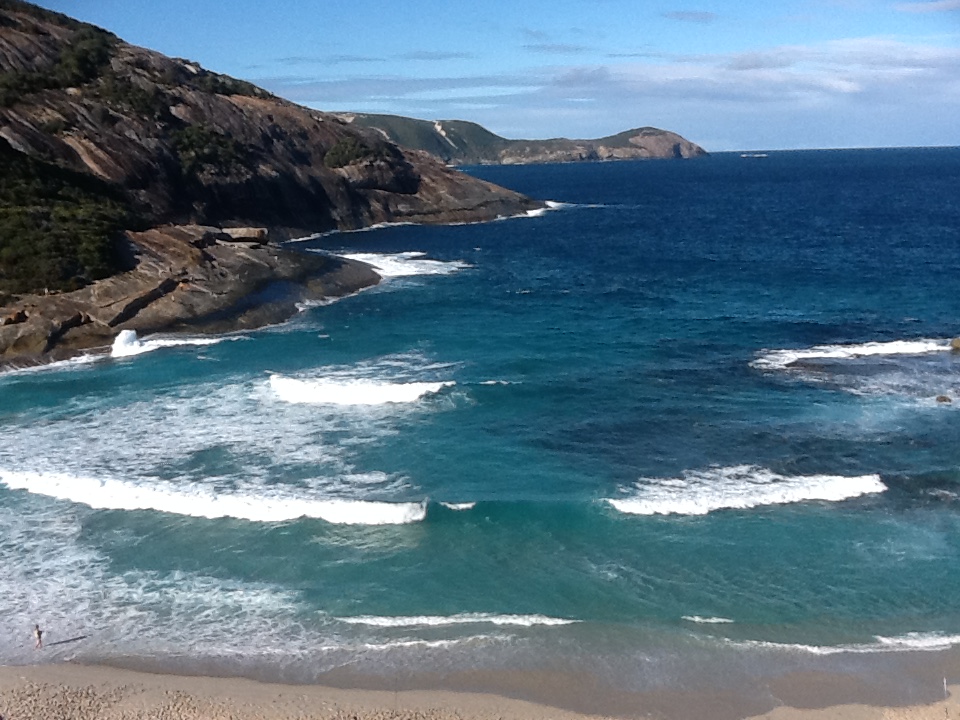
The Salmon Hole - see the fishermen on the rocks top left hand side

The Salmon Hole – see the fishermen on the rocks top left hand side

This is a really picturesque coastline with many beautiful and safe beaches…..however there is also a sad history with a number of wasted deaths due to fishermen/women being washed off the popular huge coastal smooth and slippery rocks by rogue waves. Just last week 2 men were drowned when washed off rocks at the beautiful Salmon Hole; and just yesterday an 18 year old girl slipped into the sea while fishing and drowned at Gulf Rock.

Albany has an excellent Whaling Museum at Discovery Bay, on the site of the old Cheynes Beach Whaling Company, which was Australia’s last operating whaling company, closing in the late 1970s. There are a number of exhibits, including the restored whaling ship Cheynes 1V.
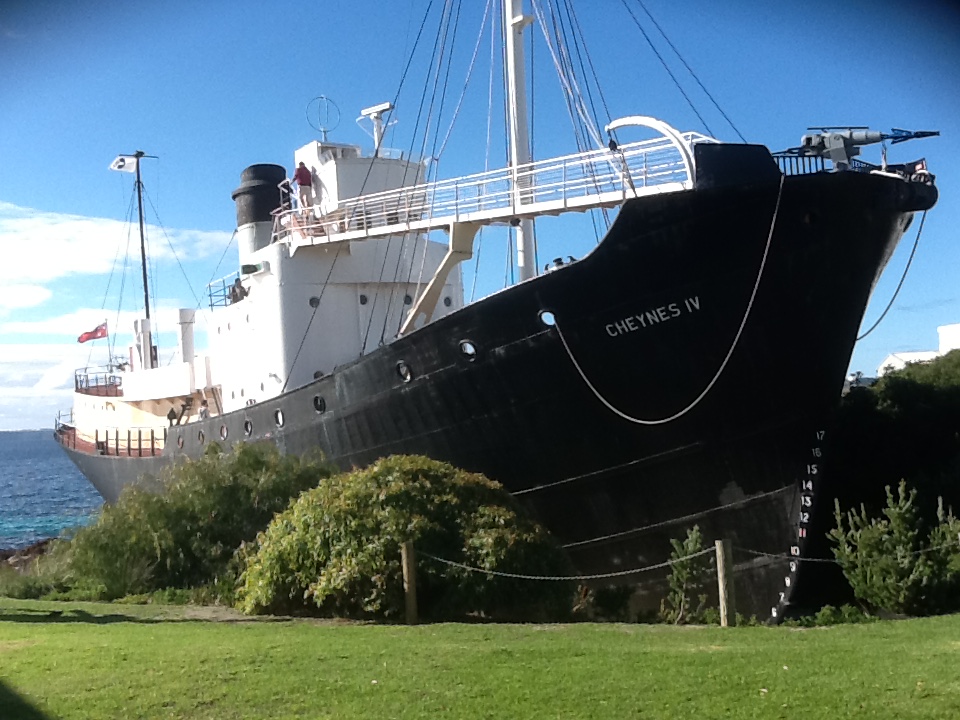
The Cheynes IV

The Cheynes IV

On the seaward side of the Bay are the attractions the Salmon Hole – where we celebrated a 4 salmon catch off the beach; the Gap (currently closed so we weren’t able to explore here); and the Blowhole, which wasn’t fully performing as we would have liked – though the roar and huge rush of wind was enough to send a shiver up your spine.
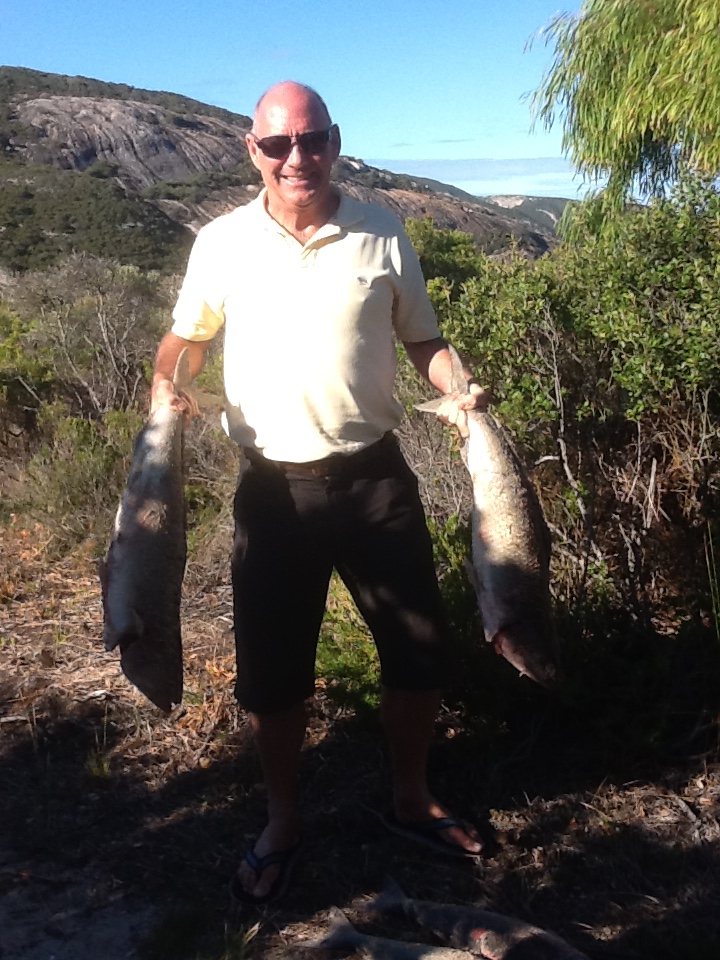
Oh what a catch!

Oh what a catch!

Today we walked the very picturesque Middleton Beach, a town surf beach, around the mouth of Oyster Harbour, and along the wild and natural coastal Nanarup Beach. The weather is a balmy 24 degrees with cool nights, so super weather for walking and lots of exercise. And to round up the day – a bike ride. Albany has excellent cycle tracks throughout the town and beachfronts.
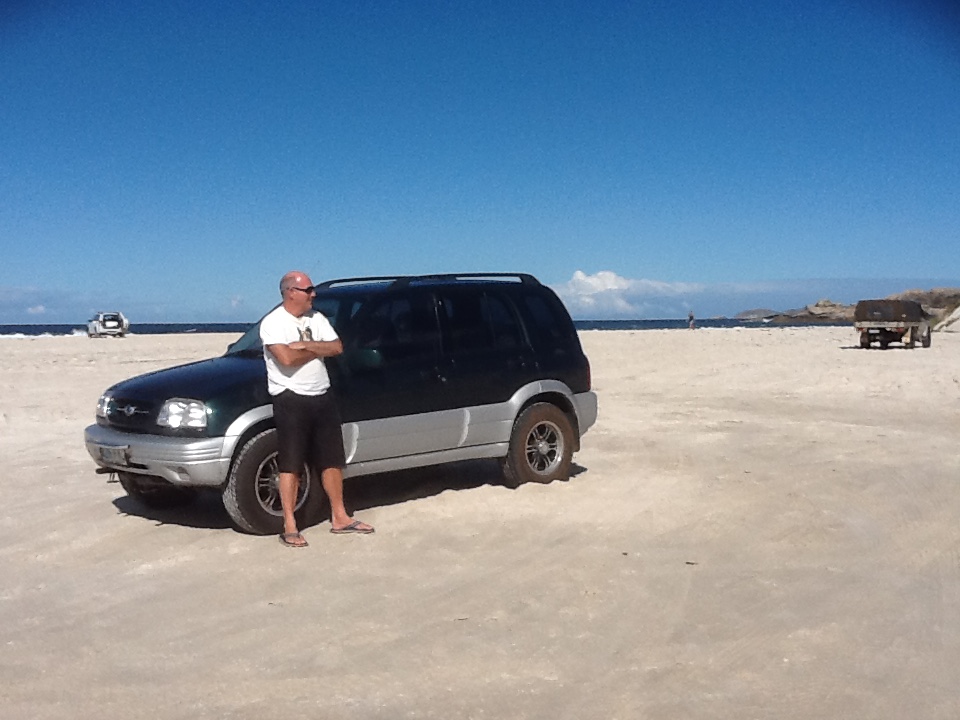
The beautiful white sands of Nanarup

The beautiful white sands of Nanarup

Following another day of exploring tomorrow we will continue east toward Esperance.


What a week, enjoying the delights of the Margaret River Region

The Broader Margaret River Region encompasses Busselton, Dunsborough, and from Cape Naturaliste, to Cape Leeuwin, Australia’s most south westerly point. And of course, the town Margaret River is in its midst. Our first three days were based at a quiet caravan park between Busselton and Dunsborough. Busselton is a coastal town of some 20,000 inhabitants, and unlike many regional towns, it has experienced considerable growth in recent years because of its proximity to Perth (220kms south), and of course the beautiful playground of white sandy beaches of the wider Geographe Bay and the Leeuwin Naturaliste National Park. In recent years a major canal development and new marina have both drawn new residents to the area.

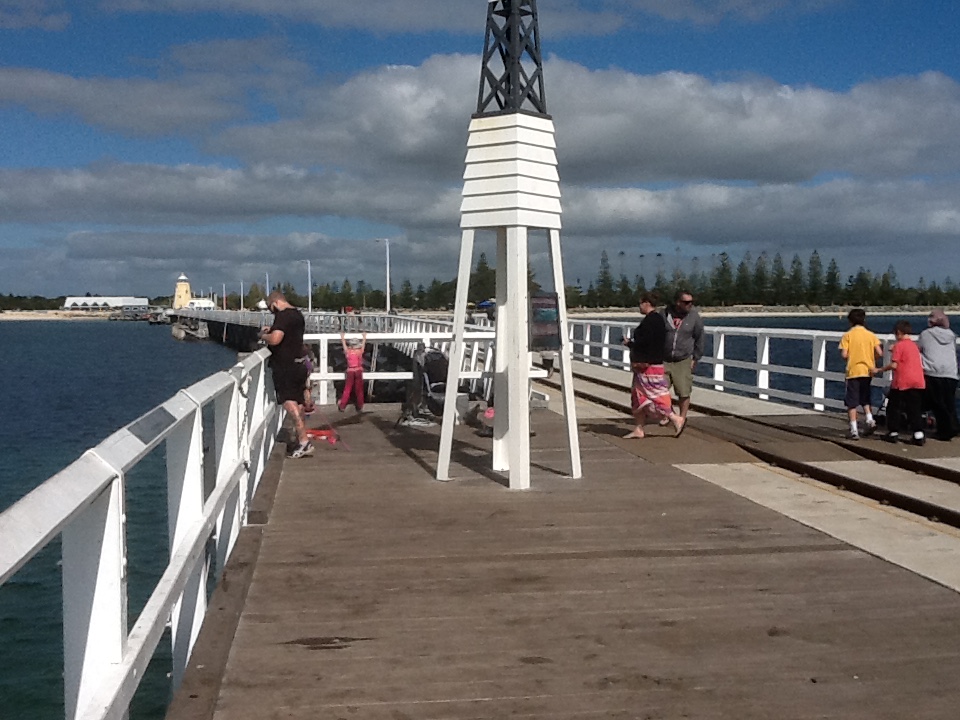
There are many places of interest in Busselton including historic buildings from early settlement days in the mid 1800s, however it was the historic jetty that held most appeal for us and naturally we had to walk it.

Busselton to Margaret River and Cape Leeuwin 024This jetty is apparently the longest wooden jetty in the southern hemisphere, stretching some 1.81kms out to sea. Construction began in 1853 and continued through to the 1960s, just before it was closed to shipping in 1972. There’s an underwater observatory and interpretive centre at the end which many enjoy.

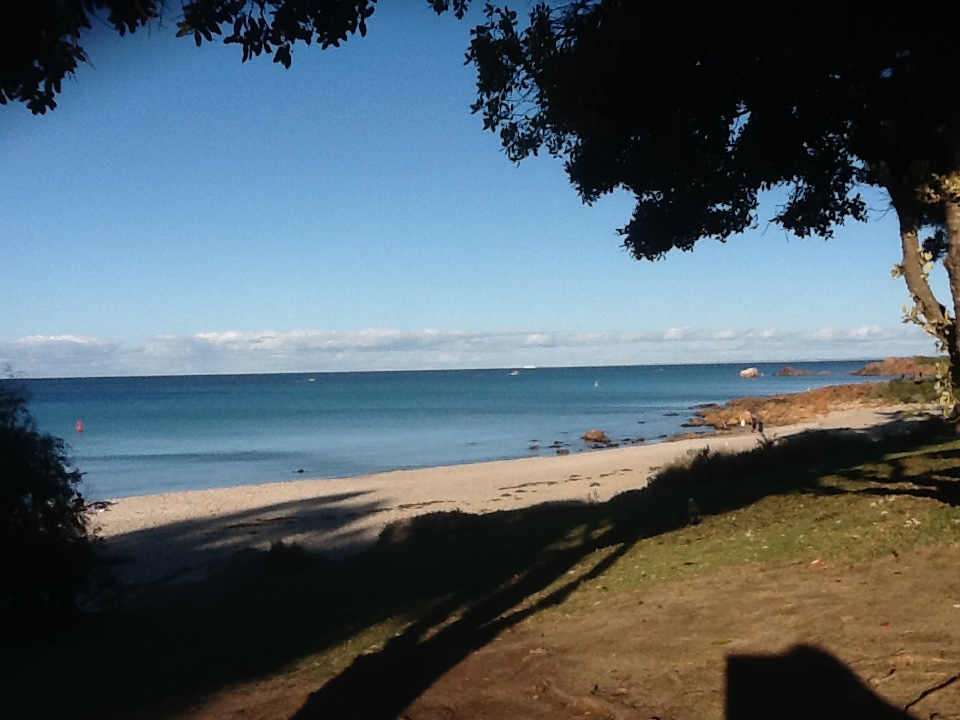
Having spent time exploring Busselton, we ventured a little further afield to Dunsborough, further along Geographe Bay. We’ve decided that Dunsbrough must be the playground for Perth’s wealthy – beautifully designed and built homes grace the waterfront, and the ‘village’ comprises many boutique shops and cafes. It is an area of historical significance to the local aborigines, with artefacts dating back 12,000 years and was first settled by Europeans in the 1830s. It is definitely a very liveable little town with so much of interest on its doorstep. Cape Naturaliste is just 13kms away, at the western edge of Geographe Bay, with many picturesque and well patronised bays and beaches along the coastline.

Oh this is hard to take!

Oh this is hard to take!

We visited the historic lighthouse at the Cape, built in the early 1900s, operating until 1966 when the lighthouse keeper was replaced by fully automatic operation. However, the highlight for us in the local area and just a short distance down the west coast and near the little town of Yallingup is Ngilgi Cave, which was discovered in 1899. We’ve always been a little sceptical of the hype surrounding tourist locations however this cave doesn’t fit into this category.

Ngilgi is named after a good aboriginal spirit that triumphed over bad, and is just one of over 150 limestone caves in this region – and there are probably many more yet to be discovered. What really took our fancy is that in the early 1900s, tours were run for visitors from afar, men dressed in 3 piece suits and women in long dresses and bustles, and just imagine it, the tour took ten hours! Today it takes an hour, climbing down walkways and stairways that offer fabulous views of 11 stories of magnificent stalactites, stalagmites, shawls, pendulites, helictites, and straw stalactites.

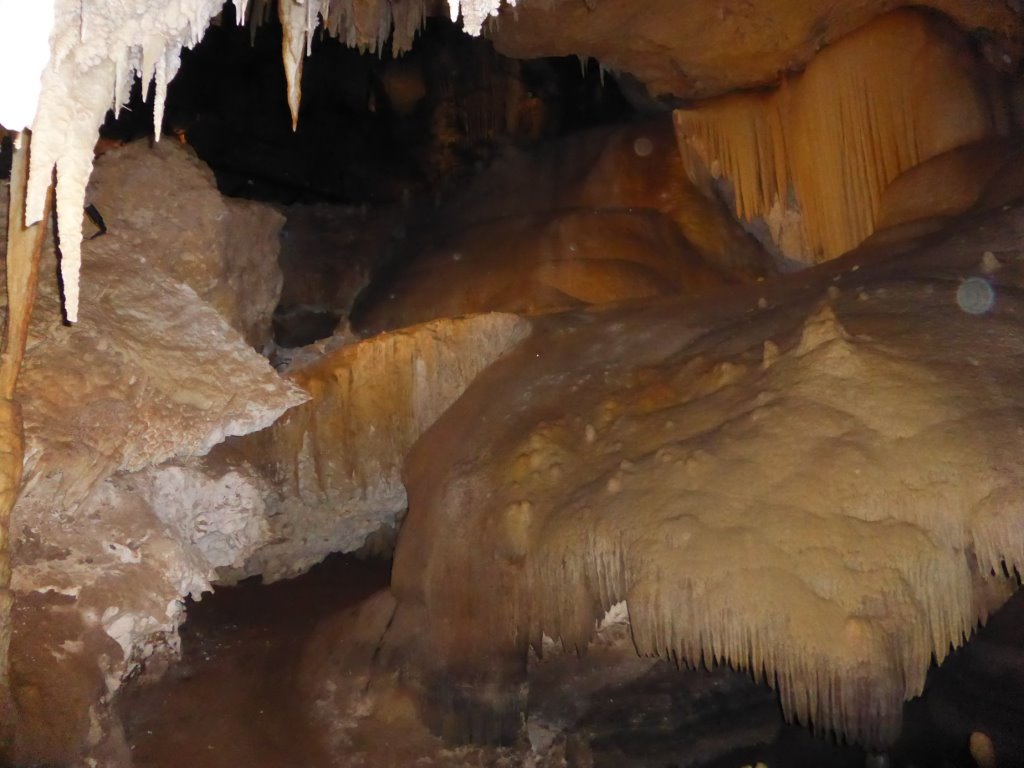
Ngilgi Cave  - its very hard to take photos

Ngilgi Cave – its very hard to take photos

Our guide was fantastic, explaining the geographic significance and history of the region and the cave, formed by the flow of water through limestone that is 1.5 million years old. We would highly recommend a visit if you are in the region.

On Thursday we headed south a huge 45kms to Margaret River. We’re staying just out of town at a very peaceful caravan park on a 600 acre farm. And to those of us who enjoy a glass of red (or white), you would know that Margaret River is famous for its wonderful wines with over 170 wineries and boutique/entrepreneurial local businesses. What you may not know is that it is also famous for its surf breaks – some of the world’s best. And lucky us, we are here during the Margaret River Surf Pro, with the top surfers in the world, surfing huge 15 to 20 foot glassy waves. And how do we know – because we have been there, enjoying the spectacle.

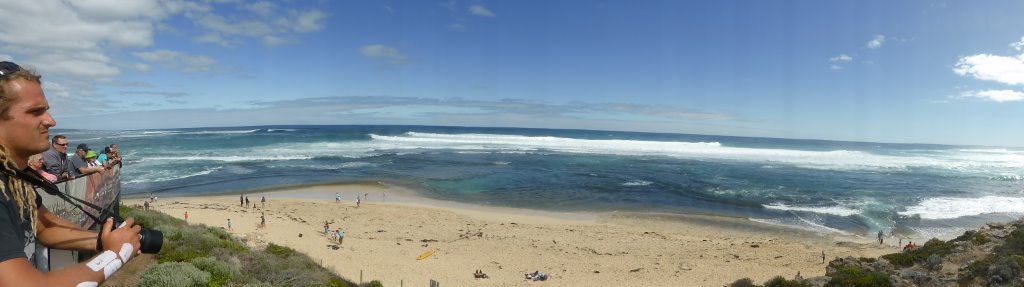
Margaret River Surf Break

Margaret River Surf Break

Of course, we have also enjoyed many of the local attractions – a number of wineries have been visited, and wines sampled, along with stops at galleries, cafes, gardens and other places of local significance.

The drive to Cape Leeuwin along Caves Road is very picturesque, through tall Kari forests, wineries and dairy farms. On the way to Cape Leeuwin we visited Hamelin Bay, famous for its black stingrays that come in close to the shore to feed, and Jewel Cave a little further down the coast. Okay, if we had to score between the caves, Jewel Cave would just come out on top. The cave is 42m deep and 1.9km long and is the biggest in the region, and it’s simply stunning, the stalactites and straws have to be seen to be believed – the third largest straw in the world is here. Of further significance are the 5 preserved Tasmanian Tigers that have been found in the cave. Jewel Cave gets the big tick from us.

On to Cape Leeuwin and the Cape Lighthouse, just south of the little town of Augusta. This is where the cold currents of the Southern Ocean meet the warm currents of the Indian Ocean. It’s easy to imagine how bleak this would be in the cold of winter – with its many rocks and reefs, and cold winds, it would have been a lonely existence managing the lighthouse, and even worse for any ships that weren’t on top of their navigational instruments. Built from blocks of sandstone in 1895 and standing 39m tall its certainly very visible.

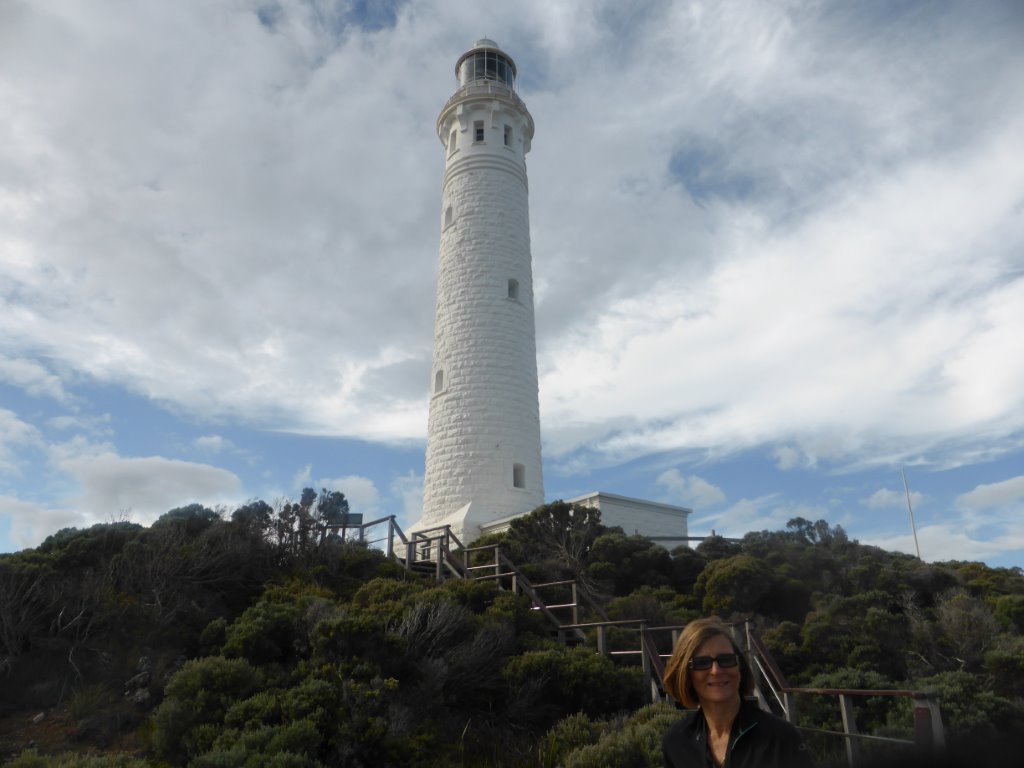
Cape Leeuwin Lighthouse with Jane posing on the front right

Cape Leeuwin Lighthouse with Jane posing on the front right

As well as having navigational importance, its also a major automated weather station, although of course it was originally manned by the lighthouse keeper.

On our third day here, we were joined by Chris and Marie Jones who are on their way north. Chris is the brother of our very good friend Bob in NZ, so we have and will spend time with them over the next few days – and of course the obligatory wine tour will be a highlight. Having a driver will mean everyone can enjoy the day. We’ll stay here until Thursday, enjoying the superb weather and great company before heading in the direction of Albany.

Back on the road, April 2015

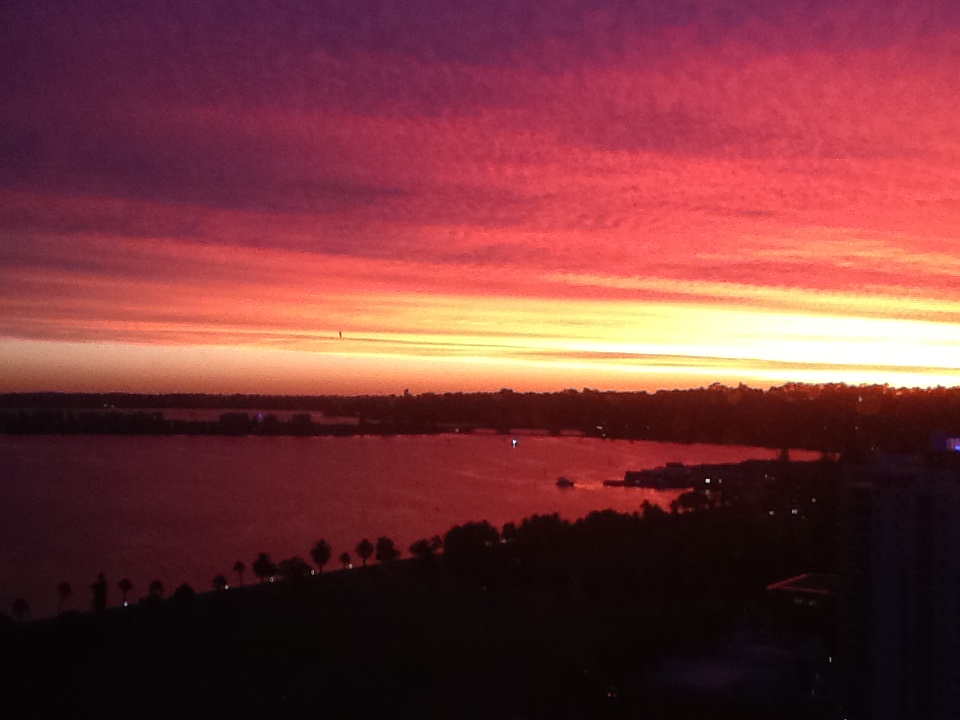
Having enjoyed six months in New Zealand, relaxing on beautiful Waiheke Island and tripping around the North Island to visit family and friends, we are now back in Australia, setting off on our last leg of our ‘circumnavigation’. Easter Saturday, April 4 we flew back to Perth, enjoying the city’s hospitality for the evening. We knew we were back in the west – just look at this amazing sunset! NZ and first week of Aussie travels 2015 205After a morning city walk we embarked on our ride, in our delightful storage host’s vintage truck (Jane sitting on the engine casing in the middle of the front seat) back to Northam where both Winnebago and Suzuki have been safely housed. Thankfully (and much to Steve’s relief) both fired up with the first turn of the key, and off we set…..down the road to a quiet spot to get everything shipshape, do the big shop and be ready to hit the road first thing on Easter Monday.

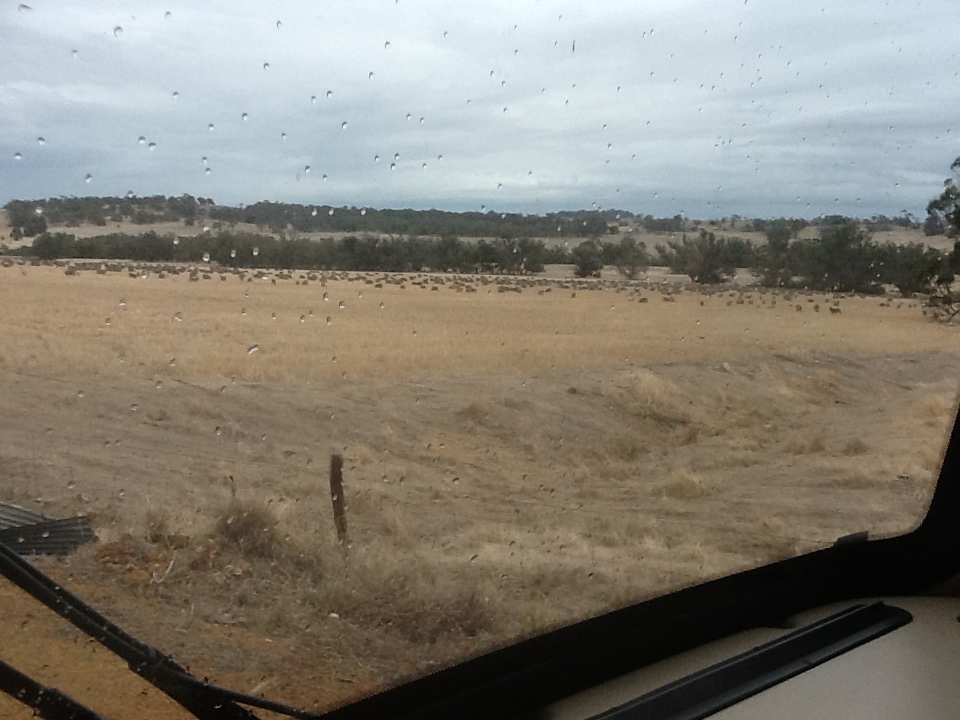
What had struck us both as soon as we left metropolitan Perth on Sunday, and through our 230km drive on Monday was just how dry the countryside is. What a contrast to the green of NZ (despite four months of stunning summer weather). When we were in the Avon Valley in September it was green, with flourishing crops of grain and grasses for hay. Today the grass is white, sheep are almost grey and most noticeably, there is a total absence of wildlife, including road kill.

Dry WA countryside

Dry WA countryside

Our first day went very smoothly, and amazingly there was almost no traffic on the road which delighted Steve.

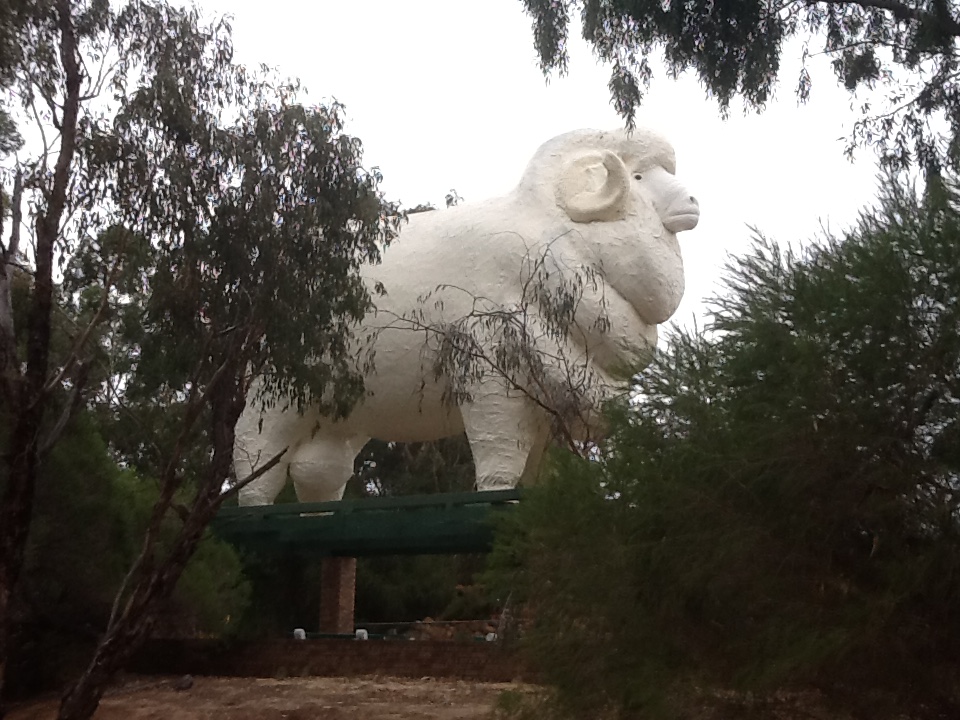
Our plan was to head south and then make our way west, back to the coast to Bunbury, which is some 175km south of Perth. Our first stop was Wagin, a small somewhat sleepy agricultural town of around 1500 people, some 225km south-east of Perth. We stayed the night in the local showground, which is very central and quiet. Wagin’s main industries are wheat, hay production and sheep. And just to make sure you understand what Wagin’s industry really is, there is a rather large giant ram (13x9x6m) in the middle of town that you literally have to fall over.

The Giant Ram in Wagin

The Giant Ram in Wagin

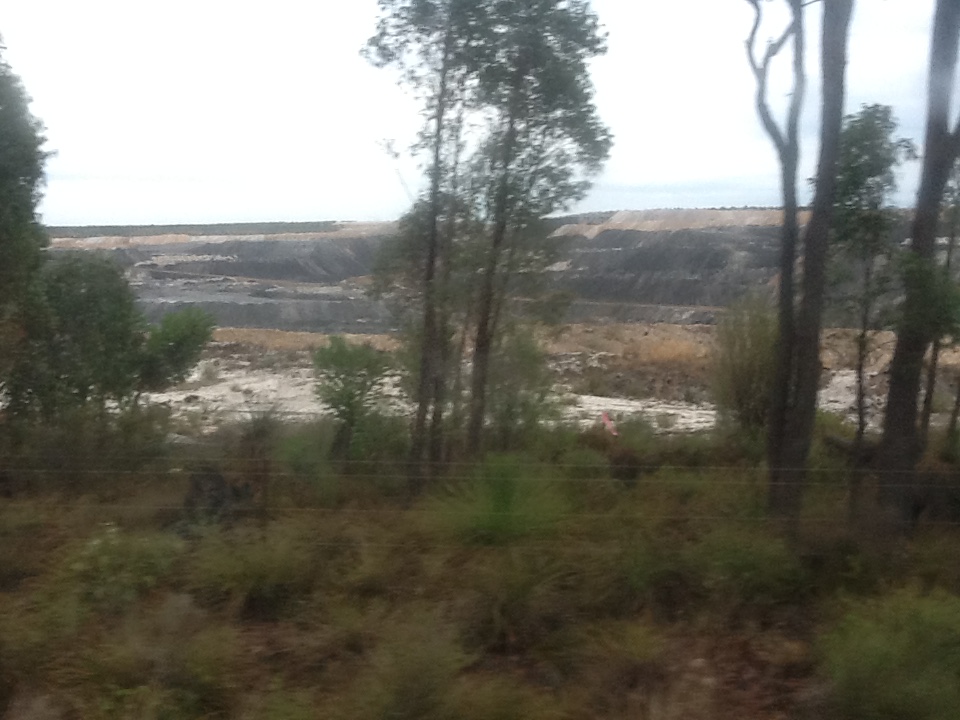
From Wagin we headed west in somewhat inclement weather, to the coal mining town of Collie, which is 59kms inland from Bunbury. In winter and spring this would be quite a beautiful area to visit. Wellington Dam is an excellent boating and camping spot, as are Stockton Lake and Mungallup Dam, all very close to the township which is located on the junction of the Collie and Harris Rivers, in the midst of WAs only coal fields,

Looking out the window at significant open cut Collie coal mines

Looking out the window at significant open cut Collie coal mines

which were discovered in the early 1880s. Many of the 7000 local folk are employed at the mines and local electricity plants. Despite the weather we ventured out for the afternoon, exploring the local sites.

The weather cleared on Wednesday for the quick drive to the coastal town of Bunbury. As we got closer to the coast, the vegetation changed to more Aussie bush, and a green tinge in the land before changing to more lush green fields near the coast. We decided to base ourselves here for five nights as the annual Bunbury Show was on in the weekend, and this trip is all about experiencing and learning about what Australia has to offer.

Unfortunately we have had a tail end of a cyclone sitting across the southern half of the state for days, and so our time here has been somewhat frustrated with the wet, but we haven’t let that stop us getting out and about. The port city of Bunbury is the 3rd largest city in WA (population 68,000) and was initially a military post in the early to mid 1800s. As you would expect, all services you would experience in major cities are based here. The port services mining, timber and farming. There are beautiful beaches all the way along the coast

Bunbury's coastline on a grey day

Bunbury’s coastline on a grey day

and its easy to imagine what this place is like in the height of summer. There is a look out tower in Marlston Hill, very close to the central retail district. The views from here are vast, providing a panoramic 360 degree spectacle.

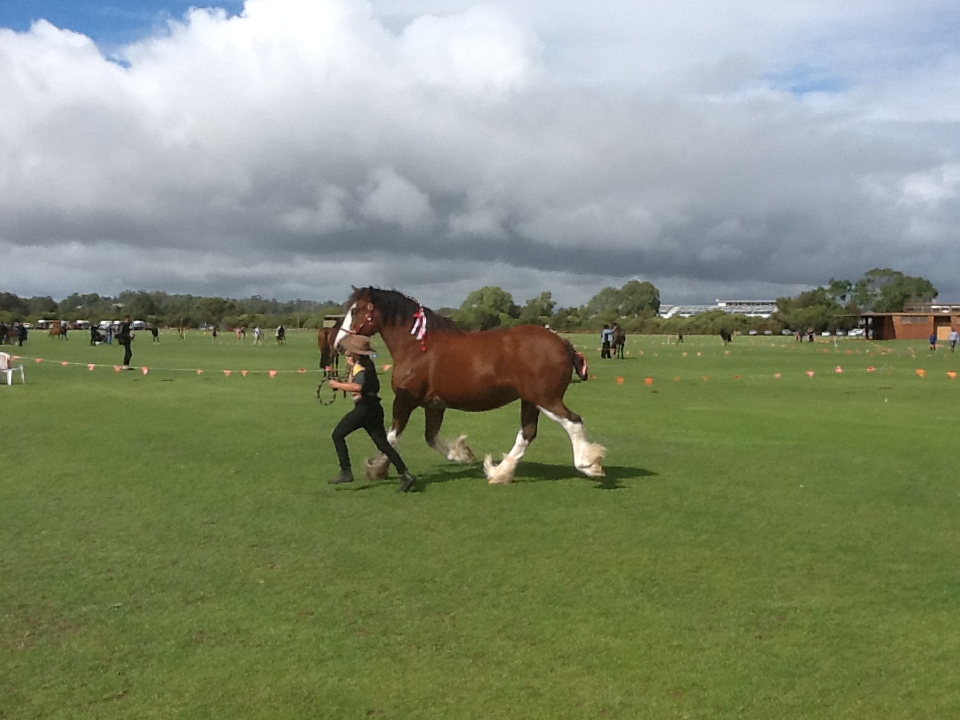
On Saturday we joined many locals at the Bunbury Show, which is really an equestrian eventing show that has grown to include artisan stands, rides and games for kiddies, agricultural events and machinery and of course various food stalls to feed the hungry. I have to say, we really enjoyed ourselves, particularly watching dressage and show jumping. Our favourites – the draught horses dressage.

The winning draught horse

The winning draught horse

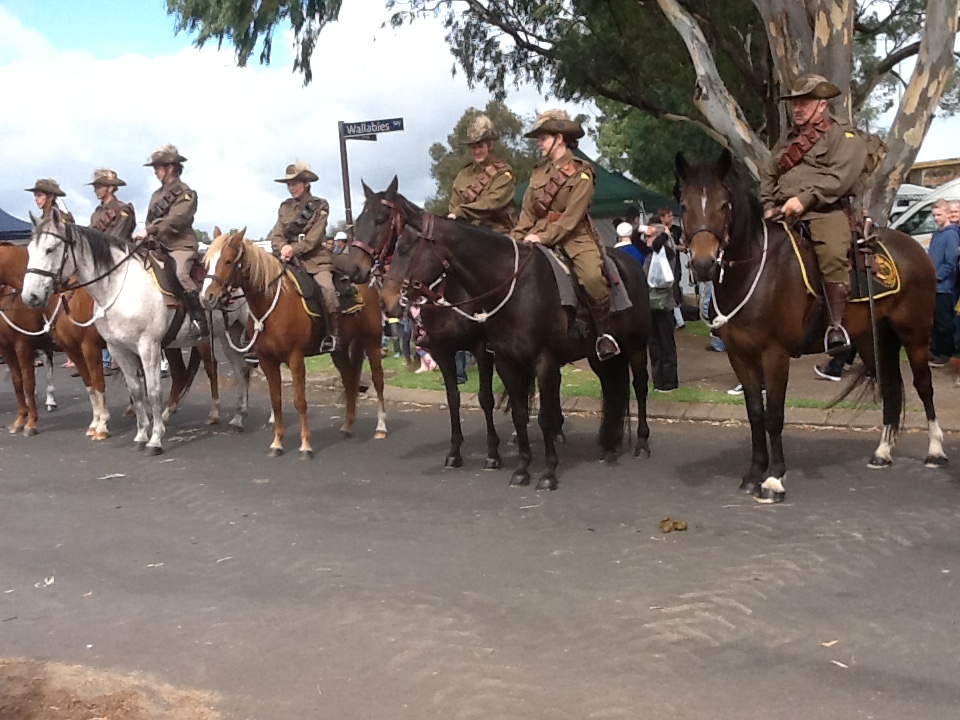
These are really powerful beautiful specimens and do their owners look after them! Pampered and groomed so that their coats are soft and gleaming. Quite stunning. It was great to see so many people supporting the towns major annual show and celebrating the country. A highlight was the re-enactment of the 7th lighthorse regiment, a tribute to world war one veterans and the importance of Anzac Day.

The Light horsemen re-enactment

The Light horsemen re-enactment

Today has been one of those days….showers (yes the cyclone aftermath is hanging) have meant we can’t enjoy a long walk or a bike ride, so its been designated a chore day before we set off south tomorrow to enjoy the delights of Busselton, Geographe Bay, the Leeuwin-Naturaliste National Park and Dunsborough.