
The Broader Margaret River Region encompasses Busselton, Dunsborough, and from Cape Naturaliste, to Cape Leeuwin, Australia’s most south westerly point. And of course, the town Margaret River is in its midst. Our first three days were based at a quiet caravan park between Busselton and Dunsborough. Busselton is a coastal town of some 20,000 inhabitants, and unlike many regional towns, it has experienced considerable growth in recent years because of its proximity to Perth (220kms south), and of course the beautiful playground of white sandy beaches of the wider Geographe Bay and the Leeuwin Naturaliste National Park. In recent years a major canal development and new marina have both drawn new residents to the area.
There are many places of interest in Busselton including historic buildings from early settlement days in the mid 1800s, however it was the historic jetty that held most appeal for us and naturally we had to walk it.
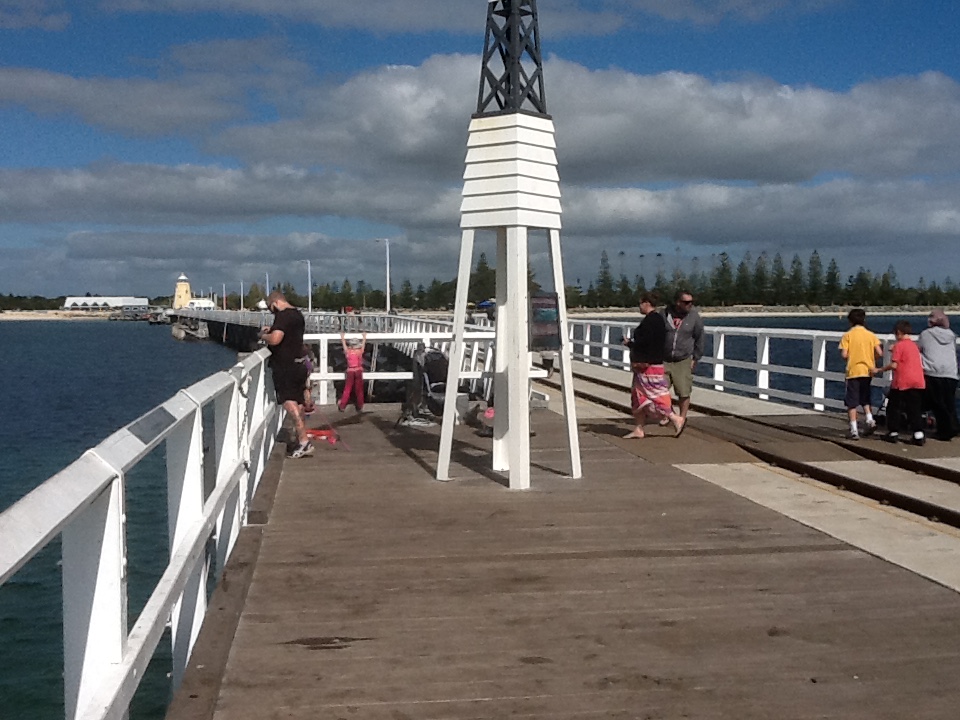 This jetty is apparently the longest wooden jetty in the southern hemisphere, stretching some 1.81kms out to sea. Construction began in 1853 and continued through to the 1960s, just before it was closed to shipping in 1972. There’s an underwater observatory and interpretive centre at the end which many enjoy.
Having spent time exploring Busselton, we ventured a little further afield to Dunsborough, further along Geographe Bay. We’ve decided that Dunsbrough must be the playground for Perth’s wealthy – beautifully designed and built homes grace the waterfront, and the ‘village’ comprises many boutique shops and cafes. It is an area of historical significance to the local aborigines, with artefacts dating back 12,000 years and was first settled by Europeans in the 1830s. It is definitely a very liveable little town with so much of interest on its doorstep. Cape Naturaliste is just 13kms away, at the western edge of Geographe Bay, with many picturesque and well patronised bays and beaches along the coastline.
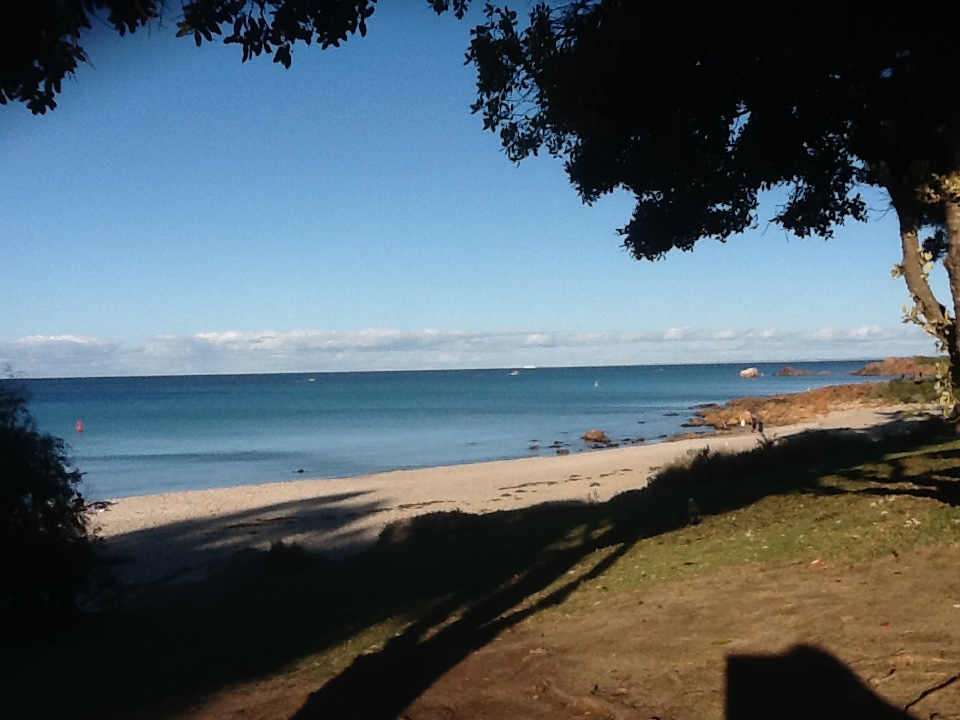
Oh this is hard to take!
We visited the historic lighthouse at the Cape, built in the early 1900s, operating until 1966 when the lighthouse keeper was replaced by fully automatic operation. However, the highlight for us in the local area and just a short distance down the west coast and near the little town of Yallingup is Ngilgi Cave, which was discovered in 1899. We’ve always been a little sceptical of the hype surrounding tourist locations however this cave doesn’t fit into this category.
Ngilgi is named after a good aboriginal spirit that triumphed over bad, and is just one of over 150 limestone caves in this region – and there are probably many more yet to be discovered. What really took our fancy is that in the early 1900s, tours were run for visitors from afar, men dressed in 3 piece suits and women in long dresses and bustles, and just imagine it, the tour took ten hours! Today it takes an hour, climbing down walkways and stairways that offer fabulous views of 11 stories of magnificent stalactites, stalagmites, shawls, pendulites, helictites, and straw stalactites.
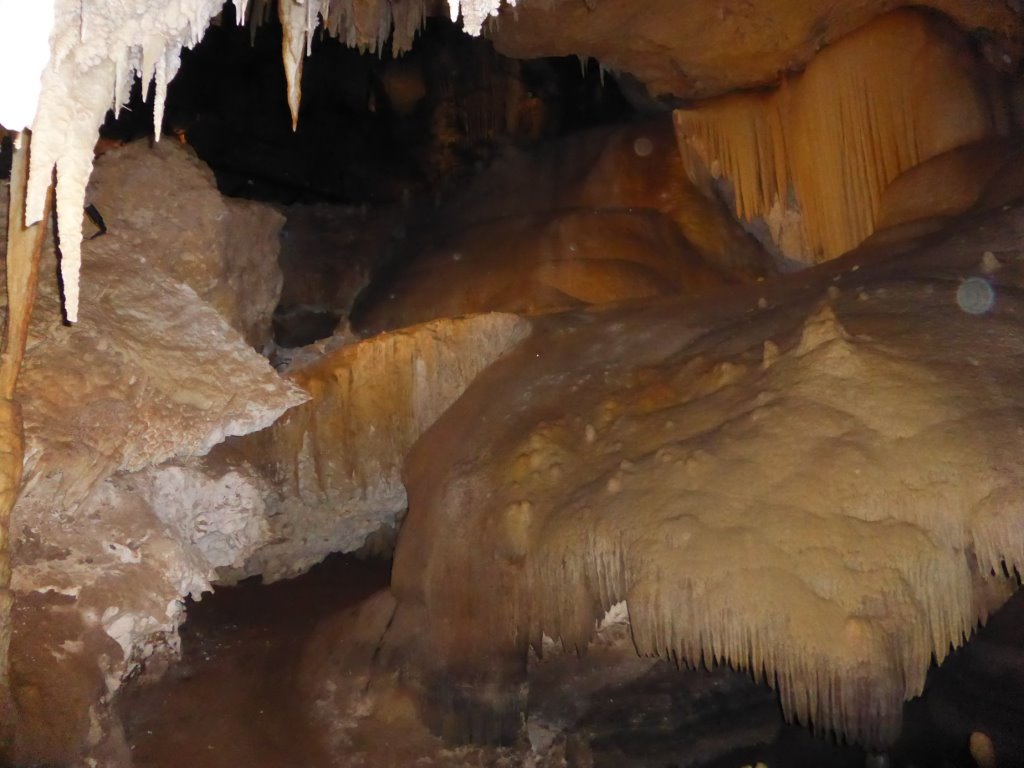
Ngilgi Cave – its very hard to take photos
Our guide was fantastic, explaining the geographic significance and history of the region and the cave, formed by the flow of water through limestone that is 1.5 million years old. We would highly recommend a visit if you are in the region.
On Thursday we headed south a huge 45kms to Margaret River. We’re staying just out of town at a very peaceful caravan park on a 600 acre farm. And to those of us who enjoy a glass of red (or white), you would know that Margaret River is famous for its wonderful wines with over 170 wineries and boutique/entrepreneurial local businesses. What you may not know is that it is also famous for its surf breaks – some of the world’s best. And lucky us, we are here during the Margaret River Surf Pro, with the top surfers in the world, surfing huge 15 to 20 foot glassy waves. And how do we know – because we have been there, enjoying the spectacle.
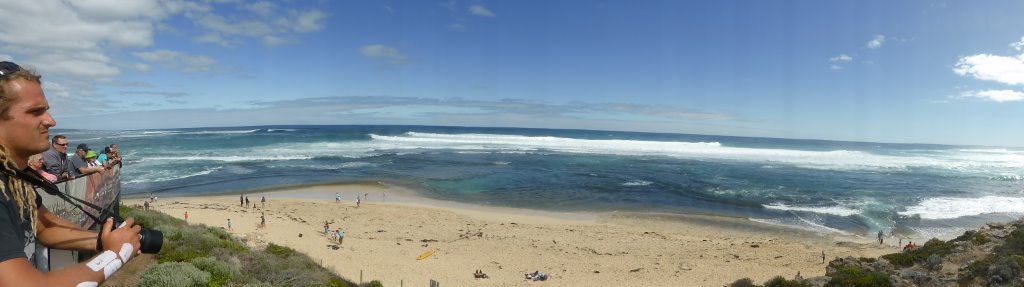
Margaret River Surf Break
Of course, we have also enjoyed many of the local attractions – a number of wineries have been visited, and wines sampled, along with stops at galleries, cafes, gardens and other places of local significance.
The drive to Cape Leeuwin along Caves Road is very picturesque, through tall Kari forests, wineries and dairy farms. On the way to Cape Leeuwin we visited Hamelin Bay, famous for its black stingrays that come in close to the shore to feed, and Jewel Cave a little further down the coast. Okay, if we had to score between the caves, Jewel Cave would just come out on top. The cave is 42m deep and 1.9km long and is the biggest in the region, and it’s simply stunning, the stalactites and straws have to be seen to be believed – the third largest straw in the world is here. Of further significance are the 5 preserved Tasmanian Tigers that have been found in the cave. Jewel Cave gets the big tick from us.
On to Cape Leeuwin and the Cape Lighthouse, just south of the little town of Augusta. This is where the cold currents of the Southern Ocean meet the warm currents of the Indian Ocean. It’s easy to imagine how bleak this would be in the cold of winter – with its many rocks and reefs, and cold winds, it would have been a lonely existence managing the lighthouse, and even worse for any ships that weren’t on top of their navigational instruments. Built from blocks of sandstone in 1895 and standing 39m tall its certainly very visible.
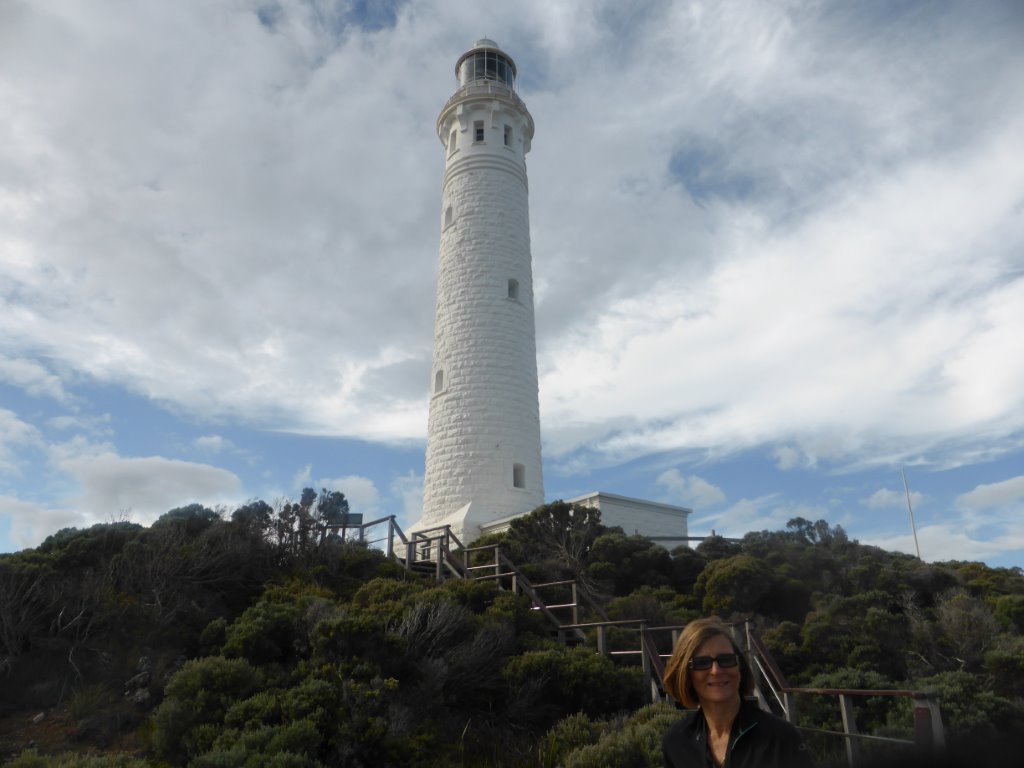
Cape Leeuwin Lighthouse with Jane posing on the front right
As well as having navigational importance, its also a major automated weather station, although of course it was originally manned by the lighthouse keeper.
On our third day here, we were joined by Chris and Marie Jones who are on their way north. Chris is the brother of our very good friend Bob in NZ, so we have and will spend time with them over the next few days – and of course the obligatory wine tour will be a highlight. Having a driver will mean everyone can enjoy the day. We’ll stay here until Thursday, enjoying the superb weather and great company before heading in the direction of Albany.
 Jane and Steve's Travels
Its a beautiful part of our great state…amazing contrast to the north of wa..
have a super time..xx