
Friday week ago we left Whyalla, to drive the almost 300kms to the Clare Valley, taking us through Port Augusta, down the A1 coast road toward Adelaide, passing by Port Pirie (home to world’s largest lead smelter) on the coast and the lower Flinders Ranges and Mt Remarkable National Park on the other. The Clare Valley is a major farming (grain and merino) and wine growing region of South Australia. Unbeknownst to us, we had selected the Valley’s busiest weekend of the year – the Gourmet Weekend, Australia’s original food and wine event and an annual event for this region. Oh what perfect timing and perfect weather!
There are a number of villages in the valley and we spent time in each. Clare is to the north (136kms from Adelaide) with 3000 or so residents is the largest, Seven Hill, Penwortham, Watervale, Leasingham, then Auburn at the southern end of the valley (110kms from Adelaide) with Mintaro to the east. All of these are historic towns, filled with wonderful historic tales, many charming 150 year old houses and buildings that are in full use, and museums and galleries sharing the history of the area. With leaves turning orange and red and starting to line the streets, its a very picturesque time to be here.
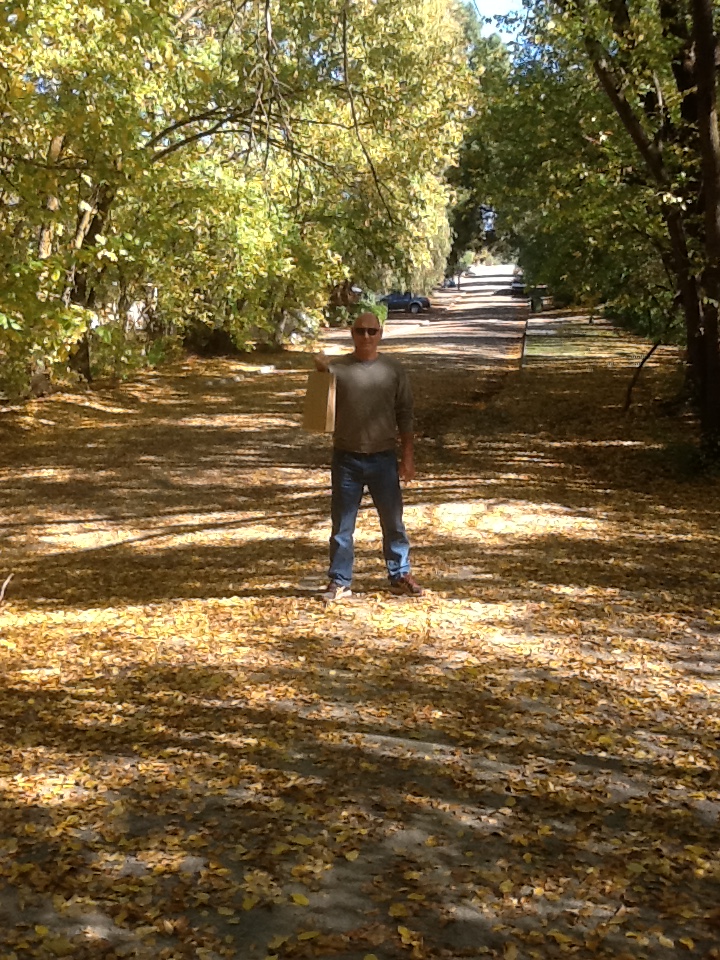
Delightful leafy streets in the Clare Valley
45kms from the valley is the historic town of Burra, a copper mining township, established with the advent of mining in 1845, another enjoyable town to visit.
We enjoyed the hospitality of a number of wineries, including one of my all time favourites Kilikanoon, where we managed to work our way through all of their tasting wines, including their $495.00 vintage. Thank goodness for the spittoon otherwise we’d have been well on the way.
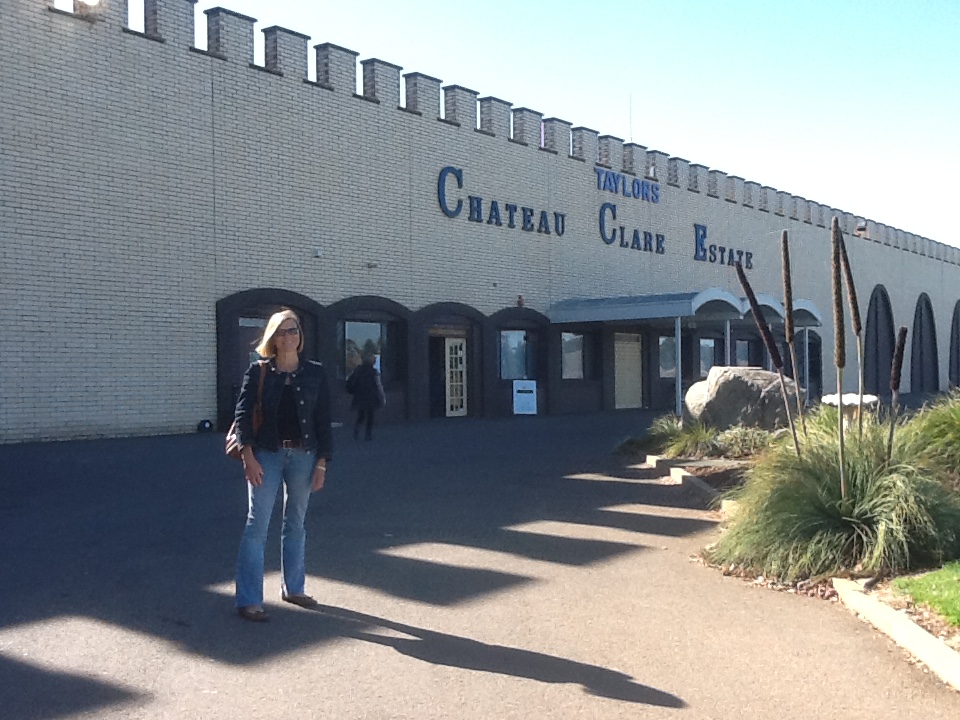
Just a wee visit to Taylors for another sampling
Because this was a special events weekend we made the most of various activities, enjoying breakfast and lunch at the wineries courtesy of celebrity chefs whilst being serenaded by talented musicians. Getting the picture? Mind you the mornings were brisk and the layers of clothes were very necessary. Taylors, Annie Lane and a number of other well known wineries were visited and wines sampled, making for an excellent weekend.
Worthy of mention was our visit to Mintaro, established in the 1850s as a watering stop for bullock teams traveling between the copper mines of Burra and Port Wakefield. Just a few kms from the wee town is Martindale Hall, a Georgian styled Italian influenced sandstone mansion built for a wealthy bachelor pastoralist by tradesmen shipped from England in 1879, at the cost of 30,000 pounds.
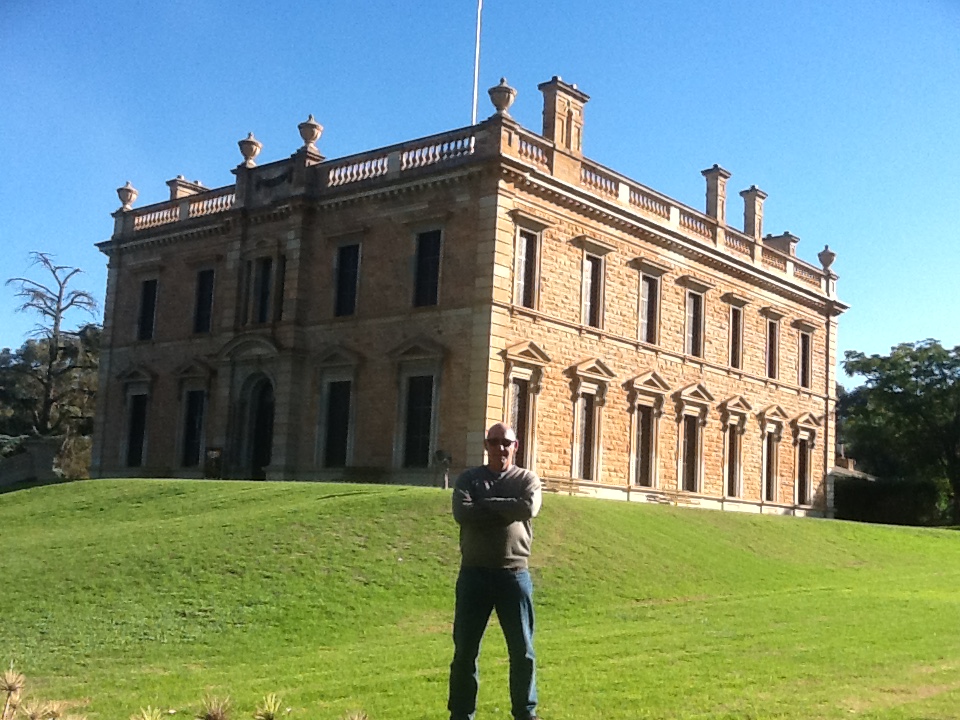
Martindale Hall
It has 32 rooms and a cellar with another 7 rooms, and naturally interesting history. It was bequeathed to the University of Adelaide in 1965, and then handed over to the Sate Government in 1986. For those who have watched the film Picnic at hanging Rock, this may be familiar.
From the Clare Valley we travelled a short distance to the Barossa Valley, which is a larger wine growing area, and home to the largest in Australia, Penfolds and Wolf Blass. Like the Clare, the Barossa was founded in the mid 1800s, and it has very strong German influence – we met a 7th generation in the wine business. Every little town has a Lutheran Church that is well patronised, and was the centre of village life for many generations. Whilst the Barossa may be seen as a more successful wine region, it doesn’t have the beauty and character of the Clare Valley. We visited many of the towns – Nuriootpa, Tanunda, Angaston, Stockwell, Lyndoch – and made ourselves quite at home in a handful of the wineries we’re familiar with. Wolf Blass, Torbrek and Penfolds many will know. And as many of you now know, we made ourselves at home among the Penfolds Grange, the cheapest bottle a mere snip at $750.00.
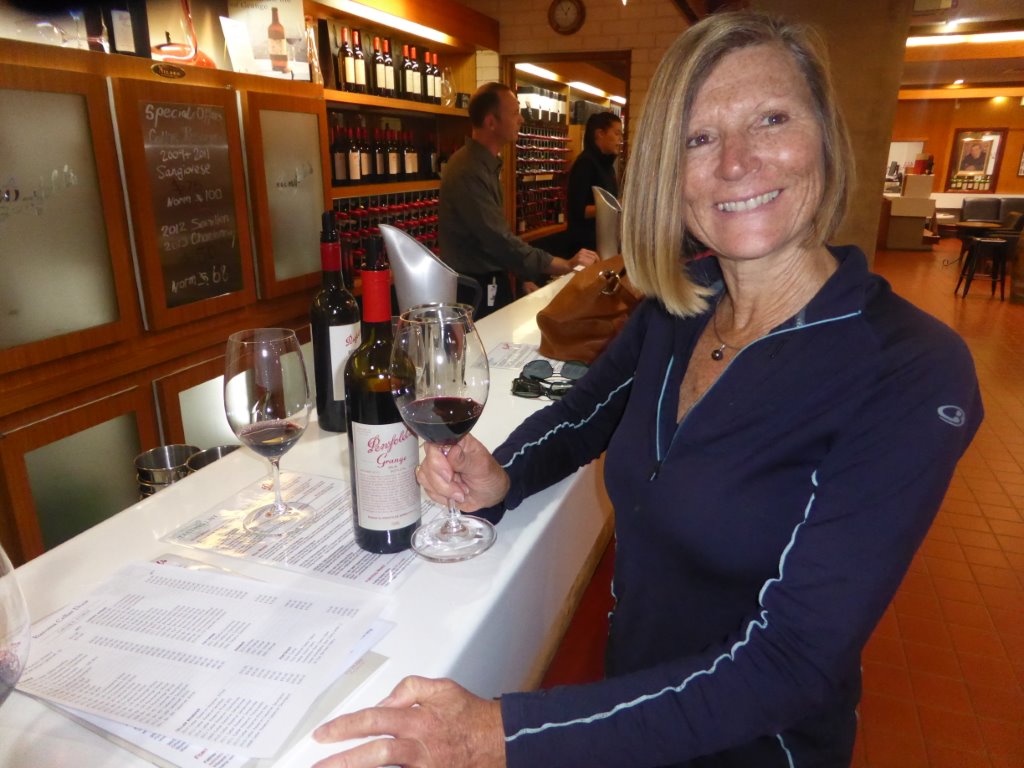
Now that Grange is good!!
Come on, you only visit once! Yes we sampled and enjoyed the 2010 vintage, and yes its quite exquisite. We also visited well known Maggie Beer’s Farm and shop, participating in a cooking demonstration, and sampling the wares afterwards. The bonus was we got to meet Maggie Beer in person.
When we left the Barossa, instead of heading straight for the Adelaide Hills we headed east on the Sturt Highway to the Murray River. We’ve heard so much about the mighty Murray over the years we lived here, and having never seen it, took the opportunity to drive alongside from Swan Reach, down to Port Mannum and on to Murray Bridge. The river is quite majestic in places, with huge red cliffs dropping down to sand dunes and sand banks, gum trees and little settlements right along the river. River ferries operate in many locations, transporting trucks and cars and of course the river was historically a major transportation route, with paddle steamers up and down the river from the 1800s until the mid 1950s.

Paddle Steamer on the Murray
Today, paddle steamers are used for tourism and are an attractive feature making their way up and down the river. Murray Bridge is a lower socio-economic river town 75kms from Adelaide, and where we left the Winnebago for the weekend whilst we enjoyed a ‘weekend away’ in the Adelaide Hills, our 3rd wine region.
We’ve visited Adelaide a number of times over the years, and it is truly one of the loveliest cities in Australia. The delightful stone houses and tree lined streets have many parallels with old English towns. Because we know Adelaide we didn’t visit on this trip, however we’ve never ventured as far as the Adelaide Hills other than a very brief day trip a few years ago. The historic and very commercial and busy German town of Hahndorf was our base, where we stayed in a delightful cottage right in town.

A very cool morning in Hahndorf
Again, the German influence can be seen and felt right through the hills, in the architecture and the predominance of Lutheran churches, and of course there are so many families with German heritage. The hills were first settled in 1836, with the population growing strongly with the gold rush in the mid 1800s. What a delight the many villages are, with their historic homes and shops, leafy streets and amazing autumn colours at this time of year

What brilliant colour – but its a bit cool!
– and the windy roads around valleys and hills, overlooking orchards and wineries, with fantastic views in all directions. Looking down to and across Adelaide from Mt Lofty and across to the east from Mt Lofty House are just two such panoramas. We had a super weekend of luxury, meals out, delightful scenery and walks around the towns – Mt Barker, Hahndorf, Stirling, Crafters, Aldgate, Woodside, Balhannon to name but a few.

An example of German architecture in the Adelaide Hills
And a real treat, was spending time with Ruth, the wife of the last CEO I reported to, Wayman, who tragically passed away from cancer 4 years ago; and today, catching up with and lunching with Teresa, my great school friend, a local magistrate who lives in Adelaide and with whom I’ve reconnected in recent years.
Now, back to reality and life on the road…..tomorrow we head east to Mt Gambia, before we embark on our journey on the Great Ocean Road. You might ask – have we enjoyed ourselves this passed week, and its a resounding yes. And do we have good wine supplies – that would be a yes as well! Until next time.
 Jane and Steve's Travels