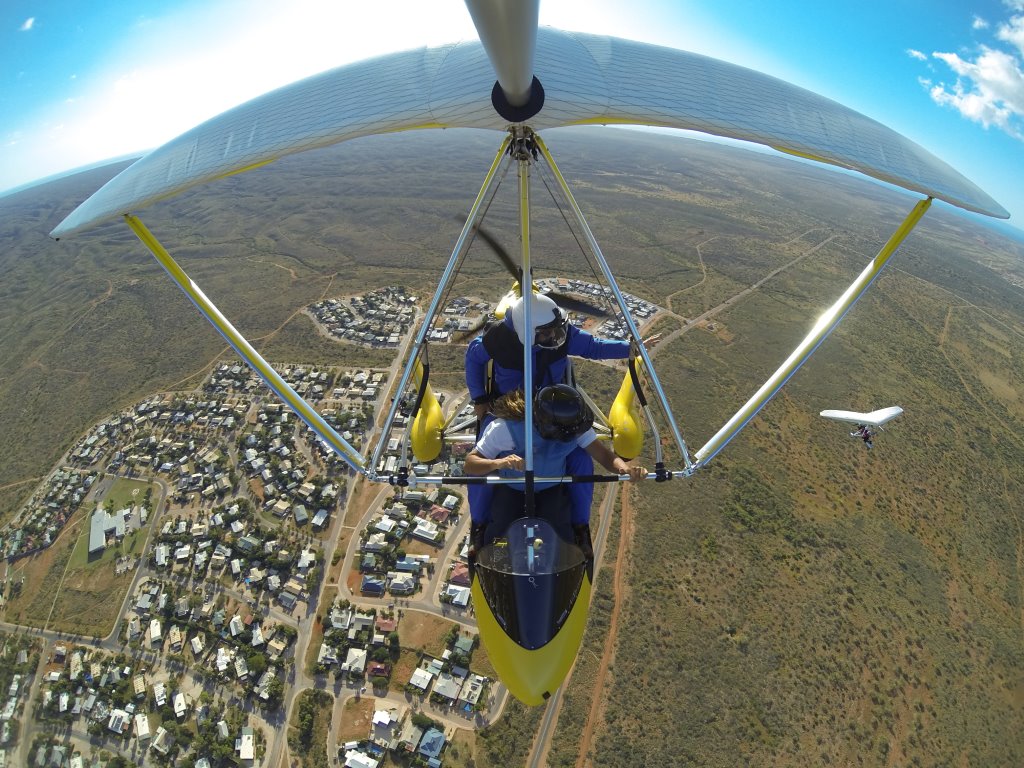
What a week, enjoying the delights of the Margaret River Region

The Broader Margaret River Region encompasses Busselton, Dunsborough, and from Cape Naturaliste, to Cape Leeuwin, Australia’s most south westerly point. And of course, the town Margaret River is in its midst. Our first three days were based at a quiet caravan park between Busselton and Dunsborough. Busselton is a coastal town of some 20,000 inhabitants, and unlike many regional towns, it has experienced considerable growth in recent years because of its proximity to Perth (220kms south), and of course the beautiful playground of white sandy beaches of the wider Geographe Bay and the Leeuwin Naturaliste National Park. In recent years a major canal development and new marina have both drawn new residents to the area.

There are many places of interest in Busselton including historic buildings from early settlement days in the mid 1800s, however it was the historic jetty that held most appeal for us and naturally we had to walk it.
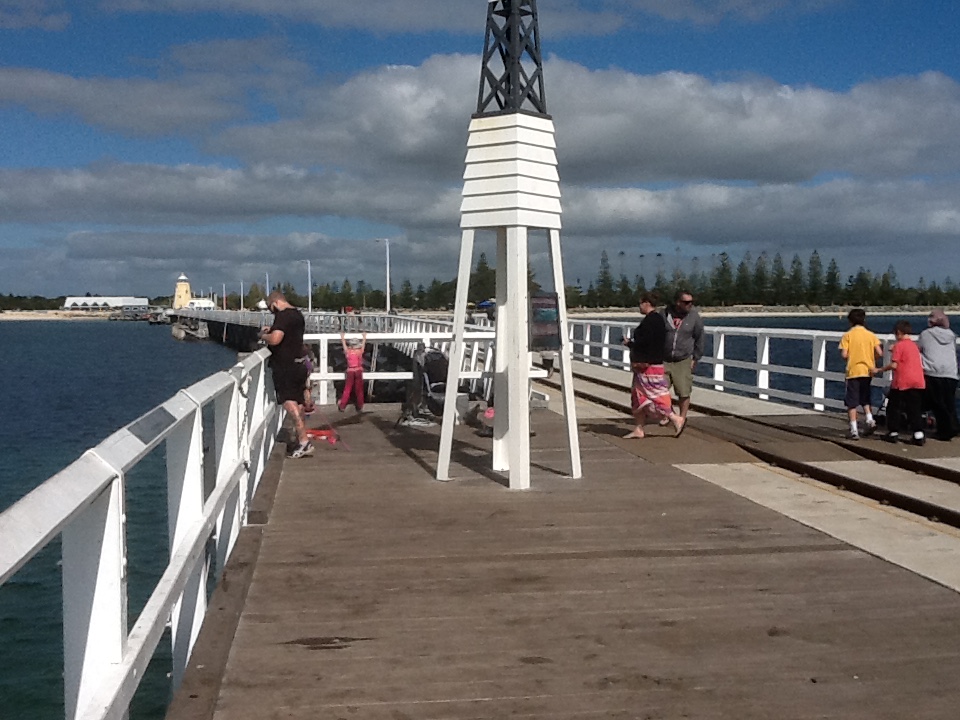
Busselton to Margaret River and Cape Leeuwin 024This jetty is apparently the longest wooden jetty in the southern hemisphere, stretching some 1.81kms out to sea. Construction began in 1853 and continued through to the 1960s, just before it was closed to shipping in 1972. There’s an underwater observatory and interpretive centre at the end which many enjoy.

Having spent time exploring Busselton, we ventured a little further afield to Dunsborough, further along Geographe Bay. We’ve decided that Dunsbrough must be the playground for Perth’s wealthy – beautifully designed and built homes grace the waterfront, and the ‘village’ comprises many boutique shops and cafes. It is an area of historical significance to the local aborigines, with artefacts dating back 12,000 years and was first settled by Europeans in the 1830s. It is definitely a very liveable little town with so much of interest on its doorstep. Cape Naturaliste is just 13kms away, at the western edge of Geographe Bay, with many picturesque and well patronised bays and beaches along the coastline.
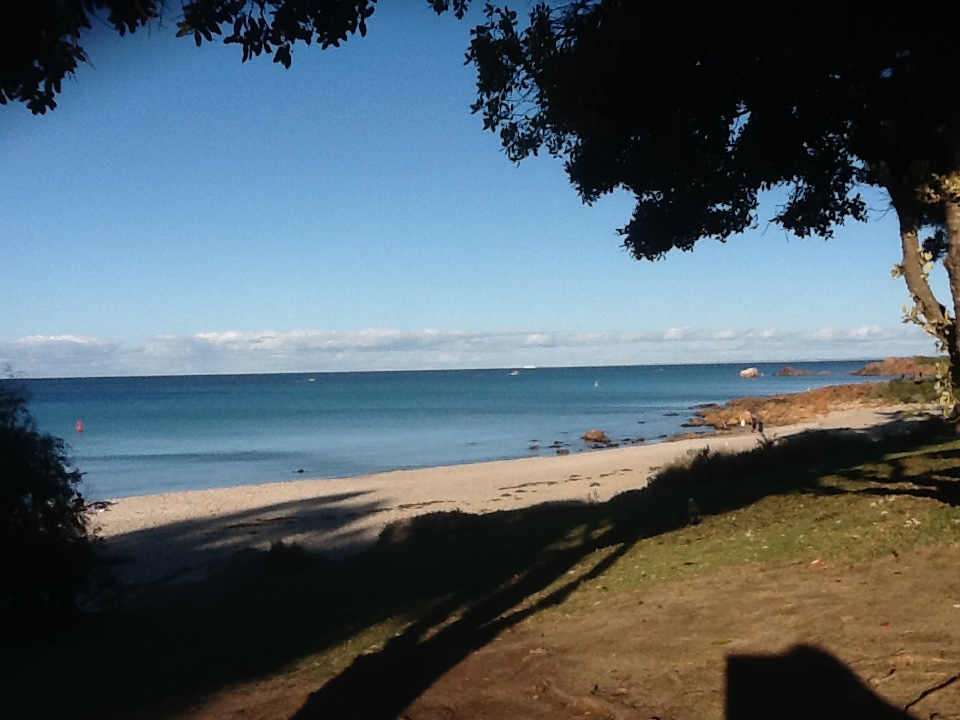
Oh this is hard to take!

Oh this is hard to take!

We visited the historic lighthouse at the Cape, built in the early 1900s, operating until 1966 when the lighthouse keeper was replaced by fully automatic operation. However, the highlight for us in the local area and just a short distance down the west coast and near the little town of Yallingup is Ngilgi Cave, which was discovered in 1899. We’ve always been a little sceptical of the hype surrounding tourist locations however this cave doesn’t fit into this category.

Ngilgi is named after a good aboriginal spirit that triumphed over bad, and is just one of over 150 limestone caves in this region – and there are probably many more yet to be discovered. What really took our fancy is that in the early 1900s, tours were run for visitors from afar, men dressed in 3 piece suits and women in long dresses and bustles, and just imagine it, the tour took ten hours! Today it takes an hour, climbing down walkways and stairways that offer fabulous views of 11 stories of magnificent stalactites, stalagmites, shawls, pendulites, helictites, and straw stalactites.
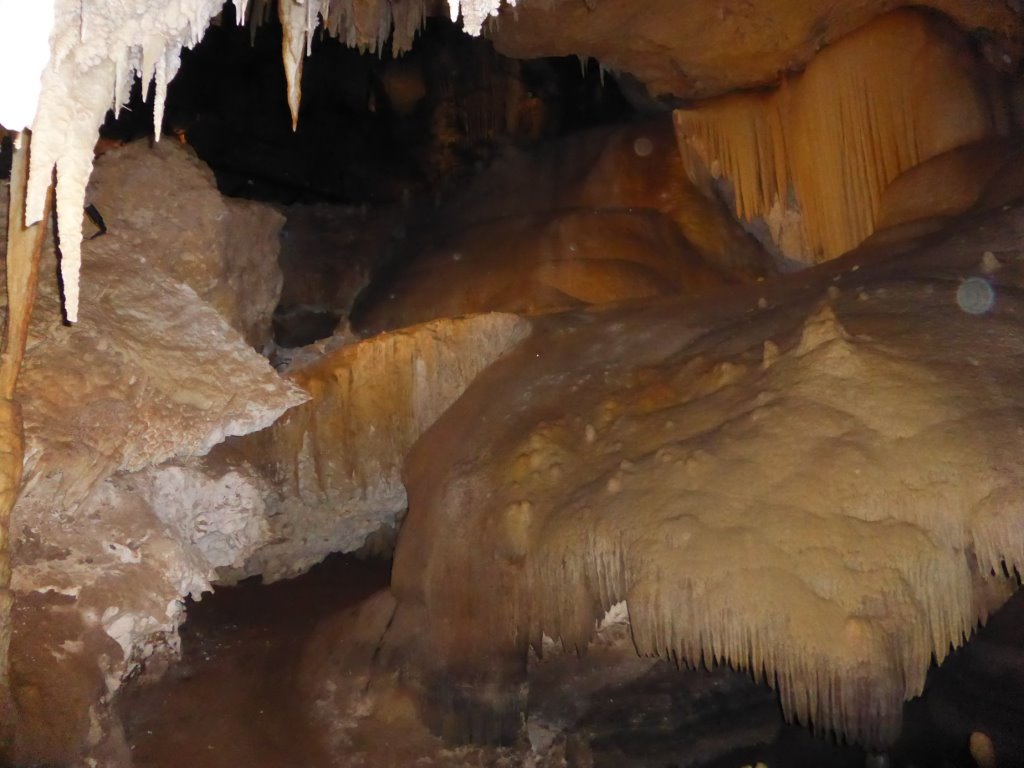
Ngilgi Cave  - its very hard to take photos

Ngilgi Cave – its very hard to take photos

Our guide was fantastic, explaining the geographic significance and history of the region and the cave, formed by the flow of water through limestone that is 1.5 million years old. We would highly recommend a visit if you are in the region.

On Thursday we headed south a huge 45kms to Margaret River. We’re staying just out of town at a very peaceful caravan park on a 600 acre farm. And to those of us who enjoy a glass of red (or white), you would know that Margaret River is famous for its wonderful wines with over 170 wineries and boutique/entrepreneurial local businesses. What you may not know is that it is also famous for its surf breaks – some of the world’s best. And lucky us, we are here during the Margaret River Surf Pro, with the top surfers in the world, surfing huge 15 to 20 foot glassy waves. And how do we know – because we have been there, enjoying the spectacle.
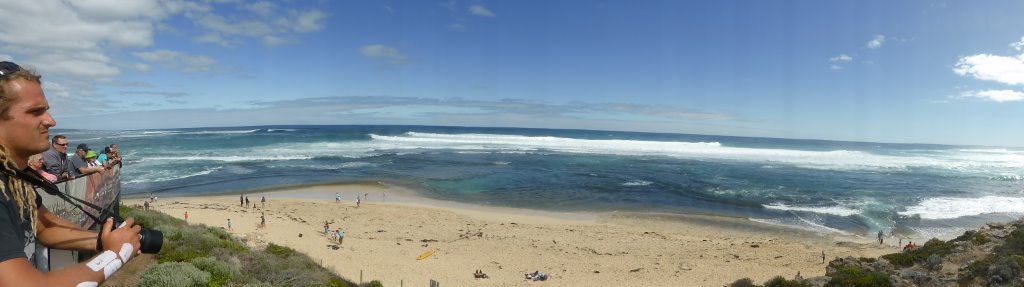
Margaret River Surf Break

Margaret River Surf Break

Of course, we have also enjoyed many of the local attractions – a number of wineries have been visited, and wines sampled, along with stops at galleries, cafes, gardens and other places of local significance.

The drive to Cape Leeuwin along Caves Road is very picturesque, through tall Kari forests, wineries and dairy farms. On the way to Cape Leeuwin we visited Hamelin Bay, famous for its black stingrays that come in close to the shore to feed, and Jewel Cave a little further down the coast. Okay, if we had to score between the caves, Jewel Cave would just come out on top. The cave is 42m deep and 1.9km long and is the biggest in the region, and it’s simply stunning, the stalactites and straws have to be seen to be believed – the third largest straw in the world is here. Of further significance are the 5 preserved Tasmanian Tigers that have been found in the cave. Jewel Cave gets the big tick from us.

On to Cape Leeuwin and the Cape Lighthouse, just south of the little town of Augusta. This is where the cold currents of the Southern Ocean meet the warm currents of the Indian Ocean. It’s easy to imagine how bleak this would be in the cold of winter – with its many rocks and reefs, and cold winds, it would have been a lonely existence managing the lighthouse, and even worse for any ships that weren’t on top of their navigational instruments. Built from blocks of sandstone in 1895 and standing 39m tall its certainly very visible.
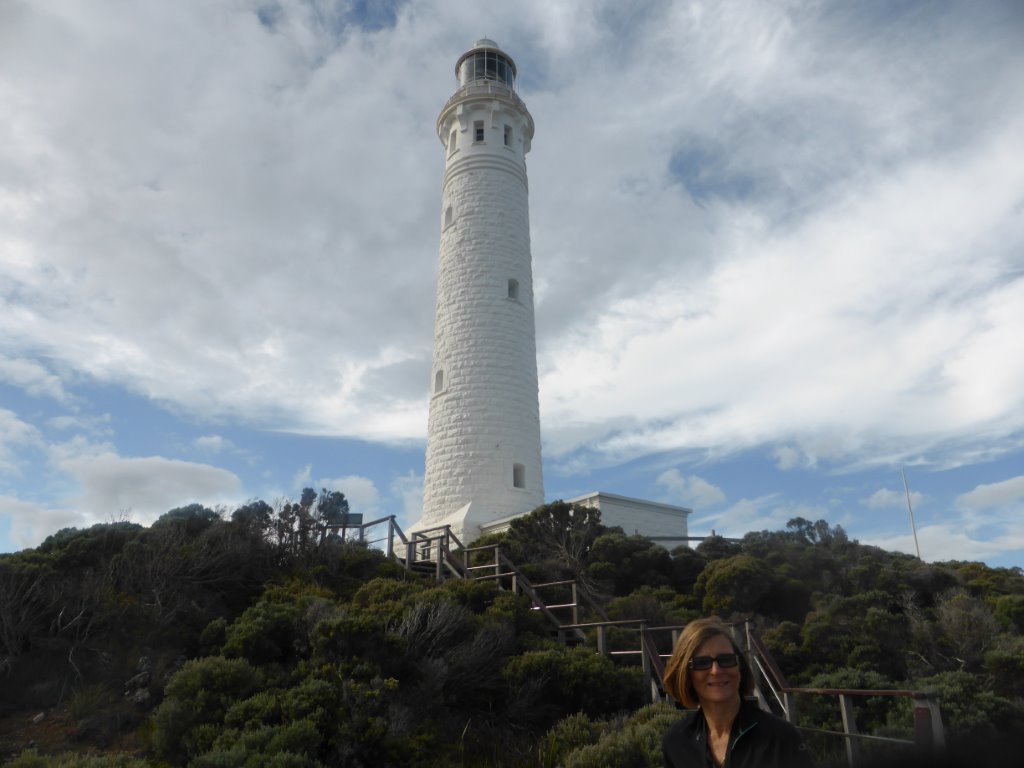
Cape Leeuwin Lighthouse with Jane posing on the front right

Cape Leeuwin Lighthouse with Jane posing on the front right

As well as having navigational importance, its also a major automated weather station, although of course it was originally manned by the lighthouse keeper.

On our third day here, we were joined by Chris and Marie Jones who are on their way north. Chris is the brother of our very good friend Bob in NZ, so we have and will spend time with them over the next few days – and of course the obligatory wine tour will be a highlight. Having a driver will mean everyone can enjoy the day. We’ll stay here until Thursday, enjoying the superb weather and great company before heading in the direction of Albany.
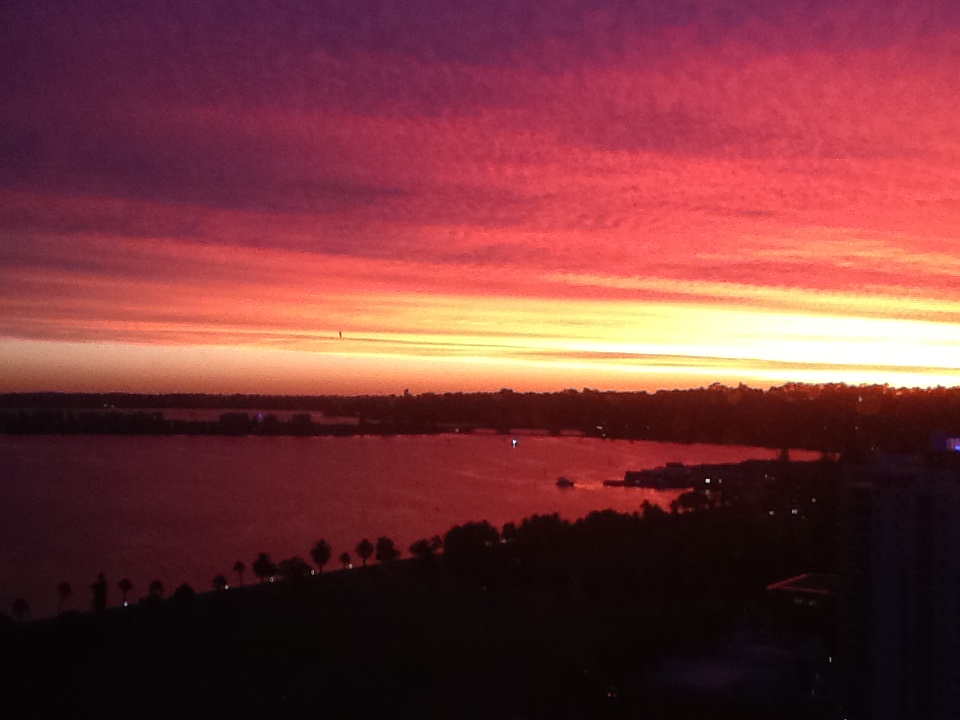
Back on the road, April 2015

Having enjoyed six months in New Zealand, relaxing on beautiful Waiheke Island and tripping around the North Island to visit family and friends, we are now back in Australia, setting off on our last leg of our ‘circumnavigation’. Easter Saturday, April 4 we flew back to Perth, enjoying the city’s hospitality for the evening. We knew we were back in the west – just look at this amazing sunset! NZ and first week of Aussie travels 2015 205After a morning city walk we embarked on our ride, in our delightful storage host’s vintage truck (Jane sitting on the engine casing in the middle of the front seat) back to Northam where both Winnebago and Suzuki have been safely housed. Thankfully (and much to Steve’s relief) both fired up with the first turn of the key, and off we set…..down the road to a quiet spot to get everything shipshape, do the big shop and be ready to hit the road first thing on Easter Monday.

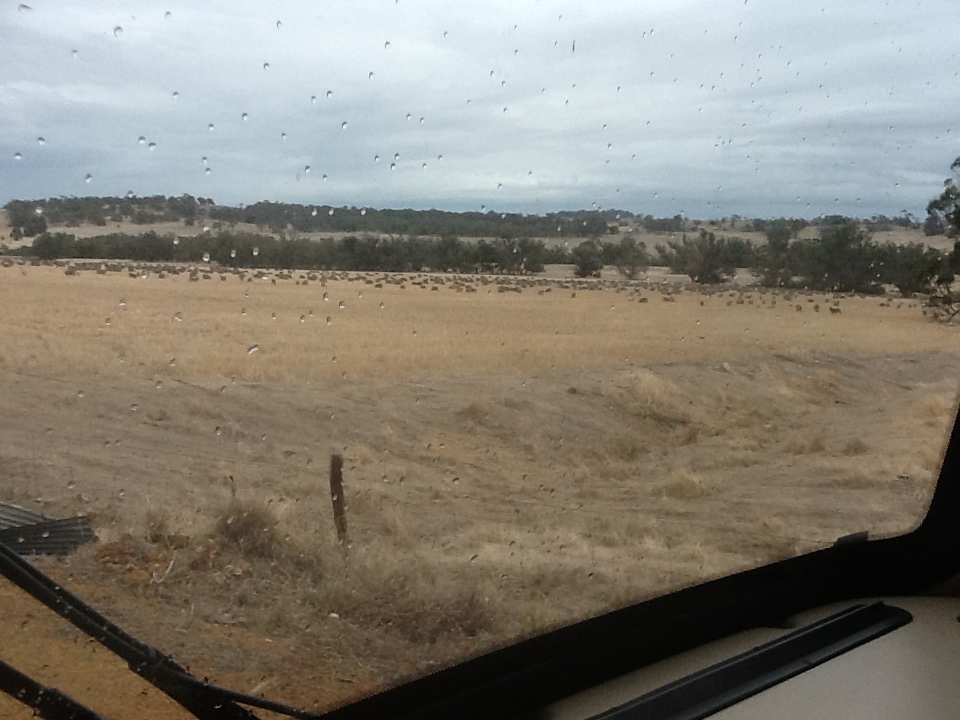
What had struck us both as soon as we left metropolitan Perth on Sunday, and through our 230km drive on Monday was just how dry the countryside is. What a contrast to the green of NZ (despite four months of stunning summer weather). When we were in the Avon Valley in September it was green, with flourishing crops of grain and grasses for hay. Today the grass is white, sheep are almost grey and most noticeably, there is a total absence of wildlife, including road kill.

Dry WA countryside

Dry WA countryside

Our first day went very smoothly, and amazingly there was almost no traffic on the road which delighted Steve.

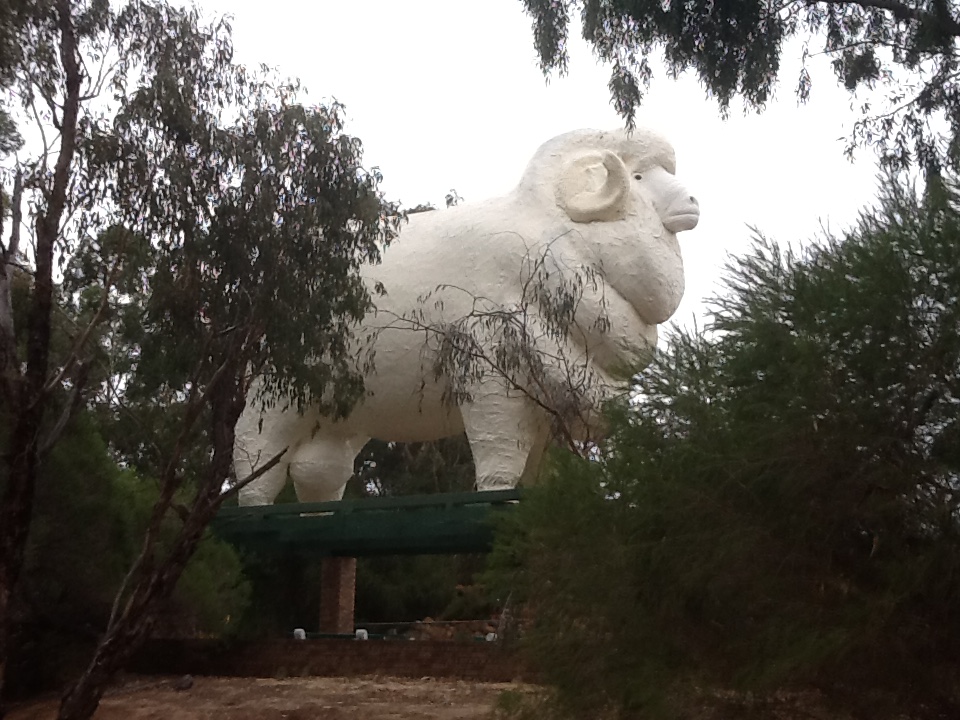
Our plan was to head south and then make our way west, back to the coast to Bunbury, which is some 175km south of Perth. Our first stop was Wagin, a small somewhat sleepy agricultural town of around 1500 people, some 225km south-east of Perth. We stayed the night in the local showground, which is very central and quiet. Wagin’s main industries are wheat, hay production and sheep. And just to make sure you understand what Wagin’s industry really is, there is a rather large giant ram (13x9x6m) in the middle of town that you literally have to fall over.

The Giant Ram in Wagin

The Giant Ram in Wagin

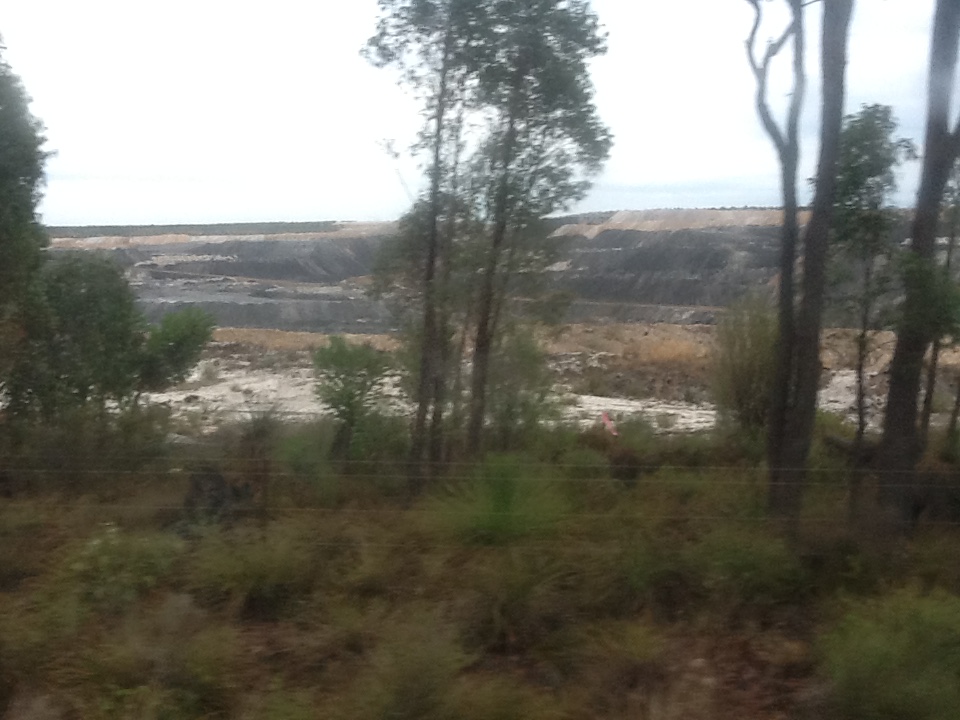
From Wagin we headed west in somewhat inclement weather, to the coal mining town of Collie, which is 59kms inland from Bunbury. In winter and spring this would be quite a beautiful area to visit. Wellington Dam is an excellent boating and camping spot, as are Stockton Lake and Mungallup Dam, all very close to the township which is located on the junction of the Collie and Harris Rivers, in the midst of WAs only coal fields,

Looking out the window at significant open cut Collie coal mines

Looking out the window at significant open cut Collie coal mines

which were discovered in the early 1880s. Many of the 7000 local folk are employed at the mines and local electricity plants. Despite the weather we ventured out for the afternoon, exploring the local sites.

The weather cleared on Wednesday for the quick drive to the coastal town of Bunbury. As we got closer to the coast, the vegetation changed to more Aussie bush, and a green tinge in the land before changing to more lush green fields near the coast. We decided to base ourselves here for five nights as the annual Bunbury Show was on in the weekend, and this trip is all about experiencing and learning about what Australia has to offer.

Unfortunately we have had a tail end of a cyclone sitting across the southern half of the state for days, and so our time here has been somewhat frustrated with the wet, but we haven’t let that stop us getting out and about. The port city of Bunbury is the 3rd largest city in WA (population 68,000) and was initially a military post in the early to mid 1800s. As you would expect, all services you would experience in major cities are based here. The port services mining, timber and farming. There are beautiful beaches all the way along the coast

Bunbury's coastline on a grey day

Bunbury’s coastline on a grey day

and its easy to imagine what this place is like in the height of summer. There is a look out tower in Marlston Hill, very close to the central retail district. The views from here are vast, providing a panoramic 360 degree spectacle.

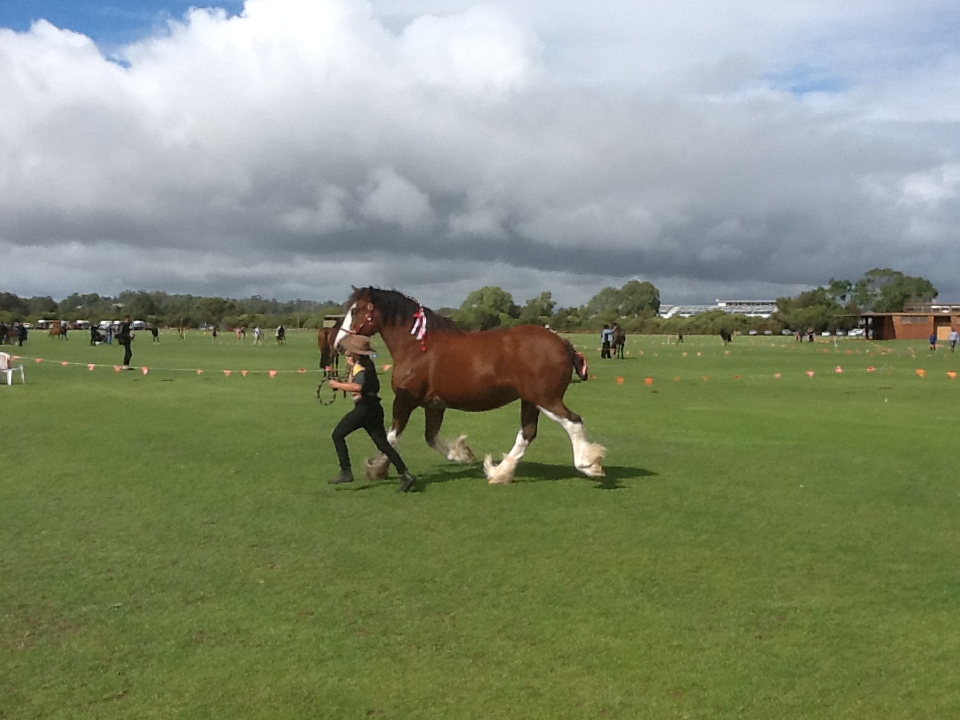
On Saturday we joined many locals at the Bunbury Show, which is really an equestrian eventing show that has grown to include artisan stands, rides and games for kiddies, agricultural events and machinery and of course various food stalls to feed the hungry. I have to say, we really enjoyed ourselves, particularly watching dressage and show jumping. Our favourites – the draught horses dressage.

The winning draught horse

The winning draught horse

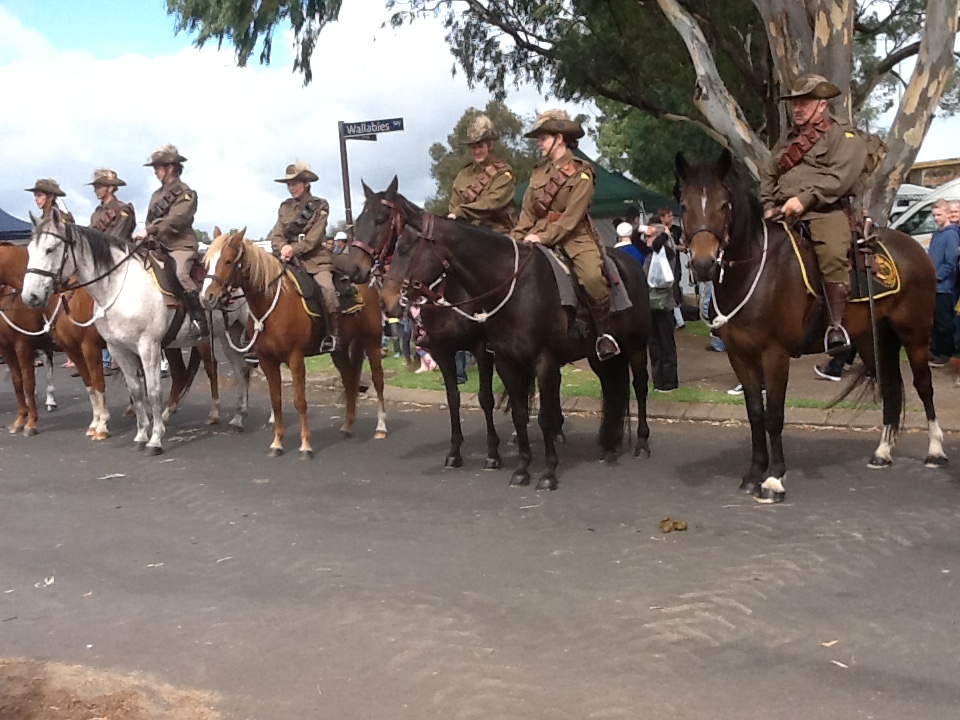
These are really powerful beautiful specimens and do their owners look after them! Pampered and groomed so that their coats are soft and gleaming. Quite stunning. It was great to see so many people supporting the towns major annual show and celebrating the country. A highlight was the re-enactment of the 7th lighthorse regiment, a tribute to world war one veterans and the importance of Anzac Day.

The Light horsemen re-enactment

The Light horsemen re-enactment

Today has been one of those days….showers (yes the cyclone aftermath is hanging) have meant we can’t enjoy a long walk or a bike ride, so its been designated a chore day before we set off south tomorrow to enjoy the delights of Busselton, Geographe Bay, the Leeuwin-Naturaliste National Park and Dunsborough.

The tranquil country charm of the Avon Valley

Just 100kms inland from Perth, the rolling green hills and historic country villages of the Avon Valley are a great place in which to relax and enjoy the last days of our travels on this leg of our journey. The drive from Perth took us through the cool (10 degrees ) Perth hills and through to our base on the periphery of WA’s largest inland town and the gateway to wheat belt, Northam. Being the regional hub, all government departments are represented, along with all services necessary to support the regions agriculture and tourism. Located on the Avon River, settlers first arrived here in the 1830s and today has over 185 heritage listed buildings.

Steve on Northam's suspension bridge crossing the Avon River

Steve on Northam’s suspension bridge crossing the Avon River

We have really enjoyed the history of the town, in particular exploring the town on foot. There is a very enjoyable walk around a number of the streets, taking in these buildings as well as many other homes that were built in the 1800s. The craftsmanship that was displayed at the time is severely lacking when comparing these homes with the modern boxes of today! It’s wonderful to see how lovingly many of the homes and commercial buildings have been restored. Even the home of the first European settler in the region is still standing and open to the public one day a week. I can’t imagine our houses and buildings of today still standing nearly 200 years later, let alone 50! These were built to last…..Australia’s history is so young when compared to Europe though!

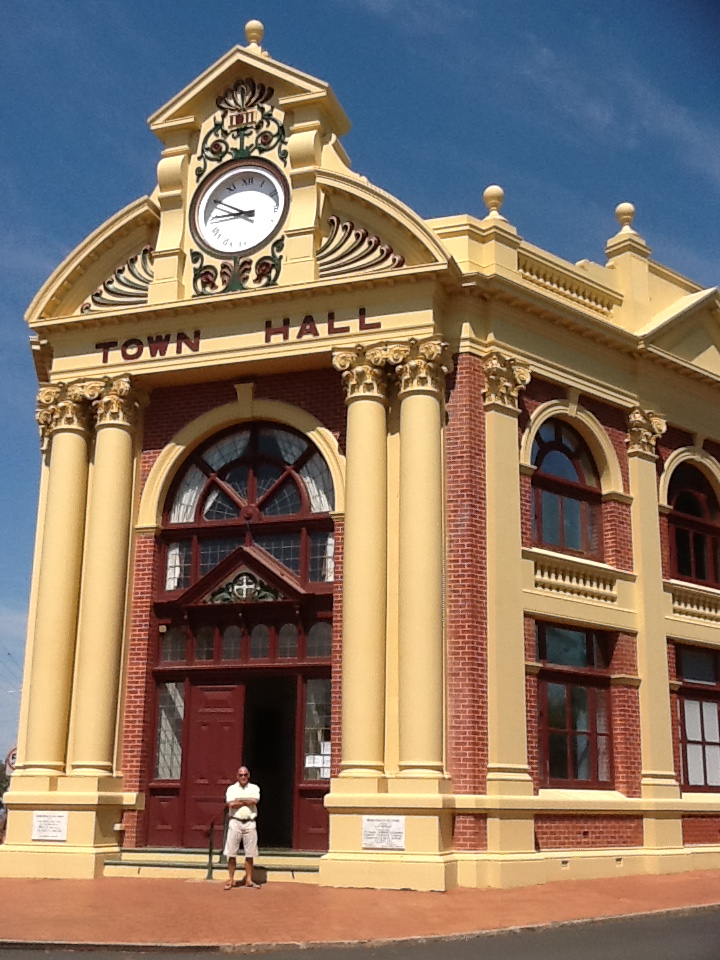
There are a number of other towns and attractions in the valley, including wineries, olive groves, country markets, festivals, cafes and restaurants, and skydiving and ballooning. No, we weren’t tempted! We haven’t visited all of the towns, but just had to take the beautiful country drive through green fields and rolling hills to the historic towns of York and Beverley, both named after their namesakes in Yorkshire. Steve of course lived in York for nearly 4 years in his early 20s, so York was a must. Being just 36kms from Northam its an easy drive alongside the river. This very proud historic town was settled in September 1831 and was the first inland settlement in WA on the banks of the Avon. York is probably the most popular day trip destination from Perth. It is very picturesque and has many been lovingly restored colonial residential and commercial buildings.

York Town Hall

York Town Hall

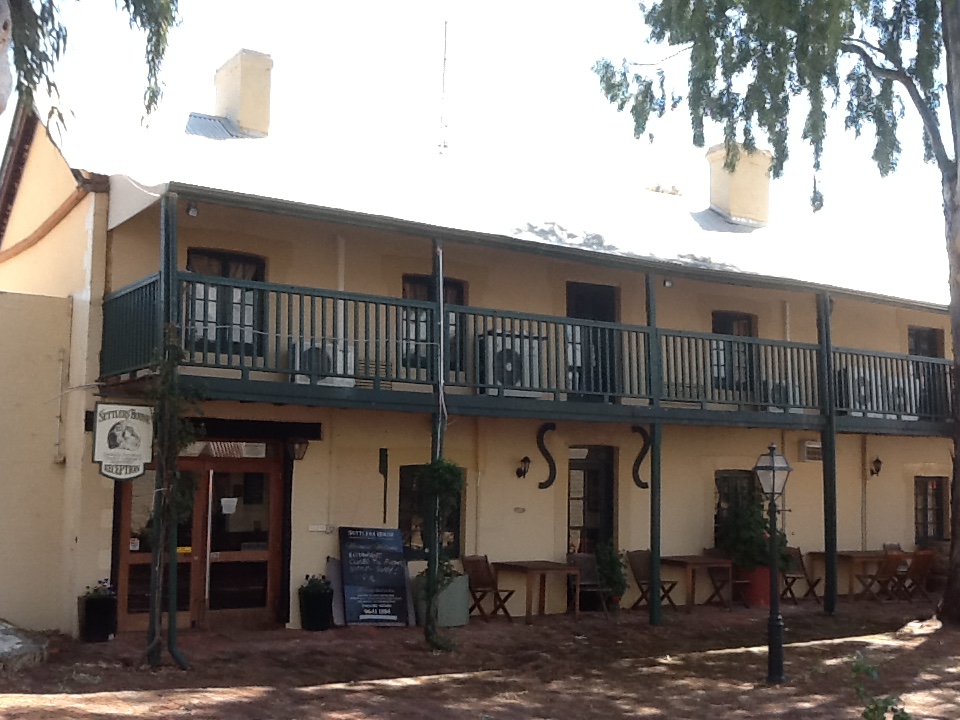
Most residents take great pride in their gardens making this quite a special little town (about 1700 residents). We spent 3 or so hours wandering through the town and the side streets, venturing into the Town Hall, Settlers Inn, the English lolly shop (guess who enjoyed himself there!!), and the old Courthouse. There is an old flour mill, however it has been closed to the public which is a real shame. And for the car lovers – York hosts a very good motor museum, now recognised as one of the finest private collections of veteran, vintage, classic and racing cars in the country. Yes, we spent quite some time there.

Historic homes in York

Historic homes in York

Who would you expect to meet in York – English visitors from Leeds, Yorkshire, and regular visitors to the shire of York in the UK. Needless to say we stopped and had a good chat, comparing the towns and asking ourselves why we were so absorbed in taking photos of these comparatively ‘young’ historic buildings!

After a very country style lunch we headed another 30kms to the town of Beverley, founded in 1838. Today a quiet agricultural town, not attracting the same attention as York, there is still a great deal of colonial history in the town. It didn’t hold the same appeal for us, when compared with York and Northam, however we could certainly appreciate its history.

The other major towns in the valley are Chittering, Goomaling, New Norcia and Toodyay.

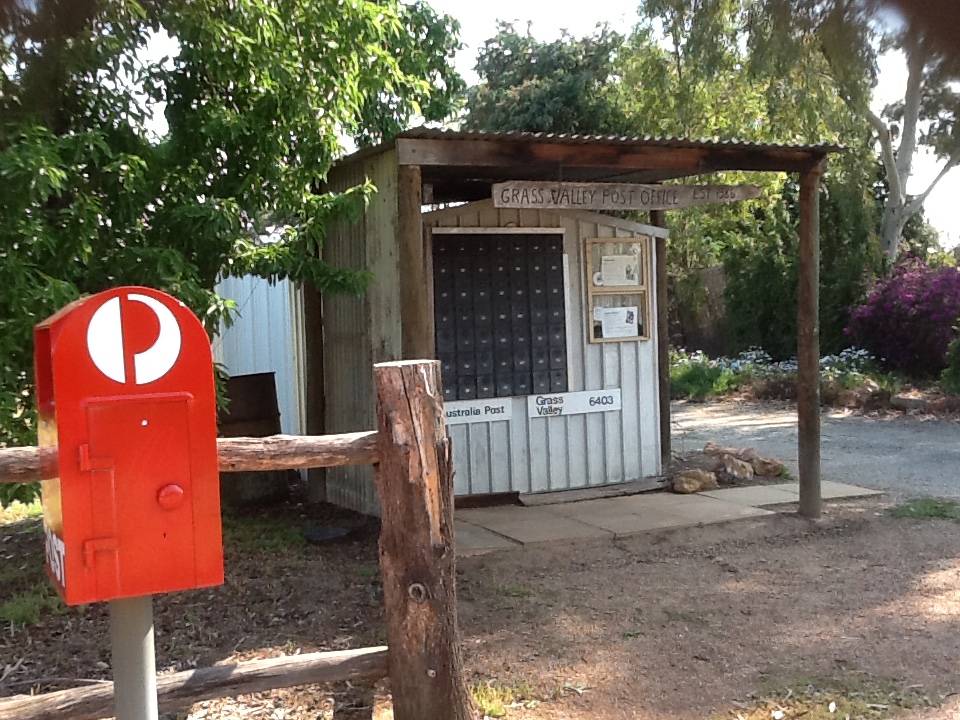
We’ve checked out the storage for ‘The Tent’ and are very happy that she will be secure and safe in our absence. The garaging is like an aircraft hangar, and has full security, so that’s where she goes tomorrow, in Grass Valley. There is a little town here and we couldn’t resist this photo, of the very new post office – I bet you haven’t seen a physical post office as small as this before!

The very cute Grass Valley Post Office

The very cute Grass Valley Post Office

Meantime we are working our way through the long check list of all the chores that must be done before tomorrow morning. What fun! The weather turned this morning which is frustrating, but you get what you get. Thankfully all the outside jobs are done other than those that take place once she’s in the shed.

By tomorrow afternoon we will be in central Perth, ensconced in the Sheraton for 3 nights. What we haven’t done on this trip is spend time around the centre of Perth, Kings Park, the galleries and its many other attractions. The weather is meant to improve again tomorrow and until we fly out on Wednesday morning. Airport security is heightened with recent events, so we will be there nice and early….oh what a culture shock all of this will be after our time on the road!

Whilst in NZ we will still post blogs, however at times a little less frequently. We hope to travel whilst there, so will share these experiences, introducing you to new places and the beauty of NZ.

Five days and six nights in Fremantle

When we left Yanchep last Wednesday morning we headed down the freeway just 80kms to South Fremantle, where we have been based, and from which we have enjoyed the energetic vibe and interesting history that this region offers. As well as being at the mouth of the Swan River; the home of the successful Australian Americas Cup win; having delightful beaches and lots of history, Fremantle is a vibrant and colourful city that is very easy to ‘take in’ walking around its many small and colourful streets. It’s a great place for lots of walking, bike riding and people watching.

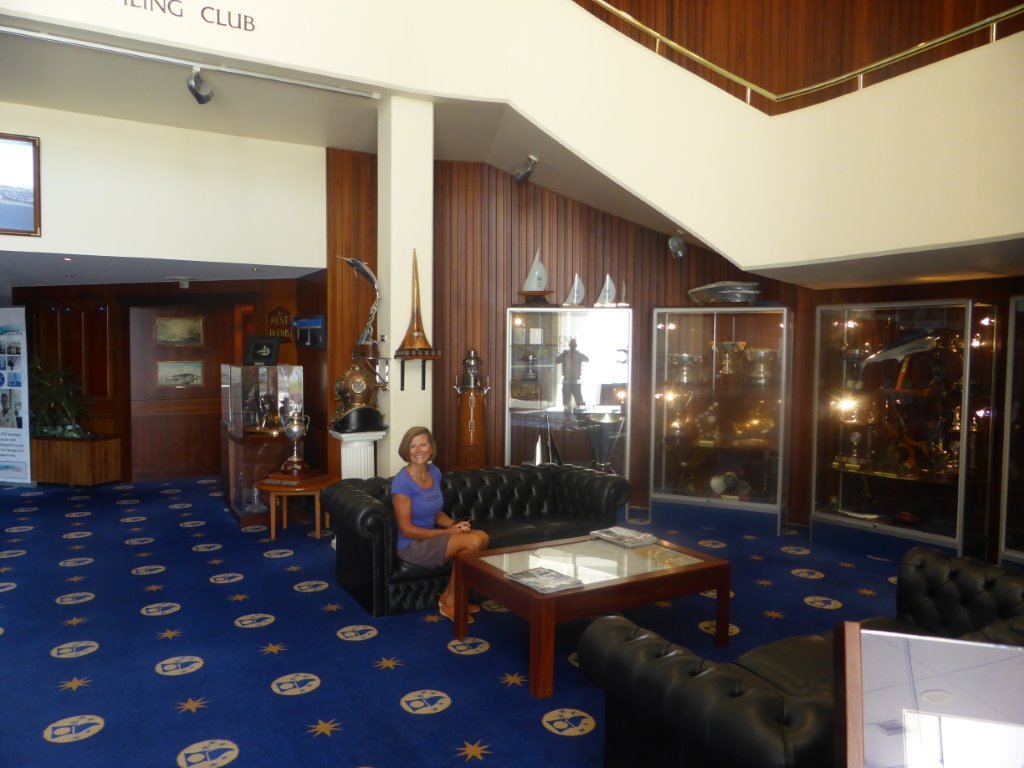
Steve has always wanted to visit the exclusive Fremantle Sailing Club, so this was our first port of call.

The very classy Fremantle Sailing Club

The very classy Fremantle Sailing Club

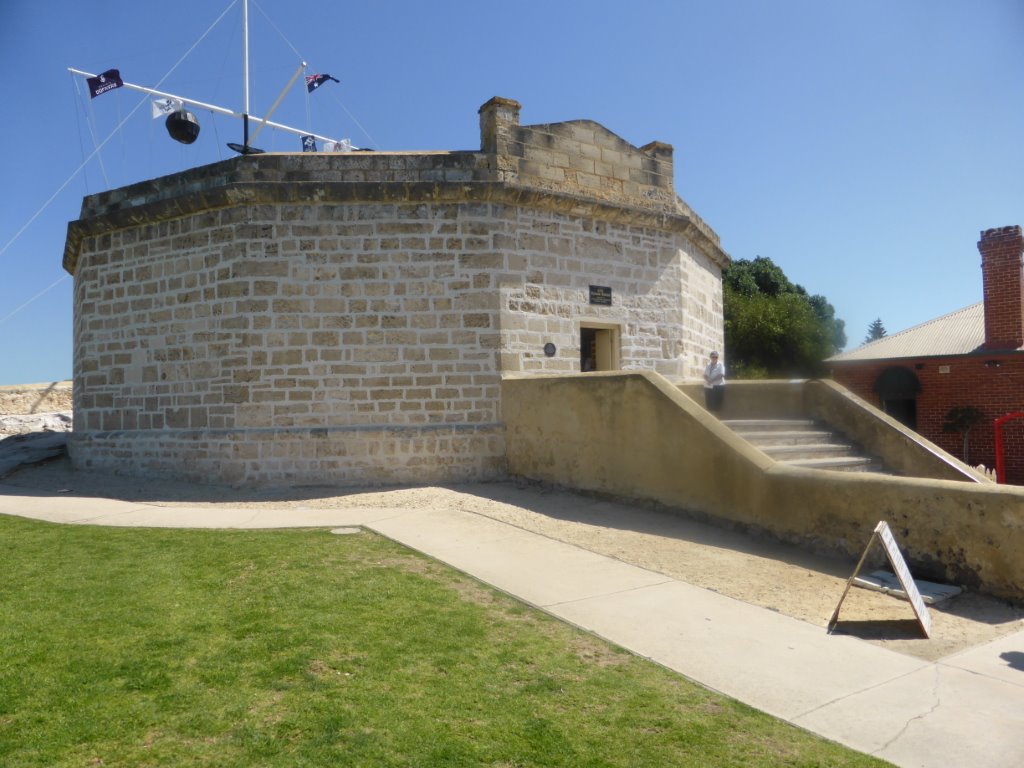
We strolled down the marina legs admiring the size and scale of the waterways before enjoying coffee in the bar, looking out over the water. On a beautiful sunny day this is an easy place to spend time and admire! From here we walked along Marine Terrace checking out the Fishing Boat Harbour, restaurants and cafes, before walking through the many streets of Fremantle, enjoying the heritage buildings from the 1800s, and the many boutique shops, cafes and restaurants before visiting WAs oldest remaining intact building, the Round House on the headland overlooking the river mouth and Cockburn Sound.

The historic Round House

The historic Round House

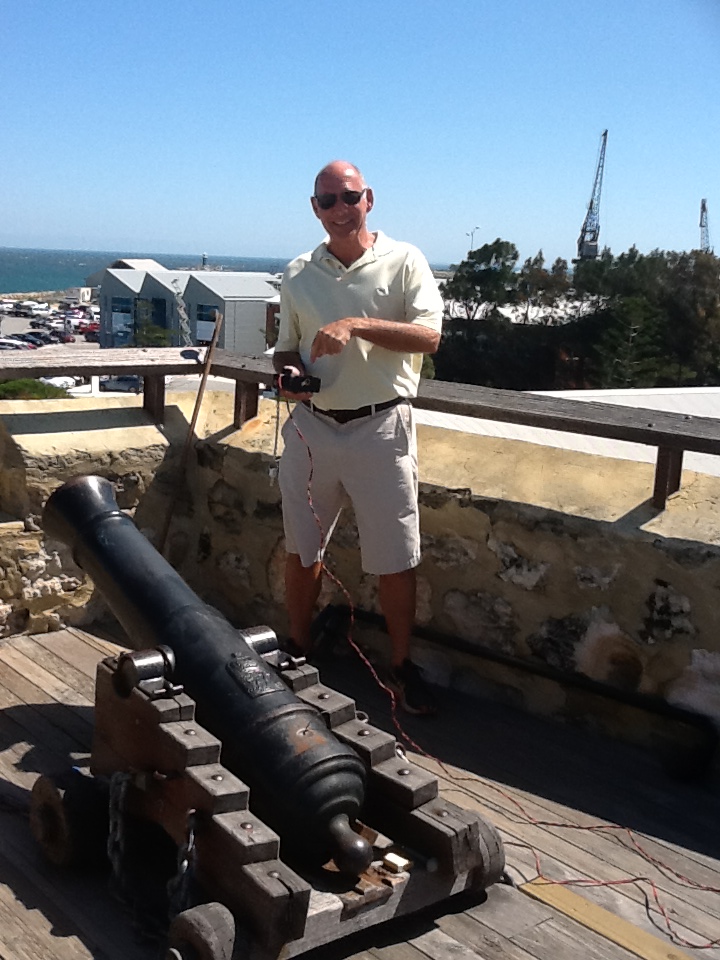
This was also an ideal site for navigation lights and a signalling station. The Round House was built in the 1830s as the Swan River Colony’s gaol, then housed convicts once they arrived from 1850. There were also cottages, two lighthouses and a courthouse nearby. Once Fremantle Prison became part of the penal system in 1886, it was used for a short time as a lock up by the police and then in 1900 it became living quarters for a chief constable. What an interesting place to visit and learn more on local penal history! Of real interest is that a time ball was established near the Round House and signalling station in 1900 as part of a procedure to give mariners and residents an exact daily time check. How this worked is that a 10 minute canon would go off, so that the ship’s captain knew to be prepared for a time check. Then the ball was hoisted to the top of the tower 3 minutes to 1pm and then released at 1pm by an electrical signal. The signal then triggered a shot from a canon to mark the time. This is where the phrase ‘ keep your eye on the ball’ comes from. Whilst this practice was discontinued in January 1937, the station was reactivated in 1998 and every day at 1pm this historic practice continues with the help of volunteers.

Honorary Gunnery Officer Steve getting ready to set off the canon to signal 1pm

Honorary Gunnery Officer Steve getting ready to set off the canon to signal 1pm

Those who know Steve well can guess that he volunteered before anyone else could open their mouths, and so Honorary Gunnery Office Beaumont set off the canon for the day. What a blast and so enjoyable.

I managed to catch-up with a couple of girl friends over long lunches in Fremantle which was great fun. Good time for Steve to clean all the lockers in the motorhome one day and to look around town another, and enjoy listening to some of the very good street buskers who have a strong presence during the afternoons.

Yesterday, in the wet and cold (after a 32 degree hot and sunny day on Saturday) we took a tour of the heritage listed Fremantle Prison, completed by convict labour in the 1850s and actively used until 1991. This was once the most notorious prison in the British Empire housing convicts, local prisoners, military prisoners, enemy aliens and prisoners of war. It was built to house up to 1000 prisoners in the main block which is 4 storeys high.

Jane in her exclusive plastic poncho outside a 7x4 cell....not going in there!

Jane in her exclusive plastic poncho outside a 7×4 cell….not going in there!

Cells were 7 x4 feet, with a hammock and bucket and that’s it. At one time walls were knocked out in some cells so that they were 7×8 but then they didn’t have enough space so 2 men were placed in each cell. Right through to 1991 there was no sanitation, 8 hours a day had to be spent in the courtyard with no sun shade (other than the last few years), 365 days a year rain or shine. It was a brutal place. There were regular riots and regular escapes. There was a women’s prison established here which operated until the 1970s.

Ohhh, so grim this is not a nice place - the gallows

Ohhh, so grim this is not a nice place – the gallows

We toured the main prison, kitchens, solitary confinement (what a morose and depressing place), the CofE church, admin and the gallows, where 46 men and one woman were hanged between 1888 and 1965 (the last hanging was in 1964). That is not a place to spend lots of time, and I wouldn’t want to visit at night!

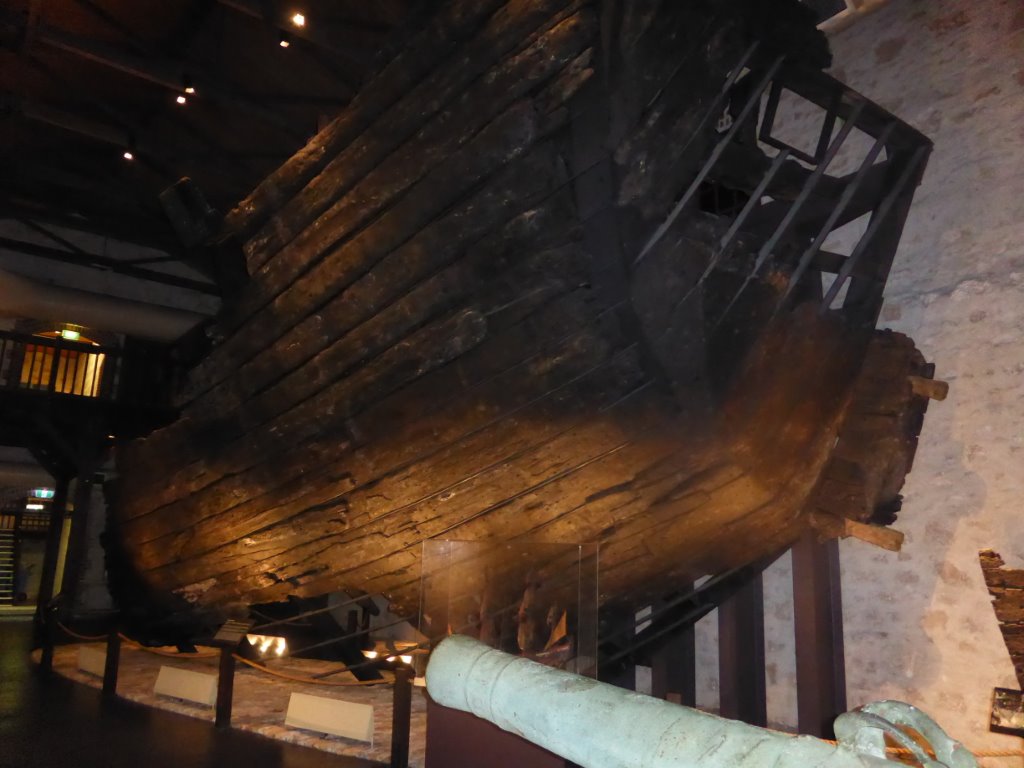
From here we went to a happier place, the Shipwreck Galleries, one of the most important maritime archaeology museums in the southern hemisphere. Mind you, the building was also built by convicts in the 1850s when stone buildings were built to last! The history of discovery from the 1600s is impressive with hundreds of relics from ships wrecked along the WA coastline, including original timbers from the Batavia (wrecked in 1629),

Restored timbers of the Batavia

Restored timbers of the Batavia

the de Vlamingh plate and countless artifacts from the Dutch shipwrecks Zutydorp, Zeewihk and Vergulde Draeck. We managed to while away a few hours taking this all in. We also enjoyed a quick stop at a travel expo where all the main European River tour operators were promoting their wares, so an excellent opportunity to do some comparisons, as one day we would love to do this.

Today has been more of a chores day including those appointments that just need to get done – doctor, dentist, a little shopping. Tomorrow we head up to the Avon Valley for 5 days. Then, alas ‘The Tent’ goes into storage for a period of time and after 3 days in a Perth hotel this leg of our travels comes to an end and we fly across the seas to Waiheke Island for a while.

Picturesque Jurien Bay and down the coast to Yanchep and Perth

The trip to Jurien Bay from Geraldton was very pleasant, initially driving through scenic countryside, fields and the historic gold mining  town of Greenough, before venturing onto the coastal highway, which winds its way toward Jurien Bay.

Steve, Rod and Dearne enjoying a coffee in the township of Dongara

Steve, Rod and Dearne enjoying a coffee in the township of Dongara

Before joining the coastal highway we stopped in Dongara, a little town on the mouth of the Irwin River for coffee, before driving down to the Port, Port Denison. Dongara is quite a cute little town and together Dongara and Port Denison market themselves as the ‘Rock Lobster capital of Australia’. Of course being lovers of crayfish we thought we might get to buy one – but at the princely cost of $78.00 we knew it wasn’t going to be. The ‘lobster’ are sold live and 98% are exported to China.

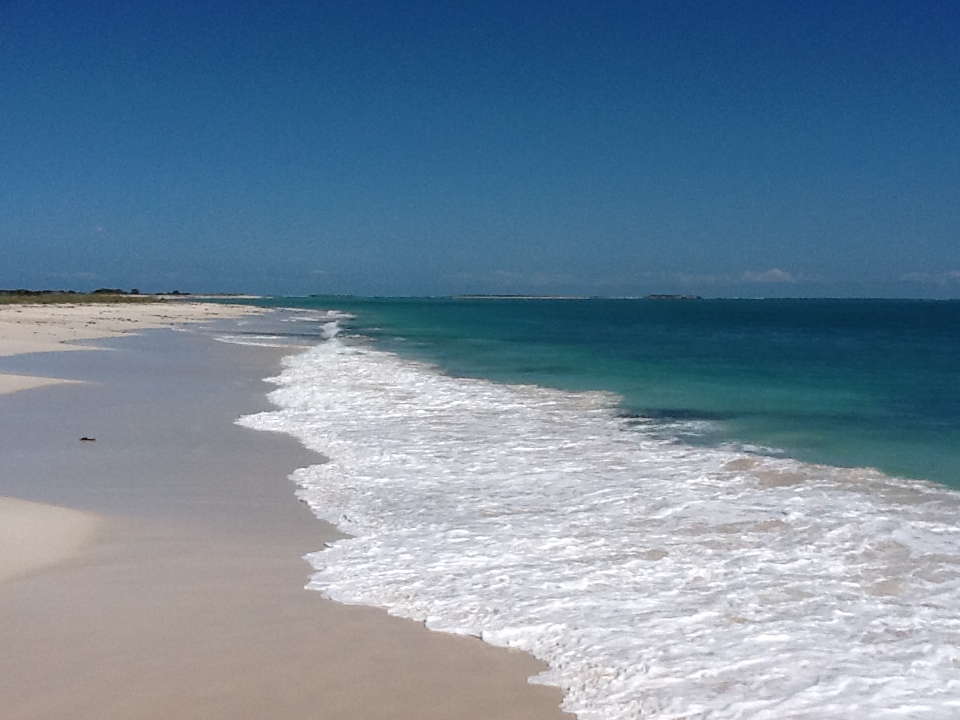
The coastal highway to Jurien Bay provides many wide sweeping views of the beaches and coast line as it meanders down through several coastal towns and beachside ‘ fishing shacks’. Jurien Bay is 220kms north of Perth, and certainly appears to be enjoying substantial growth and development, with many Perth residents venturing this far north to their ‘weekenders’. During the holiday season the population more than doubles. Rock lobster are abundant, and along with tourism and construction, the towns population is sustained. The beaches really are quite stunning, with fine white sand and clear turquoise waters.

Beautiful Jurien Bay

Beautiful Jurien Bay

Just offshore are a number of islands on which live a large population of sea lions, a local tourist attraction.

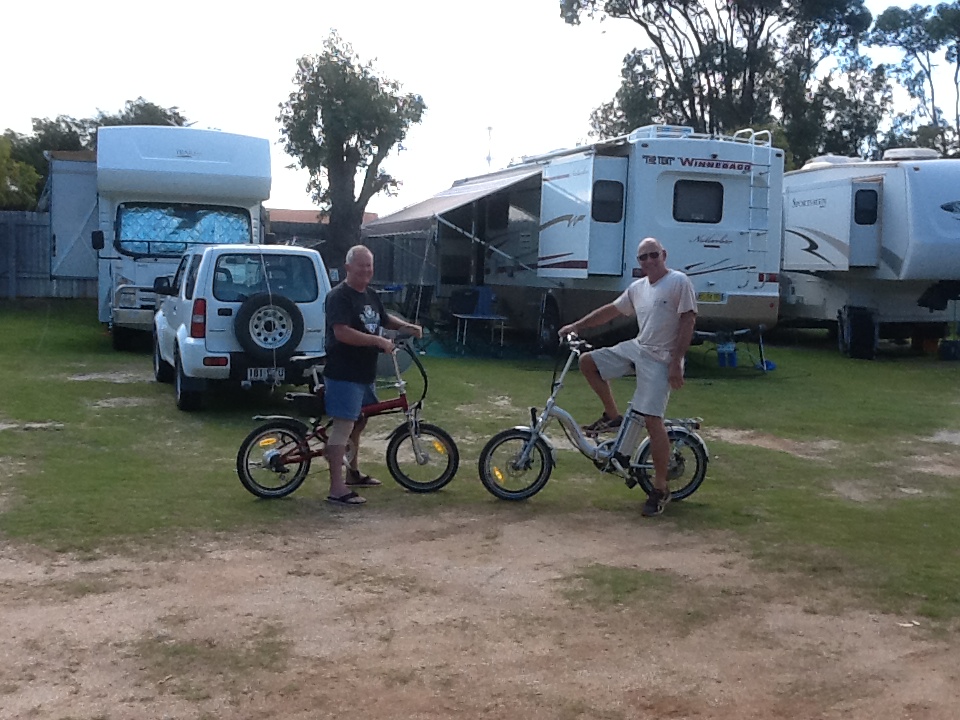
Like many towns in WA, Jurien Bay has excellent bike paths, which we explored thoroughly. We borrowed Dearne’s bike so that we could both go for a good ride, and enjoy the lovely sunny days (yes its all blue sky and warm days again).

The boys on the bikes in front of our rigs

The boys on the bikes in front of our rigs

Steve and Rod also enjoyed some more serious riding. We enjoyed a number of beach walks as well.

Whilst at Jurien Bay the little Suzuki decided to have a spat and the starter motor went on strike whilst Steve was at the petrol station. It had been a little stubborn at times, but not this. So, it was time for a replacement job. This meant that instead of visiting Cervantes, 26kms south of Jurien Bay and the Pinnacles in the Namburg National Park (the Pinnacles are limestone formations up to 3m high, creating the effect of a moonscape), we needed to get closer to Perth so that we could get the job done quickly. Being without a vehicle for too long can be restricting! So onto Yanchep we moved, leaving Rod and Dearne, until we catch up again in Perth.

Yanchep is on the coast about 70kms north of Perth, and it will soon be an outer suburb of greater Perth, with development moving further and further out of the city, and a rail link planned for 2016/17. Steve took the Suzuki in on Monday, and was able to collect the rejuvenated vehicle early today. We have explored the little village, and Two Rocks which is just north of here, and with its marina Two Rocks holds real appeal for boaties. Like much of this coast, the beaches are quite stunning. we are staying at a very quiet camp ground, and so the beach is deserted…perfect for long beach walks.

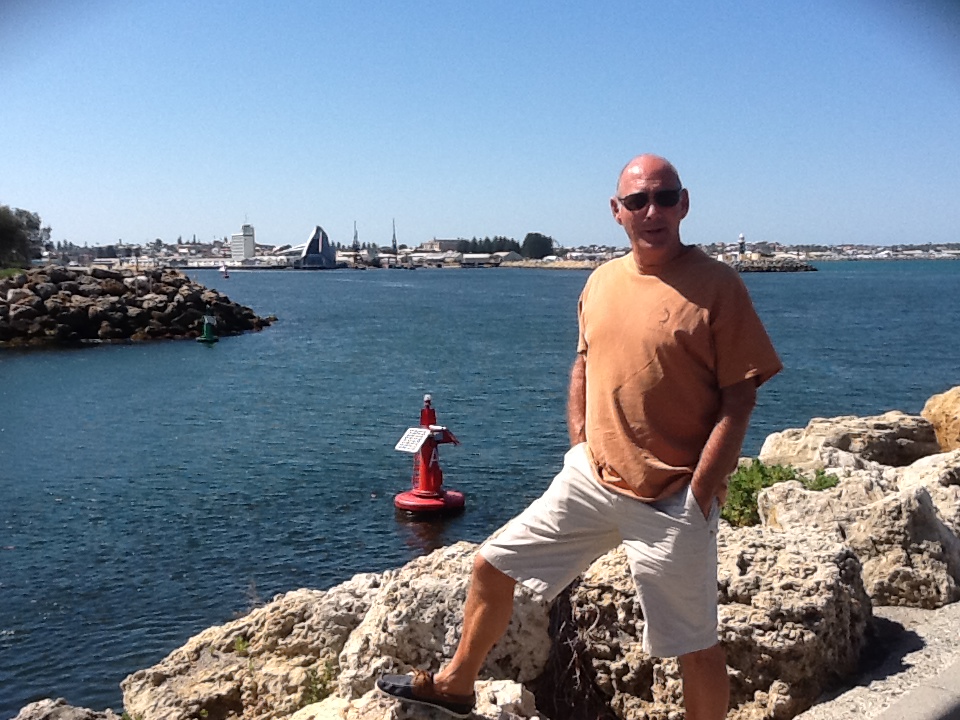
Today we visited the coast between Yanchep and Northern Fremantle, where the Port of Fremantle is based, and the harbour leads into the Swan River.

North Fremantle, looking across to Fremantle

North Fremantle, looking across to Fremantle

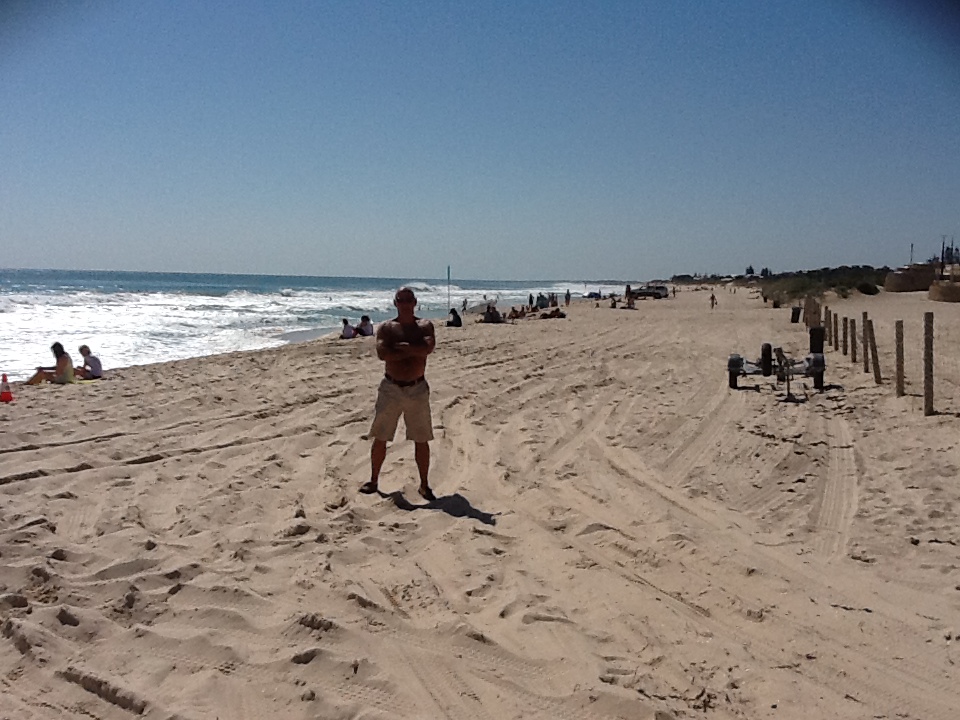
Given that Steve spent many of his younger years in Scarborough in the UK, Scarborough  in Perth had to be visited. There are some key differences – climate and water temperature; surf; this is a modern seaside town; and accent used here! We drove the Ocean Road from the Port up to Burns Beach and were astounded at the number of huge and expensive houses right along the coast. There is some serious money in this town and we haven’t even seen the inner city suburbs!

We stopped in Cottesloe for coffee on the beach, and naturally, Scarborough, where we had lunch and then spent time at the beach watching surfers and boogie boarders riding the waves.

Steve on Scarborough Beach

Steve on Scarborough Beach

What a stunning coast line with so many beautiful beaches and such clean water. We really understand some of the attractions of Perth!

Tomorrow we are off to Fremantle for a few days, and we are looking forward to exploring this older suburb and region of Perth.

So the sunshine doesn’t last forever!

In our last blog I mentioned that we planned to go sailing again to find the elusive dugong. Sadly, the weather precluded this, with the tour operator deciding the weather, whilst not wet, was too gloomy for spotting marine life, so that dampened our enthusiasm – and then it was a beautiful sunny afternoon and we could have gone. So it’s still the elusive dugong for Steve.

From Denham we moved back to Hamelin Station for the night to break up our trip down the coast to Kalbarri, and just as we had on our previous visit, it was very enjoyable and our hosts once again put out the welcome mat and made sure all visitors had an enjoyable stay.

The 270km trip to Kalbarri was made in overcast weather, watching rain clouds rolling down the coast.

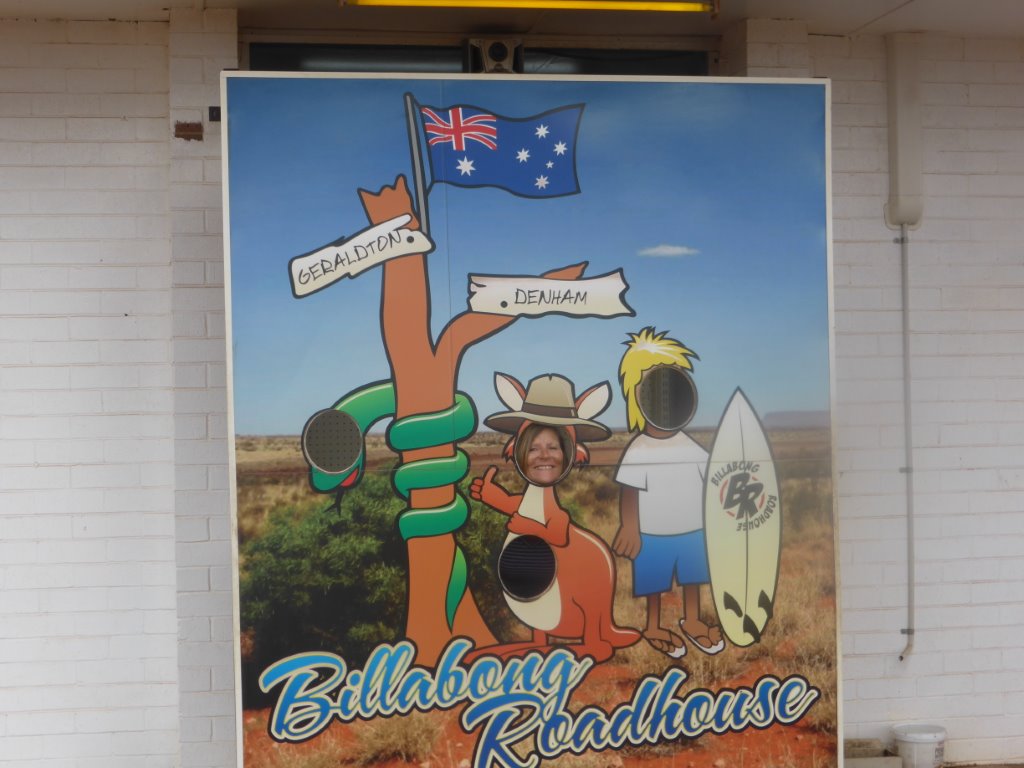
Road house stop for coffee - Jane having fun!

Road house stop for coffee – Jane having fun!

This was a more interesting drive, as we passed from landscape dominated by small scrubby trees, onto larger gum trees and lovely colourful wildflowers, and then what a surprise! We drove into the WA wheat and grain belt. This was the first time we had seen agriculture in months, and it was a very pleasant change. The drive through Kalbarri National Park was also memorable given that it is wildflower season and everywhere between the bushes and scrub are yellow, pink, white, purple and orange concentrations of colour.

The weather decided to ‘go wild’ whilst we were in Kalbarri. Kalbarri is on the coast, 590kms north of Perth and at the mouth of the Murchison River. Strong wind warnings were issued, and it was gusty with waves crashing over the beach and up the cliff. Quite picturesque in its own way. But of course some of what we do when traveling is weather dependent. One of our must dos was the walks in Kalbarri National Park. The Park covers an area of 186,000 hectares, and plays host to inland river gorges with rock formations that are 400 million years old. We had planned to visit 2 gorges, the Z-bend and the Loop, however because of the conditions this wasn’t on the cards. Both of these offered spectacular scenery and 150m cliffs dropping down to the river bed. Instead we had to make do with Hawks Head and Ross Graham, both very short walks.

Looking down into the gorge at Kalbarri, beautiful colours and rock formations

Looking down into the gorge at Kalbarri, beautiful colours and rock formations

The rain got us on the last stage of our walk but hey, that’s all part of the fun. The Murchison River has forged deep gorges, winding its way through the park. It is certainly very picturesque but for us doesn’t hold the same appeal as Karajini with its challenging walks and exceptional pools and falls.

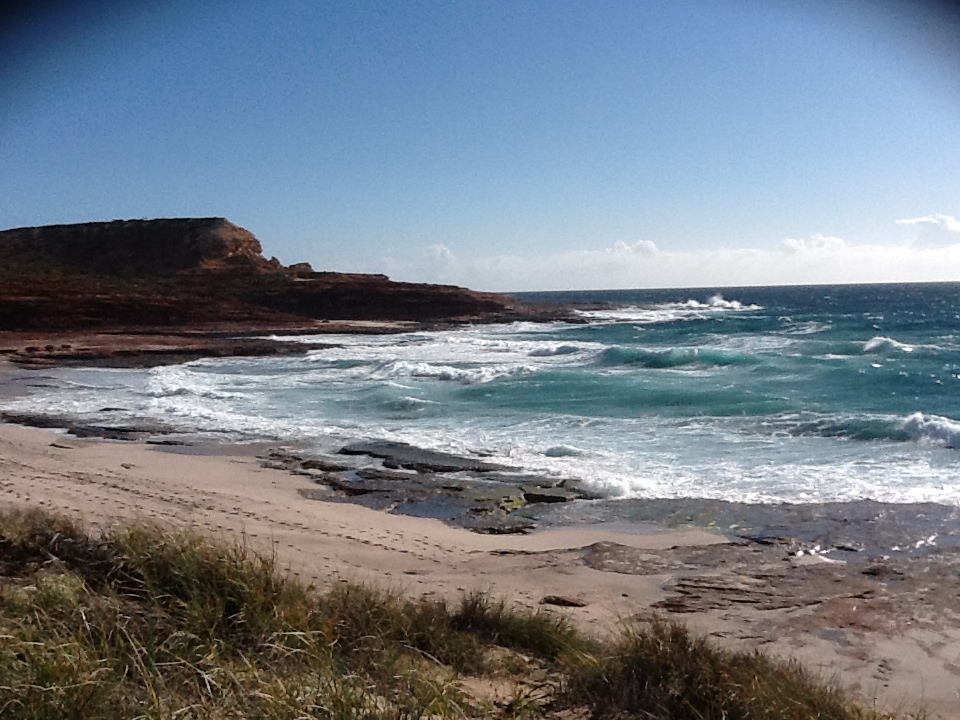
Kalbarri coast is dominated by rugged fractured and decaying sandstone cliffs that plunge more than 100m into the ocean which has sculptured amazing rock formations. As a result there have been many shipwrecks along the coast. There are a number of walking/bike trails that lead to these, which are definitely worth visiting.

Looking across to Red Bluff

Looking across to Red Bluff

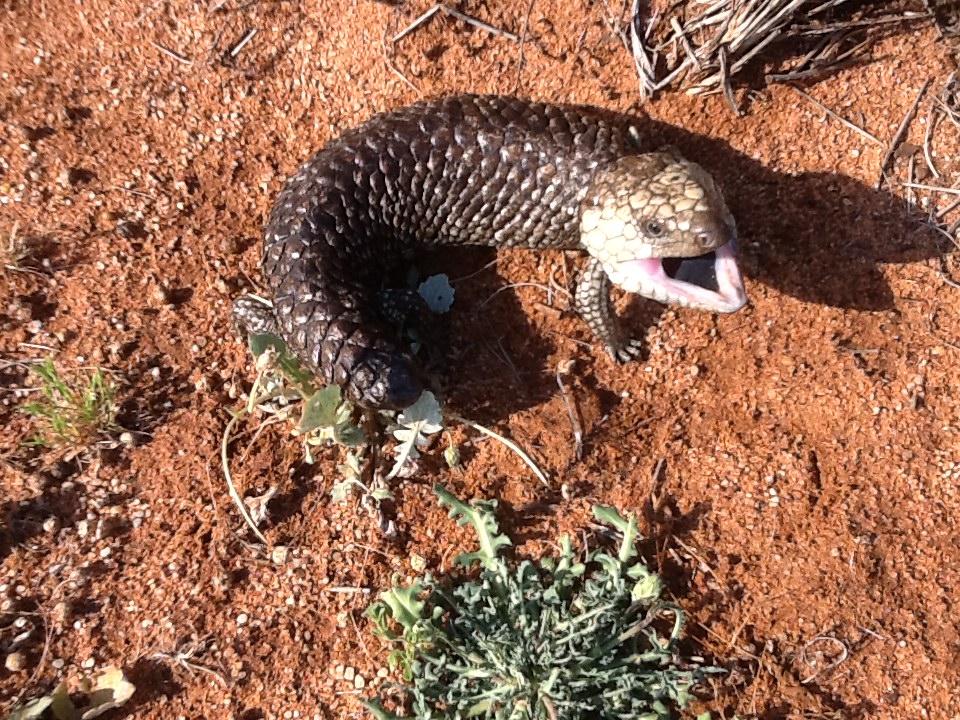
When the weather cleared, I enjoyed a 10km walk to ‘Red Bluff’ which is the highest elevation in the area, and a great spot for whale watching. With strong winds and rough seas it was more than a challenge to see any. However the local wildlife – blue tongue lizards – was out and about to greet me on the way.
Local wildlife - the 4th blue tongue lizard I met on the cliff walk

Local wildlife – the 4th blue tongue lizard I met on the cliff walk

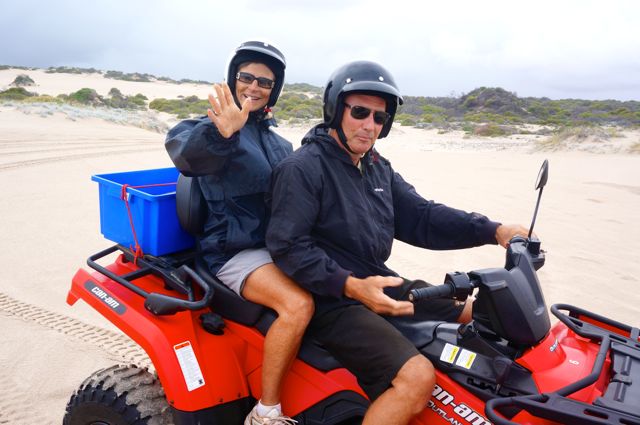
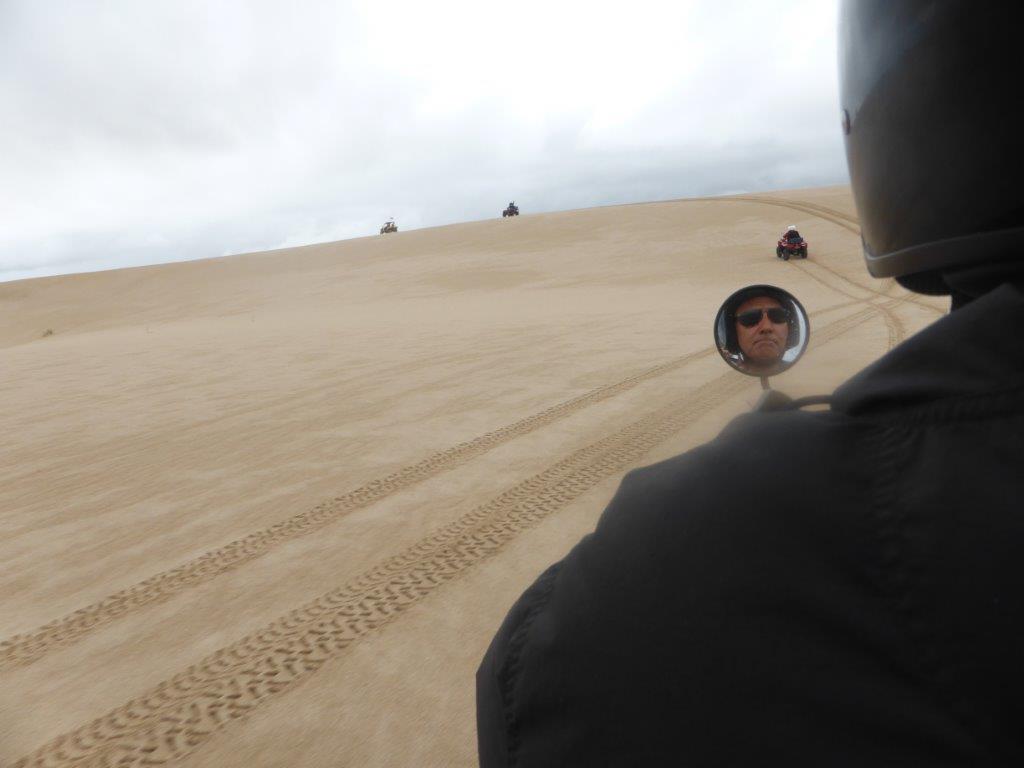
On Sunday, Fathers Day there was no change in the weather, but we intrepid four (Jane, Steve, Rod and Dearne) made the decision to go quad bike riding on the beach and sand dunes with Wagoe Beach Quad Bike Tours.
Wet weather jackets adorned, and off we go!

Wet weather jackets adorned, and off we go!

Despite the weather and getting soaked this was a real blast. It was such fun, flying along a beautiful white sandy beach with waves crashing in alongside, climbing up and down huge sand dunes and learning about the local wildlife and history of the area. We had a great time.

Flying up a sand dune in the wet

Flying up a sand dune in the wet

After 3 days it was time to head south again, this time to Geraldton, on the Coral Coast. Geraldton has a population of 37,000 and from having driven around the town is definitely a growing and developing country/seaside town. There is a major port here, and this is the centre for iron ore and grain export (all WAs wheat is exported), as well as livestock (sheep). There is also a significant fishing and rock lobster fleet at the port. Because Geraldton was gazeted as a town in 1850 there are a number of well restored historic buildings nestled between more modern architecture. The waterfront has been recently developed and hosts a marina, low rise and well architectured offices and residences. The town has a very pleasant feel to it. One of the key attractions for us was to visit the Abrolhos Islands, an archipelago of 122 coral islands and crystal blue waters with an abundance of sea life just 70kms off the coast. But this darned weather has hung over us for a week now (we don’t like it!) and the conditions simply haven’t been right for flying or snorkelling. Its been more like wave jumping or big wave surfing conditions. Today the sun is out between the clouds, its a little warmer (22 degrees) and the wind has finally settled down.

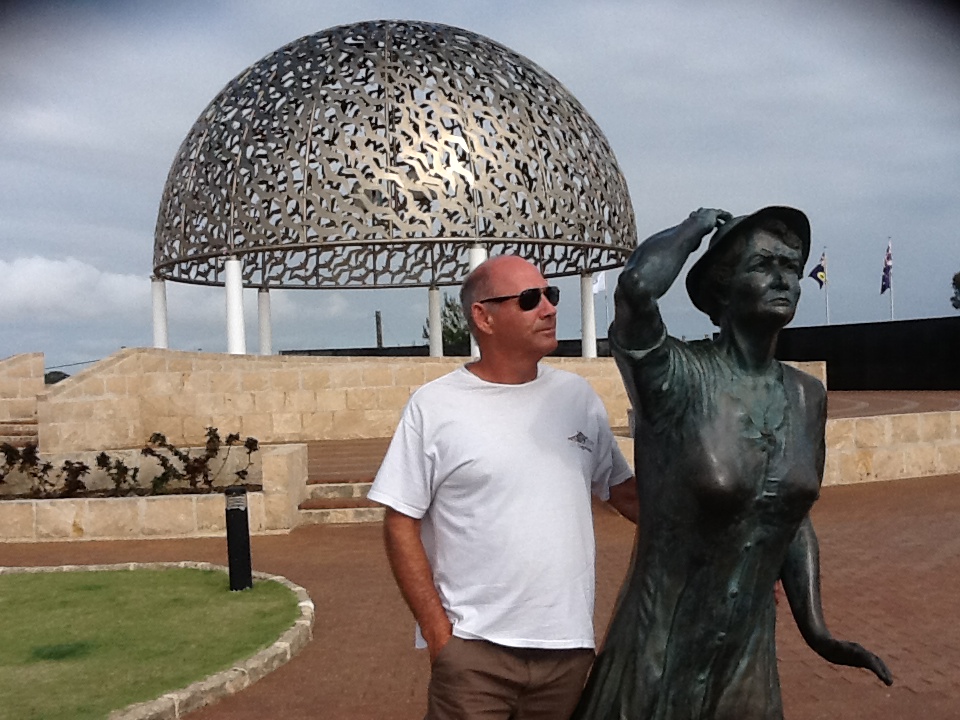
We did enjoy visiting the HMAS Sydney II Memorial on Mount Scott, a tribute to the 645 lives that were lost in 1941.

Steve with the Waiting Woman and looking back over to the Dome of Souls

Steve with the Waiting Woman and looking back over to the Dome of Souls

What a sobering place of artistic beauty. The Memorial comprises the Dome of Souls – 645 seagulls representing the lives lost; the Eternal Flame – within the dome; the Podium – a ships propeller sitting within the nautical compass giving the directional bearings of the compass; the Pool of Remembrance – evocative of a war grave with a ship; the Stele – representing the prow of HMAS Sydney II; the Waiting Woman – representing anxious mothers and relatives looking for the return of their sons; and the Wall of Remembrance – engraved with the names of the 645 men who lost their lives.

Tomorrow we again head south, to Jurien Bay. We really are getting so close to Perth now, the final stop for us on this trip.

Our time at Denham and Monkey Mia

Rather than coming straight to Denham from Carnarvon, we made a 2 night stop-over at Hamelin Station, a 500,000 acre sheep station at the bottom end of Shark Bay. This is a delightful caravan park on the station, reputed to have the best bathrooms in NW WA….and they would have to be about right. The wider Shark Bay area is one of the driest in Australia, and because there was so little rain last year, the sheep are being agisted in southern WA, so the camp ground is the main business at present. The hospitality shown was excellent, and with 5pm drinks hosted each evening it really does make for a very hospitable and welcoming stay over. Quite surprisingly there is a spring fed lake adjoining the camp ground, attracting abundant bird life that congregates at dusk for feeding.

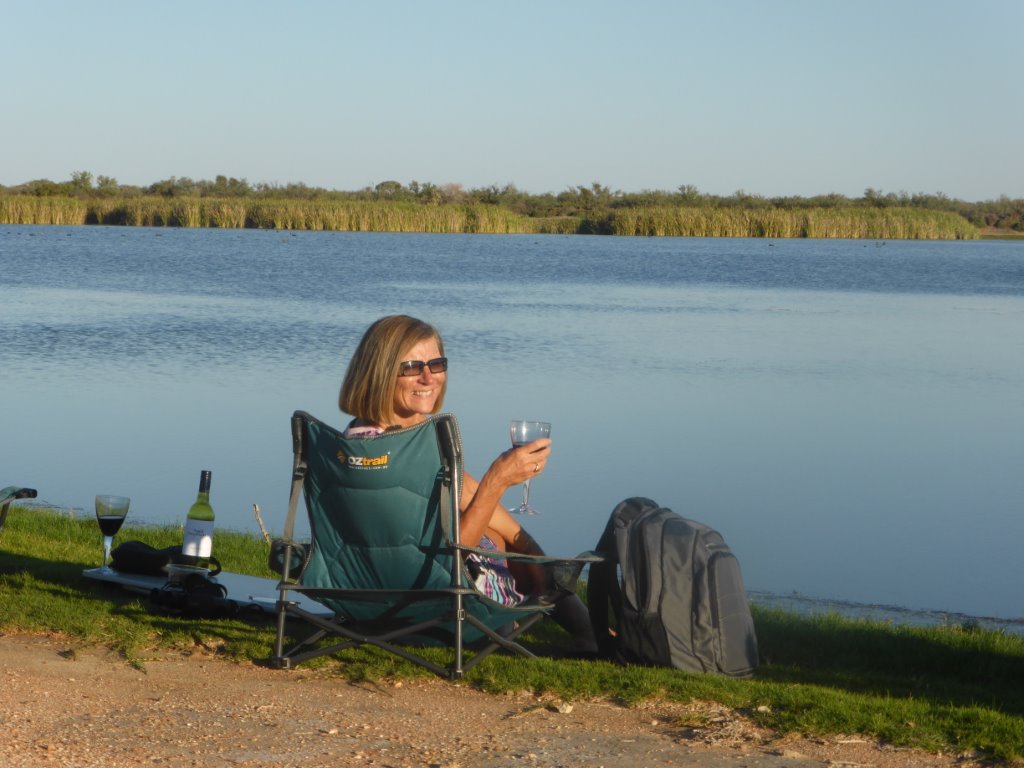
Enjoying a glass of red lakeside

Enjoying a glass of red lakeside

We enjoined an evening sitting alongside the lake, with binoculars and a glass of red, following the antics and life of an array of birds. Who would have thought it!!

Whilst at Hamelin we visited Hamelin Pool Marine Nature Reserve, home to the most diverse and abundant examples of living marine stromalites in the world. Stromalites are living fossils – cyanobacteria, direct descendants of the oldest and simplest form of photosynthetic life on earth, an example of the earliest record of life on earth.

Hamelin Pool Stromalites

Hamelin Pool Stromalites

They provided the early earth with most of its oxygen atmosphere millions of years before plants appeared. Quite amazing. Hamelin Pool has double the salinity of normal seawater, which is an ideal environment for the stromalites to grow. They look like little pillars and rocks that are different colours, attracting lots of little fish and cormorants. There is an interpretive boardwalk that explains the history and makes it easy to look down on the stromalites. Whilst at Hamelin Pool we also visited the historic telegraph station built in 1884, and the old shell quarry – this whole region has a proliferation of tiny cockles that are metres deep (Shell Beach, one of the main beaches has shells to a depth of 10m) and over time form a limestone full of the shells, known as Coquina. The limestone was mined and used in the construction of a number of buildings.

The local post office and shop at Hamelin Pool

The local post office and shop at Hamelin Pool

There is also an old post office and shop servicing a small and more basic camp ground.

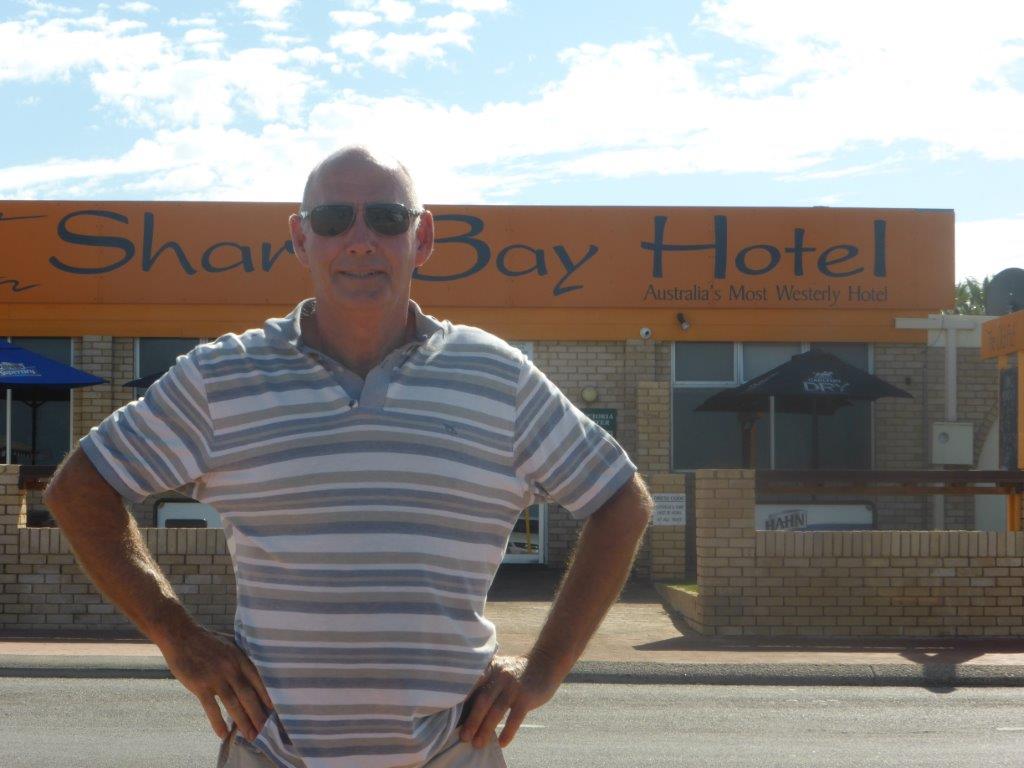
We arrived in the little seaside town of Denham on Saturday. Denham is really the administrative town and the gateway for tourists for the shire of Shark Bay. About 250,000 pass through here each ‘season’. The town hosts the most westerly hotel in Australia.

The most westerly pub in Australia

The most westerly pub in Australia

It has 4 camp sites and a population of around 600. Its very popular for fishing, and of course for those who know the area, it is the base for many who want to visit Monkey Mia, 25 kms away, to see the bottlenose dolphins which have been coming close to shore for more than 50 years. Rangers now closely supervise the dolphin feeding because the dolphins where relying on only the feeding, and as a result not teaching their young to feed and as a result they would die. The rangers do their controlled feeding in the mornings, and tourists visit to watch this. We couldn’t quite bring ourselves to join the throngs – we have seen many dolphins over the years with our sailing adventures, and prefer to see them in a more natural interaction. What we did though want to see was the elusive and shy dugong. Shark Bay is home to 1/8 of the world’s dugong population. The Bay is full of sea grass, the dugongs staple food – they devour up to 30kgs per day.

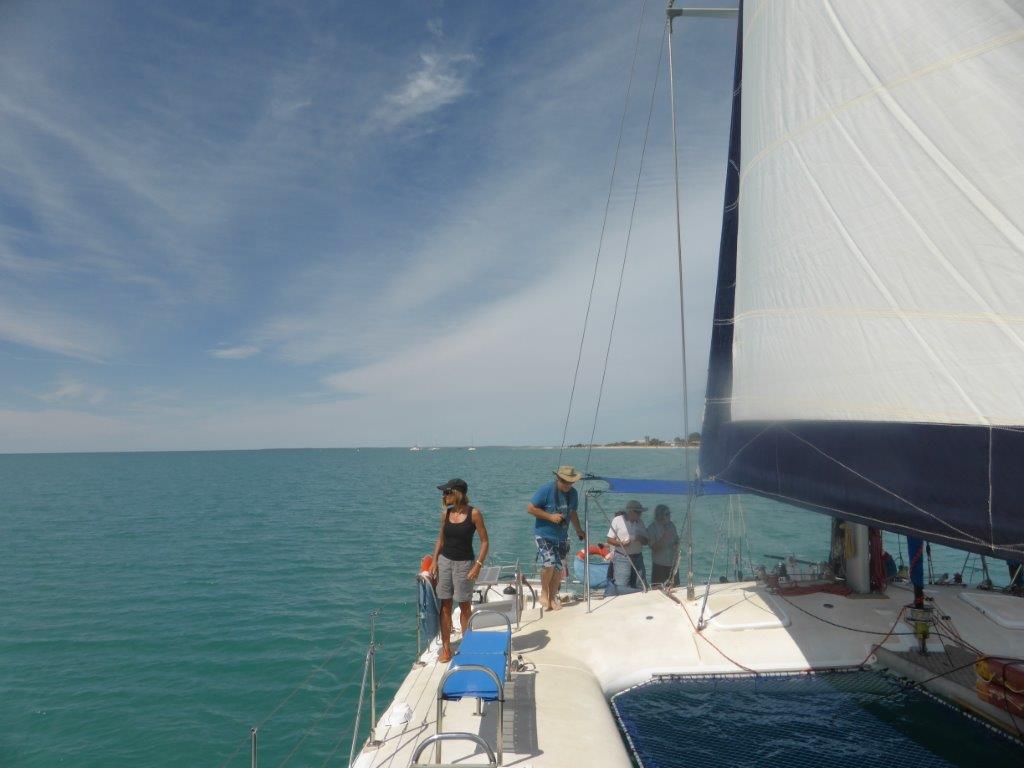
Jane up forward 'spotting' rather unsuccessfully

Jane up forward ‘spotting’ rather unsuccessfully

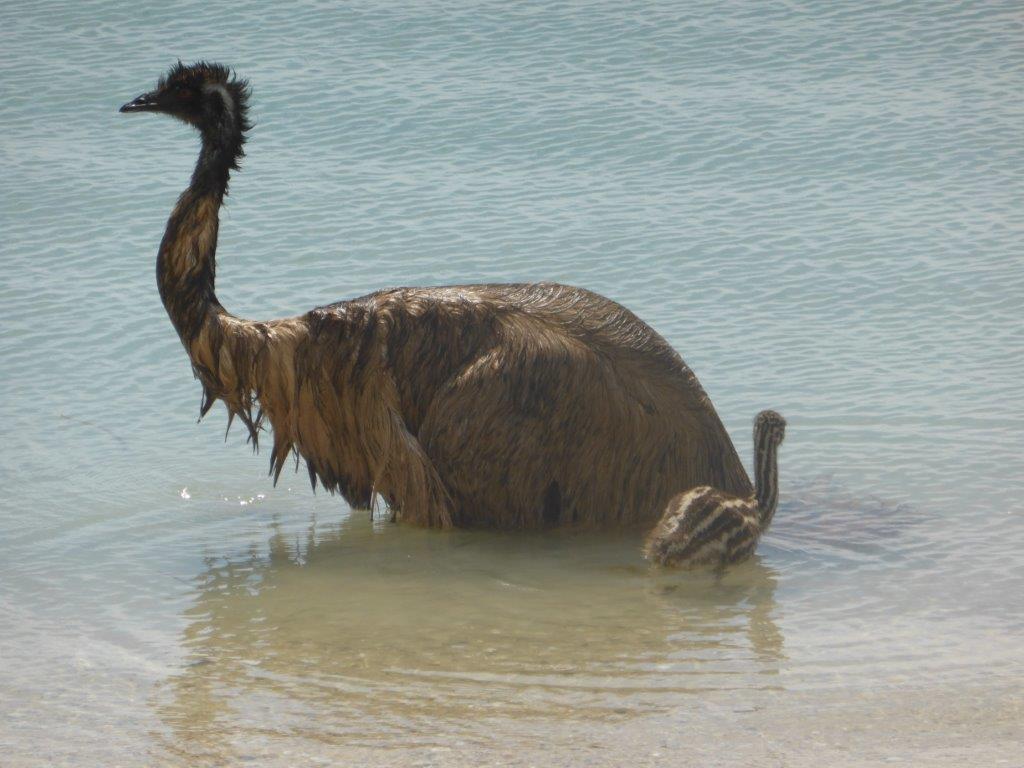
So we booked a cruise to visit the sea grass beds and hopefully see dugongs in their natural surrounds. Sadly they proved to be too elusive, and we had to suffice with dolphins and turtles instead. The tour operator provides a guarantee that if you aren’t happy with what you saw on the cruise you can come again for free. So today we are going again to see if we can spot one! What we did enjoy however at Monkey Mia was dad emu and chick having a dip in the sea.

Bedraggled dad and bub enjoying a dip

Bedraggled dad and bub enjoying a dip

The rangers were very excited, apparently this is something new, never seen before. Seeing an emu on the beach, then having a swim is not what we expect. Here in Denham we do see them wandering around the streets, and in Monkey Mia wandering around the resort and the café, so they are quite used to people and more domestic surrounds.

Yesterday our friends Dearne and Rod joined us here, after last having seen them in Broome. They have ‘caught up with us’ and we will now spend time traveling together down towards Perth. We leave here tomorrow, will spend another night at Hamelin Station, and then move to Kalbarri where we have the combination of beaches and national park to explore.

Glorious Coral Bay (southern Ningaloo Reef) and down to Carnarvon

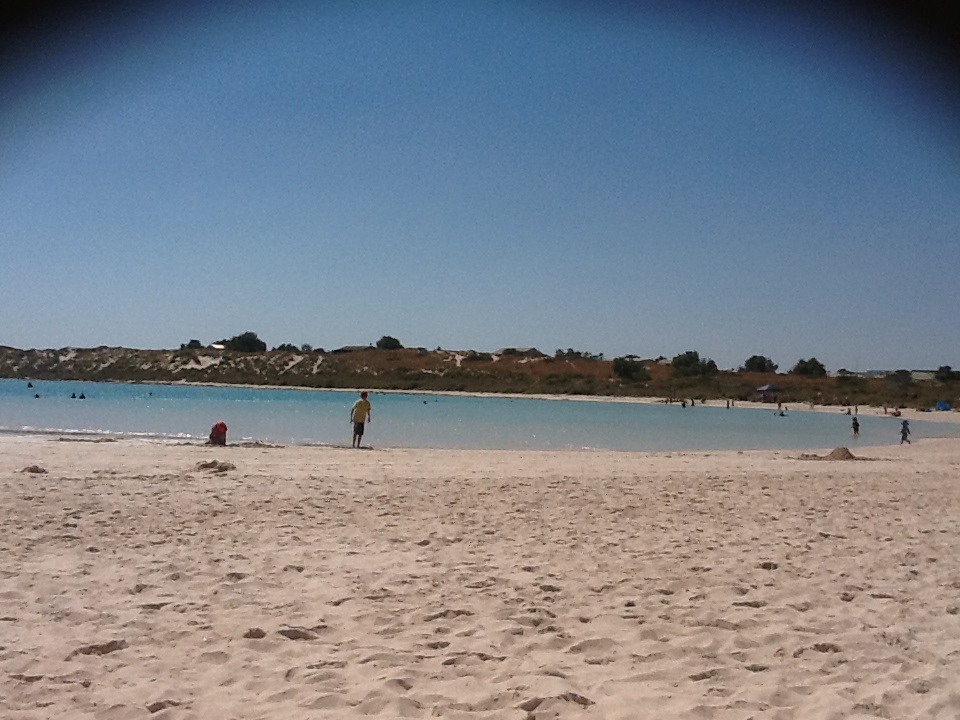
Our drive to Coral Bay was uneventful, other than we commented on the landscape over the 160kms and its similarities to the Yorkshire moors. It was rather surprising! We set up camp with the intention of staying 3 days. What a magical little part of the Western Australian Coastline this is! Coral Bay beach is very protected from any wind, and with the outer reef doing its job of holding back big seas, the whole wider bay, known as Maud Sanctuary Zone, is accessible for snorkelling, kayaking and swimming.

Looking across Coral Bay

Looking across Coral Bay

The whole bay is full of coral and fish life, its a marine wonder- land. Walking straight off the beach and into snorkelling crystal clear water with around 250 species of coral and 500 species of fish is fabulous. Needless to say we spent a lot of time in the water, between swimming and snorkelling.

On our second day the weather was perfect – sunny skies (what’s new there!) and no wind – so we set off early, hired a double sea kayak, donned wetsuits, and along with our snorkel gear headed for the outer reef. We had come here for some serious stuff so we needed to take action. The kayak company has a number of moorings along the inside of the reef, so we were able to go to different spots to snorkel. Because it was so calm, the water was like glass and it was quite incredible paddling along looking down at amazing corals and all sorts of colourful fish. It was just like being in the water with them. Of course we ‘gracefully’ slid off the side of the kayak into the water to snorkel. The depth was between 3 and 8 or 9 metres, and wow, this was an excellent snorkel experience. Whilst the corals are not as colourful as some we have seen, the sizes and types of different corals was staggering, and again there was an abundance of colourful fish life from very tiny to sizeable. we had a great time. Climbing back on board was a bit clumsy, but hey, no one could see us! Off to the next spot! This was great fun. On our next snorkel we played chasey with a turtle, that lead us on a very complicated and intricate dance. From above it must have looked very comical as we went in all directions alongside this beautiful creature. After almost three hours we thought we had seen a lot, and although the water is relatively warm, its not tropical and we were a little cool despite the 30 degree air temperature. So we called it quits for the day, spending the afternoon at the beach swimming.

If you have a keen eye, here's the afternoon's entertainment - aerobatic planes

If you have a keen eye, here’s the afternoon’s entertainment – aerobatic planes

We certainly enjoyed snorkelling at Coral Bay, and being able to literally step into deep water (3m plus) from the shore, and fin out a short distance to an underwater garden is incredible.

Coral Bay is also known for its manta-ray population. It isn’t easy to get to see these majestic ballet dancers of the sea, and yes we scored a bulls eye! Three metres from the shoreline in the shallows, playing for an hour, how good is that. We sat above on a 4m cliff, watching a magical performance in 1 metre of water. One step better would have to have been in the water, but that wasn’t to be.

It was so nice here we stayed 5 days, changing parks after 2 days to the ‘best spot in town’, with water views and the beach straight over the road in front of us.

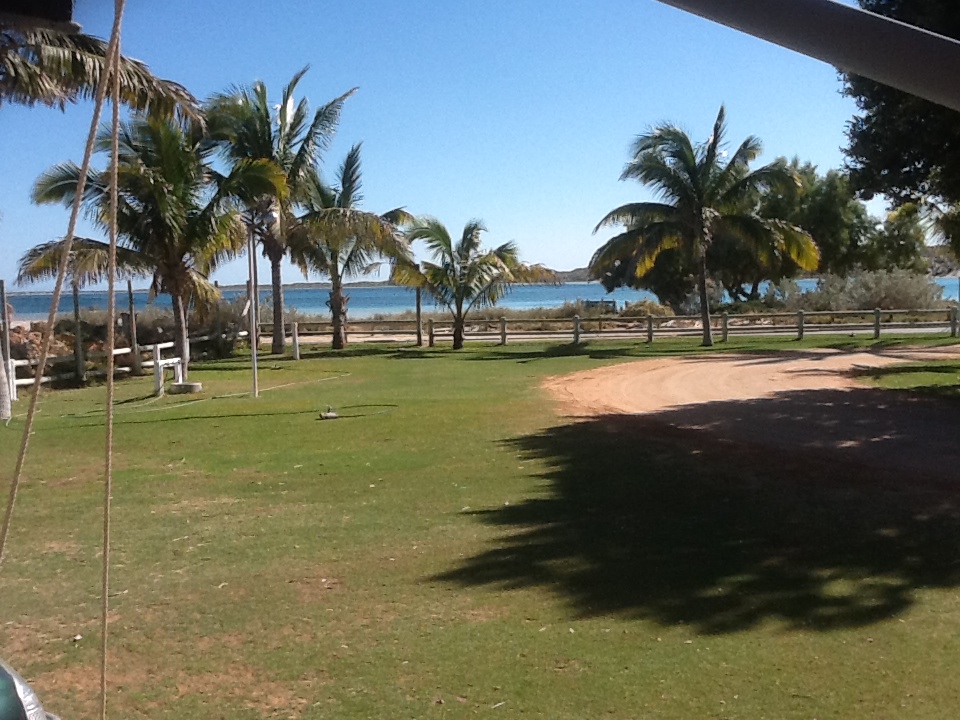
The views a bit hard to take!

The views a bit hard to take!

We also enjoyed bike riding and beach walks between Coral Bay and the little boat harbour. And, we got to see the second Bledisloe Test, with the Kiwis whipping the Aussies 51 to 20. Steve was very happy, Jane not so happy….yes I am the renegade kiwi that supports the Wallabies.

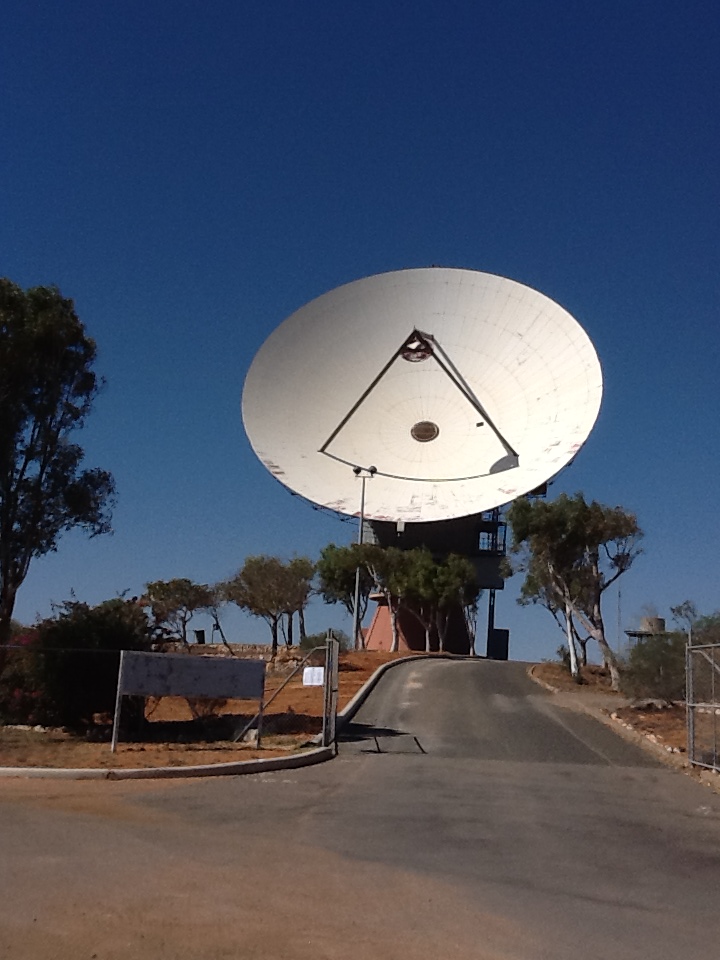
From Coral Bay our next stop has been Carnarvon. Carnarvon is known for 2 key things – firstly it supplies 70% of WAs winter vegetable requirements, and secondly Carnarvon’s Earth Tracking Station was built in conjunction with NASA in 1966 as a satellite communications and tracking station,

I'm a bit dated but I still stand tall - The OTC Dish

I’m a bit dated but I still stand tall – The OTC Dish

which was involved in the Apollo space missions – it was closed in 1987 after assisting in tracking Halley’s Comet.

Looking back along the jetty to land

Looking back along the jetty to land

Historically and of interest is the town’s one mile jetty built in 1897 to transport wool and livestock. It was used until 1966, and today it is largely original timbers that are progressively being preserved. There is a very active trawler fleet here, with a number of different fishing companies operating rather healthily. There does appear to be a very good sense of community, with a real mix of those involved in horticulture, those in fisheries, and those in local businesses supporting tourism and the townspeople. This is the only town (population 8,500) between Port Hedland and Geraldton, so when traveling its a pit stop for supplies and any maintenance work required.

Yesterday, taking a different approach I did the town tour by bike – so 26kms later, plus walking the jetty, I had seen everything that was of interest. Steve took the other option…..the car.

Today we spent the day at Quobba, 70kms by road, and north of here. Quobba is renowned in the area for its blowholes, its marine reserve and its waterfront camping, courtesy of Quobba station. When its a bit windy like today, swimming and snorkelling the marine reserve (inside a fringing reef) are sadly a no go.

The seas rushing into the bay....no swimming today

The seas rushing into the bay….no swimming today

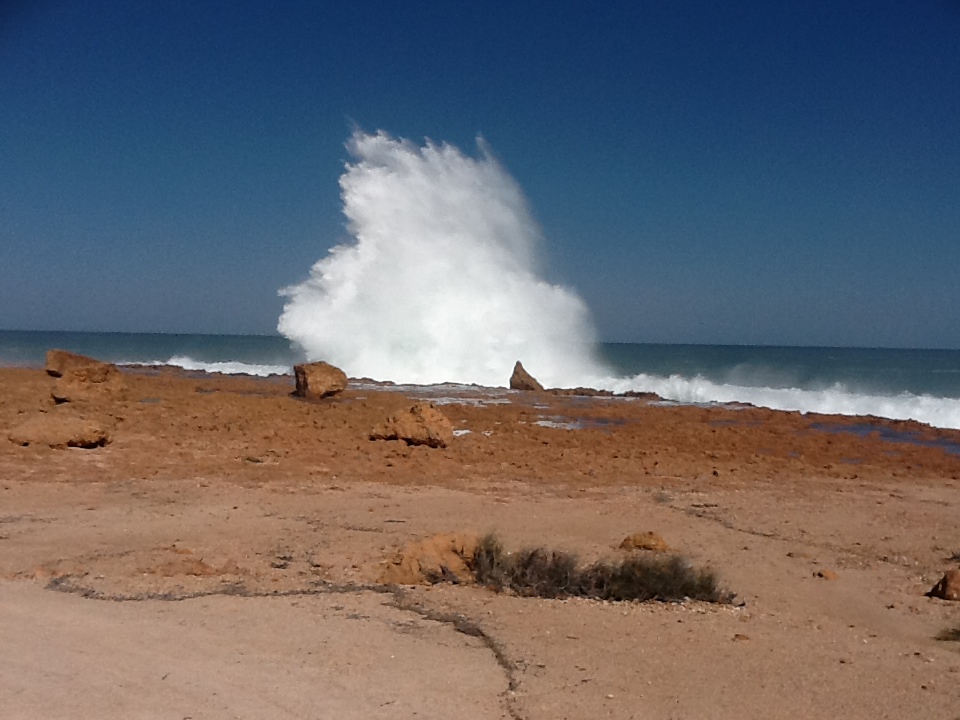
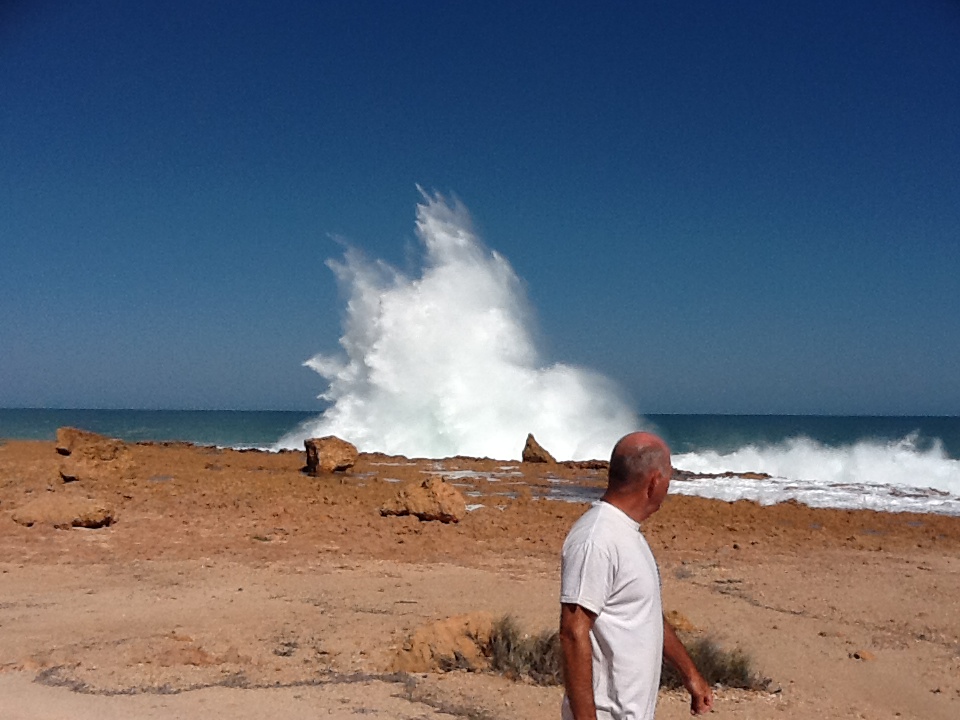
I was really disappointed we couldn’t get in the water, however the water displays made up for it. With 3 metre swells crashing into the small cliffs just north of the beach, the blow holes were performing and 20m plus water plumes billowing into the air and over the cliffs and rocks were quite spectacular to watch. We did get close but not too close because there are ‘king waves’ that appear from nowhere and envelop the rocks and everything in their path. Hopefully these couple of photos provide a sense of the scale and volume of water thrown into the air.

Crashing waves at Quobba

Crashing waves at Quobba

I wasn't running away from this one - that came later!

I wasn’t running away from this one – that came later!

Tomorrow we head south again, toward Denham, Shark Bay and Monkey Mia. We expect to spend a week or two in this area – we are getting closer to Perth and don’t want to get there too soon and leave behind the warm weather.


Departing northern Ningaloo Reef and Exmouth

As we drove out of the camp ground this morning and came toward the town of Exmouth it struck me just what an area of great contrasts this is. On a number of evenings we drove up to the Light House to enjoy a glass of wine and watch the sun set over the sea, whilst looking out on whales frolicking along the outside of the reef. The beautiful colours of the reef sparkle in the evening sunlight. Then, right out in the distance, on the horizon are 4 oil rigs. As the sun sets the lights become obvious as do the flames. Further to the north west and what can’t be seen is Barrow Island, a significant LNG plant operated by Chevron, processing 15 million tonnes pa. This is known as the Gorgon Project, with FIFO workers flying in from all around Australia, including Exmouth.

At night time there are a number of very attractive red lights on the skyline to the north. We could see these from our bedroom window every evening. This is a key Defence installation, jointly operated with our big brother the USA, to track submarine operations around key parts of the globe. Its known as the HAARP facility. These are part of the naval Harold Holt Facility, which provides very low frequency radio transmissions to the US and Australian navy ships and submarines in the Western Pacific and Eastern Indian Ocean.

Then there’s the RAAF Learmonth base, a bare base, with a number of large hangars and as a bare base, no air force units are based here, other than a small caretaker team. The base also has an air weapons range attached to it.

So, yes, the township is more recent, established to support defence operations, specifically the Harold Holt facility in the late 60s. Today there is more development including a marina and canal homes, to house the FIFO workers and expected growth.

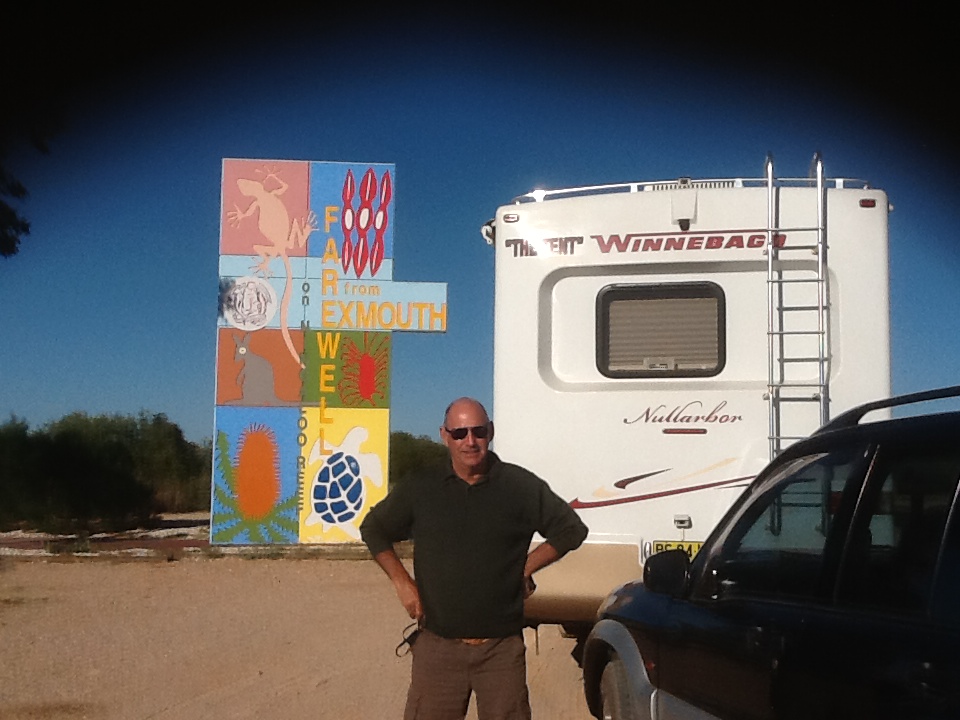
Interesting isn’t it that these major and controversial developments and projects live alongside the sensitive and beautiful Ningaloo Reef. Imagine, just one environment incident could destroy this finely tuned marine environment. It doesn’t bare thinking about! Farewell Exmouth.

Farewell Exmouth

Farewell Exmouth

And, welcome Coral Bay

Beautiful Coral Bay

Beautiful Coral Bay

The beautiful waters of Ningaloo Reef

We have spent 8 stunning days at the Ningaloo Lighthouse Caravan Park, on the edge of the Ningaloo Reef and the National Park. It’s not hard to watch the sun rise each morning, creating pink and orange over the horizon, followed by clear blue skies each day, and then watching the sun set over the sea, again with stunning colours of reds and oranges, from Ningaloo Lighthouse.

Sun setting over the Lighthouse......view from 'The Tent'

Sun setting over the Lighthouse……view from ‘The Tent’

We have enjoyed daily swims in warm waters, amazing snorkelling over coral reefs full of sea life, and the occasional visit to Exmouth to stock up and sort out a few chores. In fact we don’t even have to leave home base to enjoy the wildlife. There are many emus in the area and babies are hatching….so its not uncommon to be sitting outside with a coffee and have dad (yes mum takes off once they are born and dad brings them up) and two tiny little ones wandering by.

The Ningaloo Reef Marine Park is world renowned for its wondrous sea life, in particular the whale shark. Unfortunately we are too late for whale shark season, so we have to ‘put up with’ large numbers of hump back whales (lots of pairs of mum and bub), dugong, stingray, dolphins, sea snakes and hundreds of different types of colourful fish. Life isn’t too tough! The best snorkel sites include beautiful Turquoise Bay (in my last blog, there was a photo of Steve sitting on the sand at Turquoise Bay, it is quite stunning),

Just a reminder of the delights of Turquoise Bay

Just a reminder of the delights of Turquoise Bay

the Oyster Stacks and Lakeside. We visited both Turquoise Bay and Lakeside and have to say that Lakeside is one of the best snorkels we have ever done – it is superior to the Barrier Reef (including Lizard Island), Tahiti and Aitutaki. The prolific and inquisitive fish life was quite astonishing. And it is quite remarkable to be at a quality dive/snorkel site and be the only ones there! Because the area has massive rains in April, you now have to walk through an ‘inlet’ to get there, and this can only be done at low tide. We tried at high tide and it wasn’t a success!

There’s another site we spent a whole day at, South Manlu. This isn’t publicised as a key snorkelling site,  yet it has some of the best and most colourful corals we have ever seen, in all shapes and sizes, and again an incredible number and range of fish life – including reef sharks! It was quite stunning.

The tidal flow on the reef is quite strong so when snorkelling here the technique is about ‘drifting’. You go further along the beach and then drift down to the area that you want to finish at. It certainly takes a lot of the effort out of it!

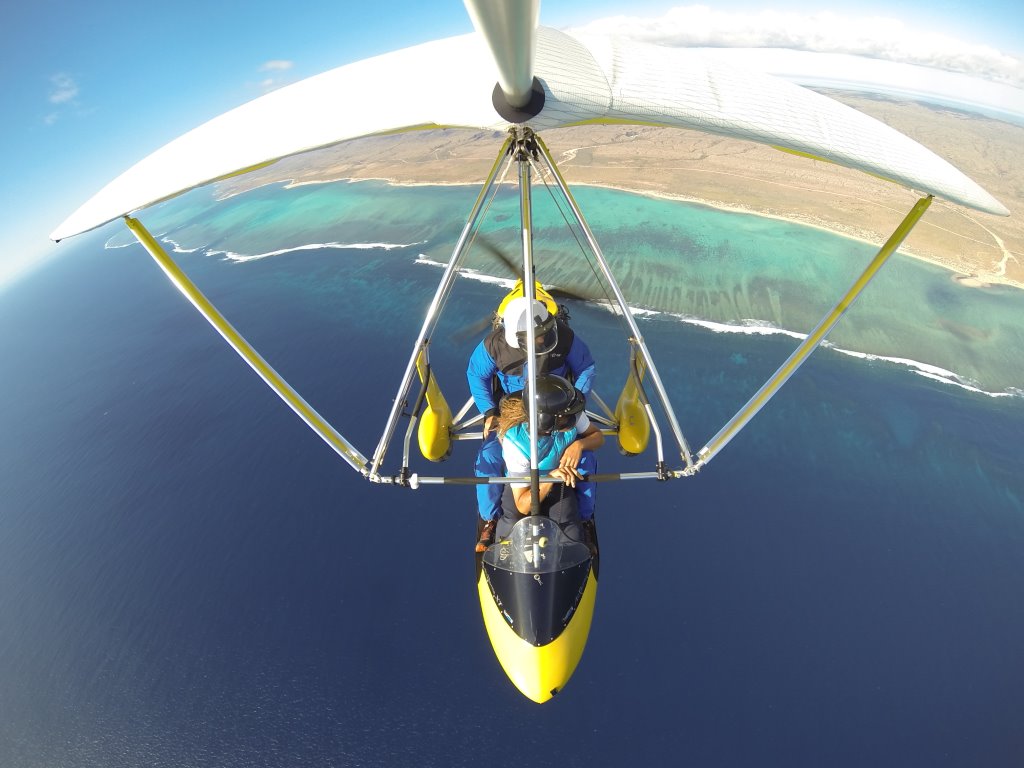
Our other favourite activity here was flying over the reef in a microlite. We had to wait for the right conditions and that was yesterday. Thankfully we knew from forecasts to book for Monday afternoon, and on cue the winds were right and it was another magic day. Off we went to the small aircraft airport for our briefing and Trainee Pilot Lesson before donning our flying suits (similar to a diving dry suit), putting on our helmets and gloves and climbing on board. I went with Tony and Steve with the very skilful 33 year old effervescent dreadlock business owner Gavin, who has 3000 hours under his belt….he started when he was 12, his father was a pilot. The flight goes from the airport over the ranges and over to the reef.

Steve with Gavin, over Ningaloo Reef

Steve with Gavin, over Ningaloo Reef

There were just a few fluffies over the range, and Steve and Gavin went over them and we went under them. Once over the reef we swooped and circled, watching hump back whales breeching and cruising alongside the reef, dugong feeding inside the reef, lots of stingrays, sharks, dolphins and sea snakes. The colours are just beautiful – light and deep turquoises and blues, water sparkling in the sunlight. Down at 500m the reef comes to life. After spotting and lots of ooohs and ahhs, it was time to return across the ranges, back over Exmouth and back to base. Steve couldn’t resist it, and pilot Gavin, who is so competent was keen…..it was time for Steve to take the controls. Yes the ex-pilot took the controls and flew back from the coast toward the airport before Gavin cut the motor and glided back down to land. Tony and I watched and flew in behind….but there were no motors cut. The microlite I was in wasn’t as powerful and nor was the pilot as experienced (albeit he is very competent and I was totally relaxed the whole time). Wow, what a blast! This is a must do. If you can’t swim with the whale sharks then this has to be the other absolute must.

Two microlites in flight over Exmouth - Steve in front and Jane below

Two microlites in flight over Exmouth – Steve in front and Jane below

We have really enjoyed our time here, and now its time to head just a little further south to the bottom end of the reef, to Coral Bay….for more snorkelling in warm waters. Okay, someone has to do it!